การปรับสภาพชีวมวลลิกโนเซลลูโลสด้วยวัสดุเพาะเห็ดเหลือทิ้ง: แนวทางการเพิ่มมูลค่าวัสดุเหลือทิ้งทางการเกษตรเพื่อการผลิตแก๊สชีวภาพอย่างยั่งยืน
Article Sidebar
Main Article Content
บทคัดย่อ
การใช้ประโยชน์จากวัสดุเหลือทิ้งทางการเกษตรเพื่อผลิตพลังงานทดแทนสามารถช่วยลดปัญหาสิ่งแวดล้อมและเพิ่มมูลค่าให้กับทรัพยากรชีวมวลที่มีอยู่ในประเทศ วัสดุเหลือทิ้งชีวมวลประเภทใบอ้อยจัดเป็นแหล่งชีวมวลที่สำคัญ แต่การนำมาใช้ผลิตแก๊สชีวภาพยังมีข้อจำกัดสำคัญจากโครงสร้างที่ประกอบด้วยเซลลูโลส เฮมิเซลลูโลส และลิกนินในสัดส่วนสูง ส่งผลให้การย่อยสลายโดยจุลินทรีย์ในกระบวนการหมักเกิดขึ้นได้ช้าและมีประสิทธิภาพต่ำ งานวิจัยนี้จึงมีวัตถุประสงค์เพื่อศึกษาศักยภาพการใช้วัสดุเพาะเห็ดนางรมเหลือทิ้งเป็นแหล่งจุลินทรีย์และเอนไซม์ธรรมชาติสำหรับการปรับสภาพใบอ้อยก่อนเข้าสู่กระบวนการหมัก เพื่อเพิ่มอัตราการย่อยสลายและประสิทธิภาพในการผลิตแก๊สชีวภาพ
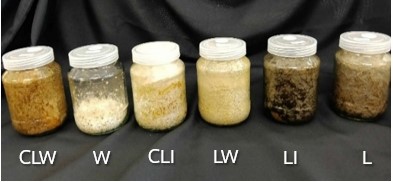
การทดลองได้นำใบอ้อยมาผ่านกระบวนการปรับสภาพเบื้องต้นด้วยการผสมกับวัสดุเพาะเห็ดนางรมเหลือทิ้งในอัตราส่วน 1:1 และเปรียบเทียบกับใบอ้อยที่ไม่ได้รับการปรับสภาพรวมถึงเปรียบเทียบความสามารถในการปรับสภาพของเส้นใยราเหลือทิ้งเปรียบเทียบกับหัวเชื้อบริสุทธิ์ที่เตรียมใหม่ทั้งในสภาวะปราศจากเชื้อและสภาวะที่มีเชื้อธรรมชาติเจือปน วิเคราะห์การเปลี่ยนแปลงขององค์ประกอบลิกโนเซลลูโลสรวมถึงน้ำตาลรีดิวซ์และความต้องการออกซิเจนทางเคมี (COD) ซึ่งเป็นหนึ่งในปัจจัยที่ส่งผลต่อประสิทธิภาพการผลิตแก๊สชีวภาพ รวมทั้งการวิเคราะห์ศักยภาพในการผลิตแก๊สมีเทนโดยอาศัยตะกอนจุลินทรีย์จากโรงงานบำบัดน้ำเสียในระบบไร้ออกซิเจน ผลการทดลองพบว่าการปรับสภาพระยะเวลา 30 วัน ใบอ้อยที่ผสมกับวัสดุเพาะเห็ดนางรมเหลือทิ้งสามารถปลดปล่อยแก๊สชีวภาพสะสมได้ 26.6±5.8 L kg-1 VS สูงกว่าอย่างมีนัยสำคัญทั้งในด้านปริมาณแก๊สมีเทน ความเร็วในการเริ่มต้นกระบวนการหมัก รวมถึงประสิทธิภาพโดยรวมของการเปลี่ยนสารอินทรีย์ให้เป็นแก๊สชีวภาพเมื่อเปรียบเทียบกับใบอ้อยเพียงอย่างเดียวที่ 3.3±3.4 L kg-1 VS นอกจากนี้การใช้วัสดุปลูกเห็ดเหลือทิ้งเพื่อการปรับสภาพวัสดุลิกโนเซลลูโลสสามารถเพิ่มประสิทธิภาพในการผลิตแก๊สมีเทนได้ใกล้เคียงกับการหัวเชื้อบริสุทธิ์ในการปรับสภาพที่ 29.0±5.5 L kg-1 VS อีกทั้งยังเพิ่มประสิทธิภาพในการปรับสภาพได้ดีแม้ว่าจะมีเชื้อจุลินทรีย์อื่นในธรรมชาติอยู่ด้วย ในขณะที่การใช้หัวเชื้อบริสุทธิ์ในสภาวะปนเปื้อนเชื้อธรรมชาติประสิทธิภาพผลิตแก๊สมีเทนลดลงอย่างเห็นได้ชัดที่ 9.2±2.7 L kg-1 VS ภายในระยะเวลาการผลิตมีเทน 25 วัน
ผลการศึกษาระบุถึงศักยภาพของการนำวัสดุเพาะเห็ดนางรมเหลือทิ้งมาใช้เป็นแหล่งจุลินทรีย์และเอนไซม์สำหรับการปรับสภาพวัสดุเหลือทิ้งทางการเกษตร โดยเฉพาะใบอ้อยที่มีปริมาณมากในภาคการเกษตรไทย ไม่เพียงช่วยเพิ่มประสิทธิภาพการผลิตแก๊สชีวภาพ แต่ยังเป็นแนวทางในการจัดการของเสียอย่างครบวงจร ลดภาระสิ่งแวดล้อม และส่งเสริมการใช้ทรัพยากรชีวมวลอย่างคุ้มค่า งานวิจัยนี้จึงมีความสำคัญในการพัฒนาระบบพลังงานทดแทนที่ยั่งยืน และสามารถประยุกต์ใช้ในระดับชุมชนและอุตสาหกรรมเพื่อเพิ่มความมั่นคงทางพลังงานในอนาคต
Article Details

อนุญาตภายใต้เงื่อนไข Creative Commons Attribution-NonCommercial-NoDerivatives 4.0 International License.
สมาคมวิศวกรรมเกษตรแห่งประเทศไทย
Thai Socities of Agricultural Engineering
เอกสารอ้างอิง
ชัยวัฒน์ โพธิ์ทอง, ปาจรีย์ ทองสนิท. 2555. ผลของการเผาอ้อยต่อคุณภาพอากาศและสมบัติของอ้อย. วิศวกรรมสาร มหาวิทยาลัยนเรศวร. 7(1), 8-16.
ณัฐพล เสวตบุตร, ดาวรุ่ง สังข์ทอง, นภวรรณ รัตสุข, อุมารัจน์ สันติสุขเกษม. 2566. ศักยภาพการผลิตก๊าซมีเทนและจลนพลศาสตร์ของการหมักร่วมระหว่าง เศษอาหารและผลิตภัณฑ์เยื่อชีวภาพบรรจุอาหาร. วารสารวิชาการเทคโนโลยีอุตสาหกรรม.
สำนักงานคณะกรรมการอ้อยและน้ำตาล. 2565. ผลกระทบของอ้อยไฟไหม้ต่ออุตสาหกรรมอ้อยและน้ำตาลไทยผลกระทบต่อสภาวะแวดล้อมและผู้ที่เกี่ยวข้อง, แหล่งข้อมูล https://www.kubotasolutions.com/knowledge/sugar_cane/detail/376
Abraham, A., Mathew, A.K., Park, H., Choi, O., Sindhu, R., Parameswaran, B., Pandey, A., Park, J.H., Sang, B.I. 2020. Pretreatment strategies for enhanced biogas production from lignocellulosic biomass. Bioresource Technology. 301, 122725.
Agrawal, R., Verma, A., Singhania, R. R., Varjani, S., Di Dong, C., Kumar Patel, A. 2021. Current understanding of the inhibition factors and their mechanism of action for the lignocellulosic biomass hydrolysis. Bioresource Technology. 332, 125042.
American Public Health Association (APHA), American Water Works Association (AWWA), Water Environment Federation (WEF). 2017. Standard methods for the examination of water and wastewater. (23rd ed.). American Public Health Association.
AOAC International. 2000. Official methods of analysis of AOAC International. (17th ed.). AOAC International.
ASTM International. 2015. ASTM D7582-15: Standard test methods for proximate analysis of coal and coke by macro thermogravimetric analysis. ASTM International.
ASTM International. 2016. ASTM D5373-16: Standard test methods for instrumental determination of carbon, hydrogen, and nitrogen in laboratory samples of coal. ASTM International.
ASTM International. 2018. ASTM D4239-18: Standard test method for sulfur in the analysis sample of coal and coke using high-temperature tube furnace combustion methods. ASTM International.
ASTM International. 2019. ASTM D5865-19: Standard test method for gross calorific value of coal and coke. ASTM International.
Blanchette, R. A. 1991. Delignification by wood-decay fungi. Annual Review of Phytopathology. 29, 381–398.
Bugg, T.D., Ahmad, M., Hardiman, E.M. and Rahmanpour, R. 2011. Pathways for degradation of lignin in bacteria and fungi. Natural product reports. 28(12), 1883-1896.
Dobre, P., Nicolae, F. and Matei, F. 2014. Main factors affecting biogas production: an overview. Romanian Biotechnological Letters. 19(3), 9283-9296.
Durán-Aranguren, D. D., Meléndez-Melo, J. P., Covo-Ospina, M. C., Díaz-Rendón, J., Reyes-Gutiérrez, D. N., Reina, L. C., Durán-Sequeda, D., Sierra, R. 2021. Biological pretreatment of fruit residues using the genus Pleurotus: A review. Bioresource Technology Reports. 16, 100849.
Filer, J., Ding, H. H., Chang, S. 2019. Biochemical methane potential (BMP) assay method for anaerobic digestion research. Water. 11(5), 921.
Fox, M.H., Noike, T. Ohki, T. 2003. Alkaline subcritical-water treatment and alkaline heat treatment for the increase in biodegradability of newsprint waste. Water science and technology. 48(4), 77-84.
Goering, H.K., P.J. Van Soest. 1970. Forage fiber analysis (apparatus, reagents, procedures, and some applications). USDA Agricltural Research Service. Handbook number 379 as modified by D.R. Mertens (1992, Personal Communication).
Gonçalves, C., Gomes, N., Rodriguez-Jasso, R., Teixeira, J., Belo, I. 2010. Adaptation of dinitrosalicylic acid method to microtiter plates. Analytical methods. 2, 2046-2048.
Hubacher, M.H.; Doernberg, S.; Horner, A. 1953. Laxatives: Chemical Structure and Potency of Phthaleins and Hydroxyanthraquinones. Journal of the American Pharmaceutical Association. 42(1), 23-30.
International Organization for Standardization. 2015. ISO 18134-3: Solid biofuels — Determination of moisture content — Oven dry method — Part 3: Moisture in general analysis sample. ISO.
International Organization for Standardization. 2021. ISO 21656: Solid biofuels — Determination of ash content of fuel pellets. ISO.
Isroi, Millati, R., Syamsiah, S., Niklasson, C., Cahyanto, M. N., Lundquist, K., Taherzadeh, M. J. 2011. Biological pretreatment of lignocelluloses with white-rot fungi and its applications: A review. BioResources. 6(4), 5224-5259.
Kannah, Y., Kavitha, S., Sivashanmugam, P. and Kumar, G. 2021. Ultrasonic induced mechanoacoustic effect on delignification of rice straw for cost effective biopretreatment and biomethane recovery. Sustainable Energy & Fuels. 5(6), 1832-1844.
Khademimoshgenani, N., Green, S. A. 2023. Synthesis and Characterization of Humic/Melanin-like Compounds by Oxidative Polymerization of Simple Aromatic Precursors. Water. 15(7), 1400.
Khan, M.U., Usman, M., Ashraf, M.A., Dutta, N., Luo, G., Zhang, S. 2022. A review of recent advancements in pretreatment techniques of lignocellulosic materials for biogas production: Opportunities and Limitations. Chemical Engineering Journal Advances. 100263.
Ma, X., Yan, S., Wang, M. 2025. Spent mushroom substrate: A review on present and future of green applications. Journal of Environmental Management. 373, 123970.
Manmai, N., Unpaprom, Y., Ramaraj, R. 2021. Bioethanol production from sunflower stalk: application of chemical and biological pretreatments by response surface methodology (RSM). Biomass Conversion and Biorefinery. 11(5), 1759-1773.
Meegoda, J. N., Li, B., Patel, K., Wang, L. B. 2018. A Review of the Processes, Parameters, and Optimization of Anaerobic Digestion. Int J Environ Res Public Health. 15(10).
Mertens D. R. 2002. Gravimetric determination of amylase-treated neutral detergent fiber in feeds with refluxing in beakers or crucibles: collaborative study. Journal of AOAC International. 85(6), 1217–1240.
Möller J. 2009. Gravimetric Determination of Acid Detergent Fiber and Lignin in Feed: Interlaboratory Study. Journal of AOAC INTERNATIONAL. 92(1), 74–90.
Mustafa, A. M., Poulsen, T. G., Sheng, K. 2016. Fungal pretreatment of rice straw with Pleurotus ostreatus and Trichoderma reesei to enhance methane production under solid-state anaerobic digestion. Applied Energy. 180, 661–671.
Nie, H., Wang, Z., You, J., Zhu, G., Wang, H., Wang, F. 2020. Comparison of in vitro digestibility and chemical composition among four crop straws treated by Pleurotus ostreatus. Asian-Australasian journal of animal sciences. 33(1), 24–34.
Pandey, V. K., Singh, M. P. 2014. Biodegradation of wheat straw by Pleurotus ostreatus. Cellular and Molecular Biology. 60(5), 29-34.
Pommier, S., Llamas, A.M., Lefebvre, X. 2010. Analysis of the outcome of shredding pretreatment on the anaerobic biodegradability of paper and cardboard materials. Bioresource Technology. 101(2), 463-468.
Rouches, E., Herpoël-Gimbert, I., Steyer, J.P., Carrere, H. 2016. Improvement of anaerobic degradation by white-rot fungi pretreatment of lignocellulosic biomass: a review. Renewable and Sustainable Energy Reviews. 59, 179-198.
Shakir, M. A., Ahmad, M. I. 2024. Bioproduct advances: Insight into failure factors in mycelium composite fabrication. Biofuels, Bioproducts and Biorefining. 18(5), 1739–1754.
Taherzadeh, M.J., Karimi, K. 2008. Pretreatment of lignocellulosic wastes to improve ethanol and biogas production: a review. International journal of molecular sciences. 9(9), 1621-1651.
Teghammar, A., Yngvesson, J., Lundin, M., Taherzadeh, M.J., Horváth, I.S. 2010. Pretreatment of paper tube residuals for improved biogas production. Bioresource technology. 101(4), 1206-1212.
Usman, M., Ren, S., Ji, M., Sompong, O., Qian, Y., Luo, G., Zhang, S. 2020. Characterization and biogas production potentials of aqueous phase produced from hydrothermal carbonization of biomass–Major components and their binary mixtures. Chemical Engineering Journal. 388, 124201.
Usman, M., Shi, Z., Ji, M., Ren, S., Luo, G., Zhang, S. 2021. Microbial insights towards understanding the role of hydrochar in alleviating ammonia inhibition during anaerobic digestion. Chemical Engineering Journal. 419, 129541.
Van Soest, P.J., J.B. Robertson, B.A. Lewis. 1991. Methods for dietary fiber, neutral detergent fiber and non-starch polysaccharides in relation to animal nutrition. J. Dairy Science. 74, 3583-3597.
Wiesnerová, L., Hřebečková, T., Jablonský, I., Koudela, M. 2023. Effect of different water contents in the substrate on cultivation of Pleurotus ostreatus Jacq. P. Kumm. Folia Horticulturae. 35(1), 25–31.
Zhao, J., Ge, X., Vasco-Correa, J., Li, Y. 2014. Fungal pretreatment of yard trimmings for enhancement of methane yield from solid-state anaerobic digestion. Bioresource Technology. 156, 176–181.
