การพัฒนาระบบอินเทอร์เน็ตของสรรพสิ่ง (IoT) สำหรับติดตามและตรวจวัดพฤติกรรมการคายก๊าซคาร์บอนได ออกไซด์ (CO2) ของเมล็ดกาแฟคั่ว
Article Sidebar
Main Article Content
บทคัดย่อ
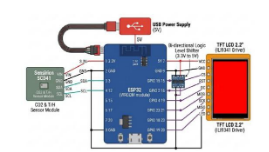
งานวิจัยนี้พัฒนาระบบอินเทอร์เน็ตของสรรพสิ่ง (IoT) เพื่อติดตามพฤติกรรมการคายก๊าซคาร์บอนไดออกไซด์ (CO2) ของเมล็ดกาแฟอาราบิกาคั่ว และศึกษาความสัมพันธ์ระหว่างปริมาณก๊าซกับคุณภาพทางเคมี โดยติดตั้งเซนเซอร์ SCD41 ร่วมกับบอร์ด ESP32 เพื่อตรวจวัดก๊าซในภาชนะปิดสนิทตลอด 25 วัน จากนั้นทำการสกัดน้ำกาแฟตามมาตรฐานของสมาคมกาแฟพิเศษ (Specialty Coffee Association, SCA) ในวันที่ 1, 5, 9, 13, 17, 21 และ 25 จากนั้นนำไปวัดค่าของแข็งที่ละลายน้ำ (TSS), ปริมาณกรด (TA), ค่าการนำไฟฟ้า (EC) และค่า pH รวมทั้งประเมินคุณภาพทางประสาทสัมผัส จากการศึกษาพบว่าเมล็ดกาแฟคั่วมีการคายก๊าซ CO2 ออกมามากที่สุดในช่วง 2-3 วันแรก ซึ่งก๊าซเหล่านี้เข้าไปขัดขวางการซึมผ่านของน้ำ ทำให้การสกัดกาแฟได้ผลไม่ดี เมื่อเวลาผ่านไปจนถึงวันที่ 17-25 ปริมาณก๊าซเริ่มลดลงและเข้าสู่ภาวะสมดุล ทำให้สกัดกาแฟได้ดีขึ้นและมีค่าทางเคมีที่สูงขึ้น ซึ่งสอดคล้องกับผลการทดสอบทางประสาทสัมผัส พบว่ากาแฟในช่วงเวลานี้มีคะแนนรวมสูง โดยเฉพาะในวันที่ 21 มีคะแนนสูงที่สุด จากผลการสรุปได้ว่า ระบบ IoT ที่พัฒนาขึ้นสามารถใช้ติดตามการคายก๊าซ และระบุได้ว่าช่วงเวลาที่เหมาะสมที่สุดเพื่อให้ได้กาแฟคุณภาพดีคือช่วง 17-25 วันหลังคั่ว
Article Details

อนุญาตภายใต้เงื่อนไข Creative Commons Attribution-NonCommercial-ShareAlike 4.0 International License.
สมาคมวิศวกรรมเกษตรแห่งประเทศไทย
Thai Socities of Agricultural Engineering
เอกสารอ้างอิง
Asiah, N., Aqil, M., Dwiranti, S., David, W., 2019. Asia Pacific Journal of Sustainable Agriculture Food and Energy (APJSAFE) Sensory and Chemical Changes of Cold and Hot Brew Arabica Coffee at Various Resting Time.
Cardelli, C., Labuza, T.P., 2001. Application of Weibull Hazard Analysis to the Determination of the Shelf Life of Roasted and Ground Coffee. LWT 34, 273–278. https://doi.org/10.1006/fstl.2000.0732
Da, C., Araújo, S., Vimercati, W.C., Macedo, L.L., Ferreira, A., Luiz, &, Prezotti, C., José, L., Teixeira, Q., Sérgio, &, Saraiva, H., 2020. Predicting the Electric Conductivity and Potassium Leaching of Coffee by NIR Spectroscopy Technique. https://doi.org/10.1007/s12161-020-01843-y/Published
llly, A., Viani, R., 2005. Espresso Coffee: The Science of Quality , 2nd ed. ed. Elsevier Academic Press, USA.
Rao, N.Z., Fuller, M., 2018. Acidity and Antioxidant Activity of Cold Brew Coffee. Sci. Rep. 8. https://doi.org/10.1038/s41598-018-34392-w
Smrke, S., Wellinger, M., Suzuki, T., Balsiger, F., Opitz, S.E.W., Yeretzian, C., 2018. Time-Resolved Gravimetric Method to Assess Degassing of Roasted Coffee. J. Agric. Food Chem. 66, 5293–5300. https://doi.org/10.1021/acs.jafc.7b03310
Tolessa, K., Rademaker, M., De Baets, B., Boeckx, P., 2016. Prediction of specialty coffee cup quality based on near infrared spectra of green coffee beans. Talanta 150, 367–374. https://doi.org/10.1016/j.talanta.2015.12.039
Vega, A., Reyes, S.M., Troestch, J., 2025. Physicochemical Parameters and Multivariate Analysis to Predict the Sensory Quality in Specialty Coffee from Panama. ACS Omega 10, 13251–13259. https://doi.org/10.1021/acsomega.4c10914
Wang, X., Lim, L.T., 2014. Effect of roasting conditions on carbon dioxide degassing behavior in coffee. Food Research International 61, 144–151. https://doi.org/10.1016/j.foodres.2014.01.027
Williams, S.D., de Andrade, D., Liu, L., 2023. Coffee is more than flavor, the creation of a coffee character wheel. J. Sens. Stud. 38. https://doi.org/10.1111/joss.12886
