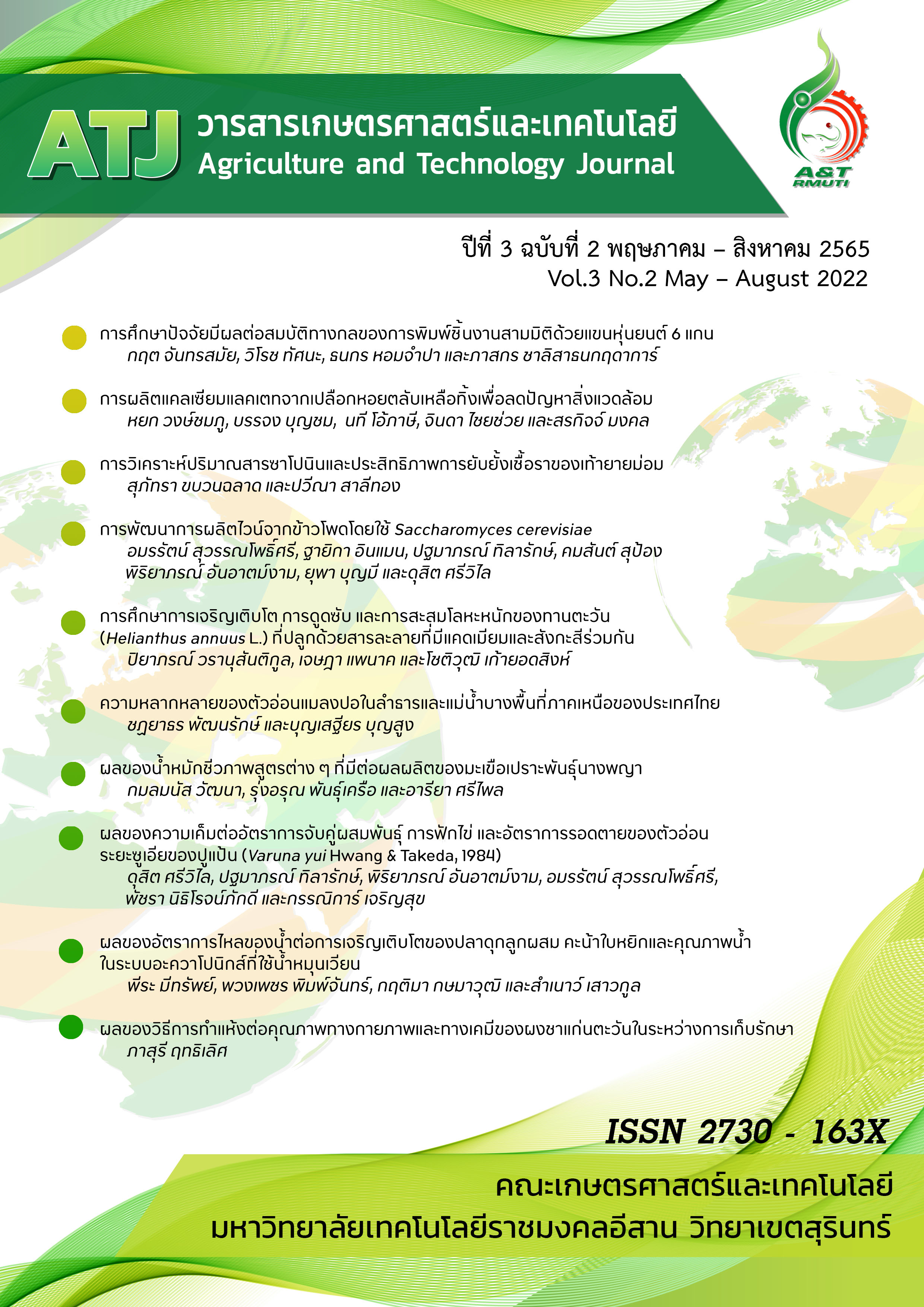
The effects of various fermented bio-extract on yield of Thai striped eggplant (Solanum melongena L.) variety Nang Pha Ya
The effects of various fermented bio-extract on yield of Thai striped eggplant (Solanum melongena L.) variety Nang Pha Ya
Keywords:
Fermented bio-extracts, Thai striped eggplant, YieldAbstract
The purpose of this research was to study the effects of various fermented bio-extract on yield of Thai striped eggplant variety, Nang Pha Ya. Experimental design was completely randomized design (CRD) with 5 treatments and 10 replications. The treatments were: 1) control (no fermented bio-extract), 2) fermented ted bio-extract from pig placenta, 3) fermented bio-extract from milk, 4) fermented bio-extract from papaya, and 5) commercial formula bio-extract. The results demonstrated that the use of various fermented bio-extracts did not statistically show significant differences in the yields of Thai striped eggplant on control treatment, but on commercial formula bio-extract treatment which resulted in high yield and yield quality. However, it was found that the application of fermented bio-extract from milk resulted in high fruit weight and total weight per plant, similar to the commercial formula bio-extract, and can also reduce the amount of rotten yield. In terms of income and cost analysis of Nang Pha ya eggplant production in 1 rai, the process with the lowest cost and the best return above variable cost was on the use of fermented bio-extract from milk. The milk bio-extract can therefore be an alternative to bio-fertilizers from commercial formulas and could reduce the cost of chemical fertilizers being used regularly by the farmers which can then lead to consumers receiving more nutritional value without chemical additives from Thai eggplants.
References
กรมพัฒนาที่ดิน. (2565). เอกสารเพื่อการถ่ายทอดเทคโนโลยี ชุดความรู้และเทคโนโลยีการพัฒนาที่ดิน: มีอะไรในปุ๋ยอินทรีย์น้ำ. ค้นเมื่อ 27 มิถุนายน 2565. https://shorturl.asia/345Cv
จานุลักษณ์ ขนบดี. (2541). การผลิตเมล็ดพันธุ์ผัก. สำนักพิมพ์โอเดียนสโตร์: กรุงเทพฯ.
ฌานิกา แซ่แง่ ชูกลิ่น, อเนก สาวะอินทร์ และสุดนัย เคลือหลี. (2565). ผลของน้ำหมักชีวภาพจากเศษปลาเหลือทิ้งด้วยเชื้อ Lactobacillus casei ต่อการเจริญเติบโตและผลผลิตของผักกวางตุ้งฮ่องเต้. วารสารวิจัย มหาวิทยาลัยเทคโนโลยีราชมงคลศรีวิชัย. 14(1): 253-265.
ณัฏฐ์วรินท์ ธุวะคำ และวัชรี ฟั่นเฟือนหา. (2562). ศึกษาประสิทธิภาพของน้ำหมักชีวภาพที่ได้จากเมล็ดลําไยและเปลือกลําไยเปลือกกล้วยน้ำว้า และเปลือกแตงโมต่อการเจริญเติบโตของผักสลัดกรีนโอ๊ค. วารสารวิทยาศาสตร์ มหาวิทยาลัยขอนแก่น. 44(2): 266-272.
พรพิมล เรืองศิริ. (2544). สวนสวยกินได้. สำนักพิมพ์ซีเอ็ดยูเคชัน: กรุงเทพฯ.
ภารดี แซ่อึ้ง, อรุณี อุทัยพิบูลย์ และสิริวรรณ สมิทธิอาภรณ์. (2563). ผลของน้ำหมักชีวภาพต่อการเจริญเติบโตและผลผลิตของถั่วเหลืองฝักสด (Glycine max (L.) Merill). วารสารวิจัยและพัฒนา วไลยอลงกรณ์ ในพระบรมราชูปถัมภ์. 15(2): 59-66.
ยงยุทธ โอสถสภา. (2552). ธาตุอาหารพืช. สำนักพิมพ์มหาวิทยาลัยเกษตรศาสตร์: กรุงเทพฯ.
รุจิรา สัมมะสุต. (2550). มะเขือ. วารสารเคหการเกษตร. 7: 195-196.
สุจิตรา เรืองเดชาวิวัฒน์, พรวิภา สะนะวงศ์ และอรพรรณ เถื่อนรอด. (2565). ผลของน้ำหมักชีวภาพต่อการเจริญเติบโตและผลผลิตของข้าวพันธุ์ กข 41. วารสารวิชาการวิทยาศาสตร์และเทคโนโลยี มหาวิทยาลัยราชภัฏนครสวรรค์. 14(19): 1-11.
สำนักวิทยาศาสตร์เพื่อการพัฒนาที่ดิน. (2553). คู่มือการปฏิบัติงานกระบวนการวิเคราะห์ตรวจสอบดินทางเคมี. กรมพัฒนาที่ดิน: กรุงเทพฯ.
อธิศพัฒน์ วรรณสุทธิ์. (2558). ปราชญ์เกษตรผลิต NGV ด้วยเศษอาหารและจุลินทรีย์หน่อกล้วย. ค้นเมื่อ 27 มิถุนายน 2565. https://www.rakbankerd.com/agriculture/rbk-view.php?id=176
อาณัฐ ตันโช. (2549). เกษตรธรรมชาติประยุกต์: หลักการ แนวคิด เทคนิคปฏิบัติในประเทศไทย. พิมพ์ครั้งที่ 1. สำนักงานพัฒนาวิทยาศาสตร์และเทคโนโลยีแห่งชาติ: กรุงเทพฯ.
Aslam M., Travis R.L. and Rains D.W. (2001). Enhancement of nitrate reductase activity and metabolic nitrate concentration by methionine sulfoximine in barley roots. Plant Sciences. 161(1): 133-142.
Ghaly A.E., Ramakrishnan V.V., Brooks M.S., Budge S.M. and Dave D. (2013). Fish processing wastes as a potential source of proteins, amino acids, and oils: a critical review. Journal of Microbial & Biochemical Technology. 5(4): 107-129.
Shi S., Li J., Guan W. and Blersch, D. (2018). Nutrient value of fish manure waste on lactic acid fermentation by Lactobacillus pentosus. The Royal Society of Chemistry. 8: 31267-31274.
Downloads
Published
Versions
- 2024-02-19 (2)
- 2022-08-30 (1)
How to Cite
Issue
Section
License
Copyright (c) 2022 Agriculture and Technology Journal

This work is licensed under a Creative Commons Attribution-NonCommercial-NoDerivatives 4.0 International License.
เนื้อหาและข้อมูลในบทความที่ลงตีพิมพ์ในวารสารทดสอบระบบ ThaiJo2 ถือเป็นข้อคิดเห็นและความรับผิดชอบของผู้เขียนบทความโดยตรงซึ่งกองบรรณาธิการวารสาร ไม่จำเป็นต้องเห็นด้วย หรือร่วมรับผิดชอบใดๆ
บทความ ข้อมูล เนื่อหา รูปภาพ ฯลฯ ที่ได้รับการดีพิมพ์ในวารสารทดสอบระบบ ThaiJo2 ถือเป็นลิขสิทธิ์ของวารสารทดสอบระบบ ThaiJo2 หากบุคคลหรือหน่วยงานใดต้องการนำทั้งหมดหรือส่วนหนึ่งส่วนใดไปเผยแพร่หรือเพื่อกระทำการใดๆ จะต้องได้รับอนุญาตเป็นลายลักอักษรณ์จากวารสารทดสอบระบบ ThaiJo2 ก่อนเท่านั้น