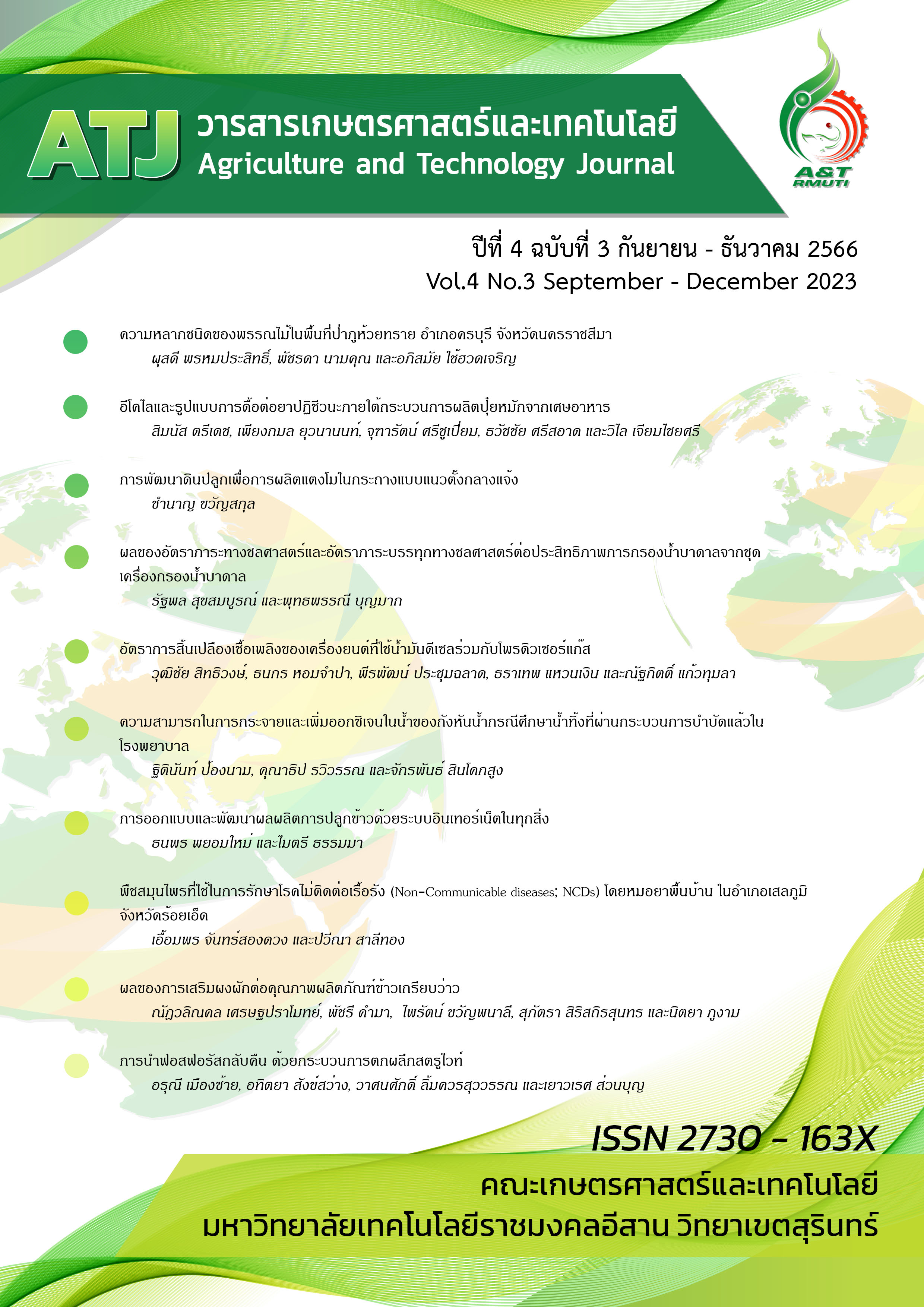
Medicinal plants for Non-Communicable diseases (NCDs) by Traditional Healers in Selaphume district, Roi Et Province
Keywords:
Ethnobotany, Medicinal plants, NCDs, Traditional healers, Roi Et ProvinceAbstract
The purpose of this study was to examine the species diversity of medicinal plants used by traditional healers in Selaphume District, Roi Et Province, for Non-Communicable Diseases (NCDs). The study was conducted from October 2021 to August 2022, using semi-structured interviews. Four traditional healers were selected through purposive sampling and the snowball technique. A total of 34 medicinal plant species belonging to 31 genera and 26 families were identified. The family Fabaceae had the highest number of medicinal plant species with 4 (12%), followed by Acanthaceae, Moraceae, Rhamnaceae, Rutaceae and Similaceae, each with 2 species (6%). Decoction was the most common method of preparation, accounting for 28 species (82%), followed by consuming them fresh, with 6 species (17%). Trees were the most common habit for medicinal plants used for NCDs, with 13 species (39%), followed by shrubs, with 9 species (27%). The stem was the most frequently used plant part for preparation, with 13 species (39%), followed by leaves, with 9 species (26%). The highest Informant Consensus Factor (ICF) value was found for Diabetes (ICF=0.09). The most commonly reported medicinal plants used (UV=0.75) were Morinda citrifolia L. Lecomte and Passiflora foetida L. which were used for Diabetes, High blood pressure, and Heart disease.
References
กศิมา สง่ารัตนพิมาน และอรพิน ภัทรกรสกุล. (2564). การประเมินผลการพัฒนาระบบการจัดการโรคไม่ติดต่อเรื้อรังเครือข่ายโรงพยาบาลสมเด็จพระยุพราชสระแก้ว. วารสารวิทยาลัยพยาบาลพระจอมเกล้า จังหวัดเพชรบุรี. 5(1): 42-57.
ฐานข้อมูลพืชสมุนไพร คณะเภสัชศาสตร์ มหาวิทยาลัยอุบลราชธานี. (2553). ค้นเมื่อ 20 พฤศจิกายน 2565. http://www.phargarden.com/main.php.
มัทนา เครื่องเงิน และแดนชัย เครื่องเงิน. (2557). การใช้สมุนไพรรักษาโรคเบาหวาน: สักทอง. วารสารวิทยาศาสตร์และเทคโนโลยี. 1(1): 1-9.
สวนพฤกษศาสตร์ป่าไม้ สำนักวิชาการป่าไม้. (2557). ชื่อพรรณไม้แห่งประเทศไทย เต็ม สมิตินันทน์ ฉบับแก้ไขเพิ่มเติม พ.ศ. 2541. กรมป่าไม้: กรุงเทพฯ.
นวพรรษ ผลดี และวรชาติ โตแก้ว. (2560). ภูมิปัญญาการใช้สมุนไพรในการดูแลสุขภาพเบื้องต้นในชุมชนพื้นที่ป่าชุมชนบ้านหินฮาว อำเภอบ้านฝาง จังหวัดขอนแก่น. รายงานการวิจัย. สาขาชีววิทยา คณะวิทยาศาสตร์ มหาวิทยาลัยราชภัฏมหาสารคาม.
บุญธรรม กิจปรีดาบริสุทธิ์. (2540). ระเบียบวิธีการวิจัยทางสังคมศาสตร์.พิมพ์ครั้งที่ 7. โรงพิมพ์เจริญผล: กรุงเทพมหานคร.
ปาจรีย์ อินทะชุบ. (2561). วิจัยภูมิปัญญาท้องถิ่นด้านความหลากหลายทางชีวภาพของพืชในชุมชน. รายงานการวิจัย. กรมวิชาการเกษตร. กรุงเทพฯ.
พงศธร พอกเพิ่มดี. (2563). แผนยุทธศาสตร์ชาติระยะ 20 ปี (ด้านสาธารณสุข) พ.ศ. 2561-2580. วารสารวิชาการสาธารณสุข. 29(1): 173-186.
พัฒ สุจำนงค์. (2524). การพัฒนาชนบทแบบผสมผสานสำหรับประเทศไทย. ไทยวัฒนาพานิช: กรุงเทพฯ.
สำนักโรคไม่ติดต่อ กรมควบคุมโรค กระทรวงสาธารณสุข. (2556). แนวทางการประเมินโอกาส เสี่ยงต่อการเกิดโรคหัวใจและหลอดเลือด. สำนักงานกิจการโรงพิมพ์องค์การสงเคราะห์ทหารผ่านศึก: กรุงเทพฯ.
สำนักโรคไม่ติดต่อ กรมควบคุมโรค กระทรวงสาธารณสุข. (2560). แผนยุทธศาสตร์การป้องกันและควบคุมโรคไม่ติดต่อระดับชาติ 5 ปี (พ.ศ. 2560-2564). บริษัท อิโมชั่น อาร์ต จำกัด: กรุงเทพฯ.
ธีระ วรธนารัตน์. (2561). รู้เท่าทัน-ปรับพฤติกรรม-เสริมสร้างสุขภาวะ ป้องกันกลุ่มโรคไม่ติดต่อ NCDs. ค้นเมื่อ 10 ธันวาคม 2565. https://www.thairath.co.th/content/1374821.
สุวิมล ทองแกมแก้ว, พิทักษ์ อยู่มี และอนุสรา สีหนาท. (2560). โครงการการสำรวจพืชสมุนไพรและการใช้ประโยชน์ ในพื้นที่ตำบลบ้านกร่าง อำเภอเมือง จังหวัดพิษณุโลก. รายงานการวิจัย. คณะวิทยาศาสตร์และเทคโนโลยี มหาวิทยาลัยราชภัฎพิบูลสงคราม
สุนทรี จีนธรรม, ปัณณ์รภัส ถกลภักดี และจีรภัทร์ อัฐฐิศลิป์เวท. (2558). การศึกษาความหลากหลายของพรรณพืชสมุนไพรและภูมิปัญญาท้องถิ่นโดยใช้กระบวนการ มีส่วนร่วมของชุมชนบ้านดงบัง ตําบลดงขี้เหล็ก อําเภอเมือง จังหวัดปราจีนบุรี. วารสารวิจัยสหวิทยาการไทย. 10(3): 1-8.
ศรัญญา ก่อพันธ์, ธวัชชัย ธานี และสมบัติ อัปมระกา. (2018). ความหลากชนิดและการใช้ประโยชน์ของพืชสมุนไพรของกลุ่มชาติพันธุ์กูยในพื้นที่ป่าชุมชนโคกคูขาด-บ้านคูสี่แจ อำเภอไพรบึง จังหวัดศรีสะเกษ. วารสารวิทยาศาสตร์และเทคโนโลยี มหาวิทยาลัยมหาสารคาม. 3(3): 247-262.
อาคม บุญเลิศ, อมร เปรมกมล และปัตพงษ์ เกษสมบูรณ์. (2561). ความชุกและปัจจัยที่สัมพันธ์กับกลุ่มอาการอีสานรวมมิตรในผู้ป่วยเบาหวานและความดันโลหิตสูงในชุมชนของเขตสุขภาพที่ 7. ศรีนครินทร์เวชสาร. 33(2): 122-128.
เอื้อมพร จันทร์สองดวง, ณัฐพล ดีประวี, ธรรณธร ผิวทอง และประภาสิริ ชื่นตา. (2565). พืชสมุนไพรของชุมชนไทลาวบ้านทรายมูล และชุมชนภูไทบ้านนากอก ในจังหวัดยโสธร. วารสารมหาวิทยาลัยราชภัฏร้อยเอ็ด: วิทยาศาสตร์และเทคโนโลยี. 3(1): 1-25.
Junsongduang A., Kasemwan W., Lumjoomjung S., Sabprachai W., Tanming W. and Balslev H. (2020). Ethnomedicinal knowledge of traditional healers in Roi Et. Thailand. Plants. 9(9): 1177.
Junsongduang A., Balslev H., Inta A., Jampeethong A. and Wangpakapattanawong P. (2014). Karen and Lawa medicinal plant use: Uniformity or ethnic divergence?. Journal of Ethnopharmacol. 151: 517–527.
Maneenoon K., Khuniad C., Teanuan Y., Saedan N., Prom-In S., Rukleng N., Kongpool W., Pinsook P. and Wongwiwat W. (2015). Ethnomedicinal plants used by traditional healers in Phatthalung Province, Peninsular Thailand. Journal of Ethnobiology and Ethnomedicine. 11(43): 1-20.
Panyaphu K., On T.V., Sirisa-arda P., Srisa-ngac P., ChansaKaowa S. and Nathakarnkitkul S. (2011). Medicinal plants of the Mien (Yao) in northern Thailand and their potential value in the primary healthcare of postpartum women. Journal of Ethnopharmacol. 135: 226–237.
Phumthum M., Srithi K., Inta A., Junsongduang A., Tangjitman K., Pongamornkul W., Trisonthi C. and Balslev H. (2018). Ethnomedicinal plant diversity in Thailand. Journal of Ethnopharmacol. 214: 90–98.
Phillips O., Gentry A.H., Reynel C., Wilkin P. and Galvez-Durand B.C. (1994). Quantitative ethnobotany and amazonian conservation. Conservation Biology. 8(1): 225-248.
Smitinand T., Santisuk T. and Larsen K. (2005). Flora of Thailand. In Smitinand T., Santisuk T. and Larsen K., Editors. Diamond Printing: Bangkok.
Trotter R.T. and Logan M.H. (1986). Informant consensus: a new approach for identifying potentially effective medicinal plants. Bedfore Hills: New York.
World Health Organization. (2020). Noncommunicable diseases: Progress monitor 2020. Accessed 12 Jan. 2023. https://www.who.int/publications/i/item/ncd-progress-monitor-2020
Downloads
Published
Versions
- 2024-02-20 (2)
- 2023-12-29 (1)
How to Cite
Issue
Section
License
Copyright (c) 2023 Agriculture and Technology Journal

This work is licensed under a Creative Commons Attribution-NonCommercial-NoDerivatives 4.0 International License.
เนื้อหาและข้อมูลในบทความที่ลงตีพิมพ์ในวารสารทดสอบระบบ ThaiJo2 ถือเป็นข้อคิดเห็นและความรับผิดชอบของผู้เขียนบทความโดยตรงซึ่งกองบรรณาธิการวารสาร ไม่จำเป็นต้องเห็นด้วย หรือร่วมรับผิดชอบใดๆ
บทความ ข้อมูล เนื่อหา รูปภาพ ฯลฯ ที่ได้รับการดีพิมพ์ในวารสารทดสอบระบบ ThaiJo2 ถือเป็นลิขสิทธิ์ของวารสารทดสอบระบบ ThaiJo2 หากบุคคลหรือหน่วยงานใดต้องการนำทั้งหมดหรือส่วนหนึ่งส่วนใดไปเผยแพร่หรือเพื่อกระทำการใดๆ จะต้องได้รับอนุญาตเป็นลายลักอักษรณ์จากวารสารทดสอบระบบ ThaiJo2 ก่อนเท่านั้น