
Brand Personality: An Application for Country Brand Personality
Keywords:
Country Brand Personality, Country Brand, Brand PersonalityAbstract
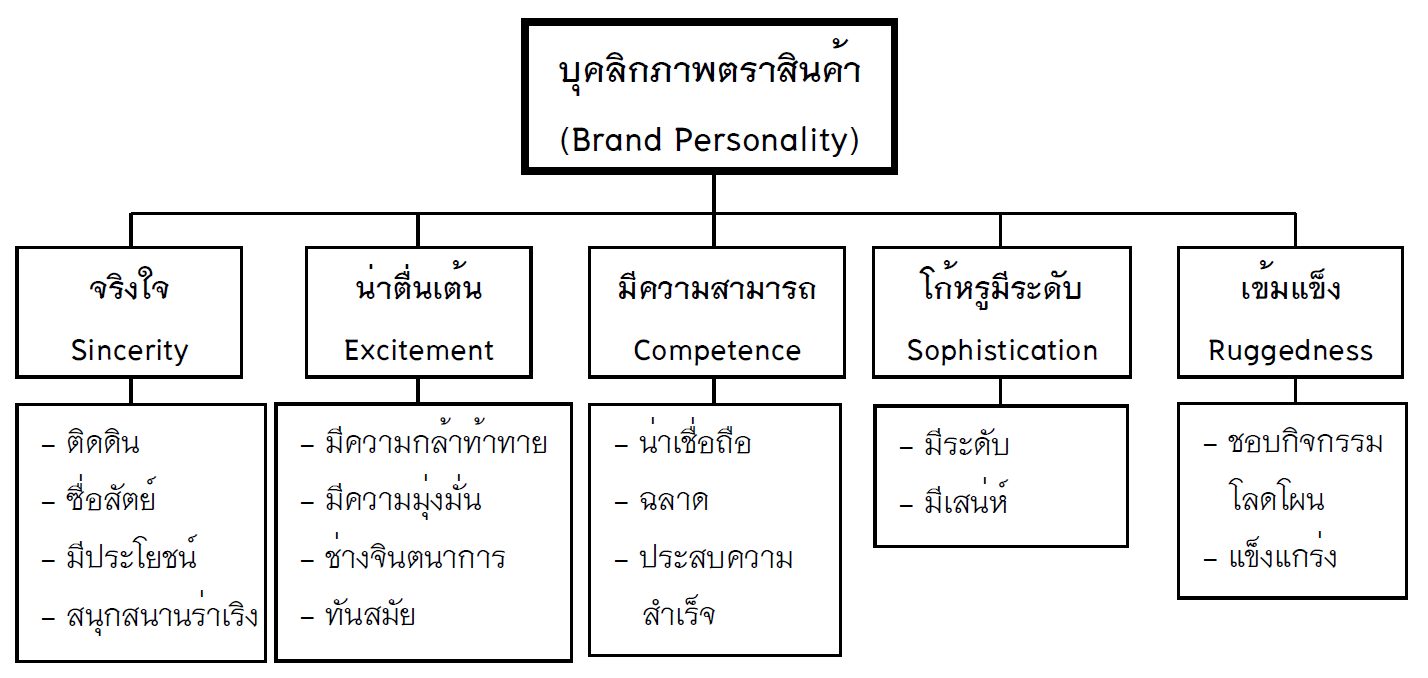
This conceptual article discusses the roles of brand personality concept on country brand building and marketing. The concept of brand personality has been used to study personality of several entities in addition to those of typical brands and products including academic institutions, service, and tourist attractions. Therefore, as a country can be viewed as a brand and there is a need to market a country, the brand personality concept, when associated with a country, would be an interesting application of this concept. The main content of this article starts with the discussion of brand concept and then presents the brand personality concept in terms of brand personality definition, brand personality measurement, and roles of brand personality and its applications. Finally, the article discusses the country personality concept in terms of the sources of country personality, definition of country personality, and country personality measurement. The study of country brand personality concept will reflect the social, economic, political, life quality, and tourism aspects of the country as they may be associated with country personality in the perception of people, investors, or tourists from other countries. This article will be useful for marketers and government in marketing their country.
Downloads
References
กุลนันทน์ ศรีพงษ์พันธุ์, และก่อพงษ์ พลโยราช. (2557a). บทบาทของผลิตภัณฑ์ที่เน้นประโยชน์ใช้สอยและผลิตภัณฑ์ที่เน้นความเพลิดเพลินทางอารมณ์ในงานวิจัย. วารสารบริหารธุรกิจ, 37(141), 34-47.
กุลนันทน์ ศรีพงษ์พันธุ์, และก่อพงษ์ พลโยราช. (2557b). อิทธิพลภาพลักษณ์ของประเทศแหล่งกำเนิดที่มีต่อการประเมินผลิตภัณฑ์และความตั้งใจซื้อของผู้บริโภค. วารสารนักบริหาร, 34(2), 66-79.
กุลนันทน์ ศรีพงษ์พันธุ์, และก่อพงษ์ พลโยราช. (2561). มาตรวัดบุคลิกภาพประเทศ. จุฬาลงกรณ์ธุรกิจปริทัศน์, 40(155), 1-29.
เดอะเบสท์. (2564). ข้อมูลประเทศออสเตรเลีย. สืบค้นเมื่อ 13 ตุลาคม 2564, จาก https://thebest-edu.com/study-abroad/australia/australia-information/
ศรัณย์ อมาตยกุล, ก่อพงษ์ พลโยราช, และวาลี ปรีชาปัญญากุล. (2560). การใช้แนวคิดการบริโภค เชิงสัญญะร่วมกับแนวคิดบุคลิกภาพตราสินค้า. วารสารบริหารธุรกิจและการบัญชี มหาวิทยาลัยขอนแก่น, 1(1), 54-65.
Aaker, J. L. (1997). Dimension of Brand Personality. Journal of Marketing Research, 34(3), 347-356.
Boudreaux, C. A., & Palmer, S. E. (2007). A Charming little cabernet: Effects of wine label design on purchase intent and brand personality. International Journal of Wine Business Research, 19(3), 170-186.
d'Astous, A., & Boujbel, L. (2007). Positioning countries on personality dimension: Scale development and implications for country marketing. Journal of Business Research, 60(3), 231-239.
d'Astous, A., & Li, D. (2009). Perceptions of countries based on personality traits; A study in China. Asia Paciific Journal of Marketing and Logistics, 21(4), 475-488.
Ekinci, Y., & Hosany, S. (2006). Destination personality: An application of brand personality to
tourism destinations. Journal of Travel Research, 45(2), 127-139.
Freling, T. H., & Forbes, L. P. (2005). An empirical analysis of the brand personality effect. Journal of Product & Brand Management, 14(7), 404-413.
Harris, E. G., & Fleming, D. E. (2005). Assessing the human element in service personality formation: Personality congruency and the five factor model. Journal of Services Marketing, 19(4), 187-198.
Hosany, S., Ekinci, Y., & Uysal, M. (2006). Destination image and destination personality: An application of branding theories to tourism place. Journal of Business Research, 59(5), 638-642.
Kim, C. K., Han, D., & Park, S. (2001). The effect of brand personality and brand identification on brand loyalty: Applying the theory of social identification. Japanese Psychological Research, 43(4), 195-206.
Kotler, P., & Armstrong, G. (2014). Principle of Marketing. New Jersey: Pearson Education.
Matthiesen, I., & Phau, I. (2005). The 'HUGO BOSS' connection: Achieving global brand consistency across countries. Brand Management, 12(5), 325-338.
Polyorat, K. (2011). The influence of brand personality dimensions on brand identification and word-of-mouth: The case study of university brand in Thailand. Asian Journal of Business Research, 1(1), 46-61.
Siguaw, J. A., Mattila, A., & Austin, J. R. (1999). The brand personality scale: An application for restaurants. Hotel and Restaurant Administration Quarterly, 40(3), 48-55.
Downloads
Published
How to Cite
Issue
Section
License
Copyright (c) 2022 Chandrakasem Rajabhat University

This work is licensed under a Creative Commons Attribution-NonCommercial-NoDerivatives 4.0 International License.
บทความที่ได้รับการตีพิมพ์เป็นลิขสิทธิ์ของมหาวิทยาลัยราชภัฏจันทรเกษม
ข้อความที่ปรากฏในบทความแต่ละเรื่องในวารสารวิชาการเล่มนี้เป็นความคิดเห็นส่วนตัวของผู้เขียนแต่ละท่านไม่เกี่ยวข้องกับมหาวิทยาลัยราชภัฎจันทรเกษม และคณาจารย์ท่านอื่นๆในมหาวิทยาลัยฯ แต่อย่างใด ความรับผิดชอบองค์ประกอบทั้งหมดของบทความแต่ละเรื่องเป็นของผู้เขียนแต่ละท่าน หากมีความผิดพลาดใดๆ ผู้เขียนแต่ละท่านจะรับผิดชอบบทความของตนเองแต่ผู้เดียว