
The Development of Interactive Computer Assisted Instruction Lessons for The Achievement of English Grammar for Mathayomsuksa 5 Students
Keywords:
The Interactive Computer Assisted Instruction, Learning Achievement, Efficiency of Computer-assisted InstructionAbstract
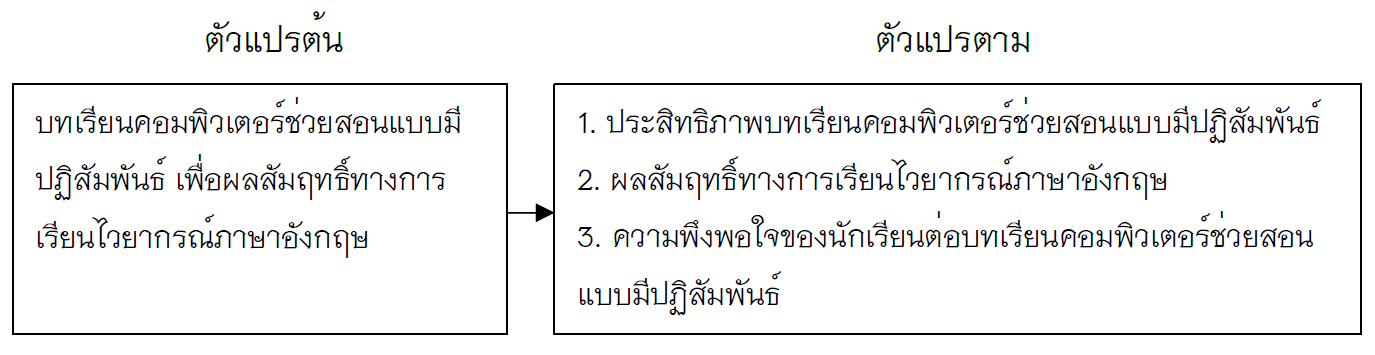
This research is an academic service project for schools in the service area of Lampang Rajabhat University. The objectives of this research were: 1) to development of Interactive computer assisted instruction lessons for the achievement of English grammar for Mathayomsuksa 5 students to be effective according to the 80/80 criteria; 2) to compare the learning achievement of English grammar by using the average score of 75 percent; and 3) to study the Mathayomsuksa 5 students’ studying satisfaction about interactive computer assisted instruction lesson. The sample was selected by mean of cluster random sampling. The instruments used in this research were: 1) interactive computer-assisted instruction lessons on English grammar; 2) The test of matching learning and filling words in the blanks with alpha coefficient equivalent to 0.75, discrimination value between 0.27-0.80, and difficulty value between 0.33-0.80; and 3) the 5-point rating scale satisfaction test of athayomsuksa 5 students learning by Interactive computer assisted instruction lessons. The statistics used in data analysis were percentage, mean and standard deviation. The statistics used in hypothesis test was One Sample Group t-test
The results of the study were as follows. 1) The Interactive Computer Assisted Instruction on English Grammar for Mathayomsuksa 5 students was 80.16/81.42 which met the set criterion of 80/80. 2) The achievement of students learning by Interactive Computer Assisted Instruction on English Grammar was significantly were 78.85 higher than 75% criterion at the 0.05 level of statistical significance. 3) The level of students’ satisfaction toward learning by Interactive Computer Assisted Instruction on English Grammar was at the high level (M = 4.16).
Downloads
References
กระทรวงศึกษาธิการ. (2557). นโยบายสำนักงานคณะกรรมการ การศึกษาขั้นพื้นฐานปีงบประมาณ 2558 สำนักงานคณะกรรมการการศึกษาขั้นพื้นฐาน. กรุงเทพฯ: โรงพิมพ์ชุมนุมสหกรณ์การเกษตรแห่งประเทศไทย.
กระทรวงศึกษาธิการ. (2559). การบริหารจัดการเวลาเรียนภาษาอังกฤษ ชั้นประถมศึกษาปีที่ 1-3 ในสถานศึกษาขั้นพื้นฐาน. กรุงเทพฯ: โรงพิมพ์ชุมนุมสหกรณ์การเกษตรแห่งประเทศไทย.
ณัฐวราพร เปลี่ยนปราณ และสุทัศน์ นาคจั่น. (2558). การเรียนรู้คำศัพท์ภาษาอังกฤษโดยใช้เกมประกอบการสอนของ นักเรียนชั้นประถมศึกษาปีที่ 6 โรงเรียนวัดทุ่งน้อย อำเภอกุยบุรี จังหวัดประจวบคีรีขันธ์. Veridian E-Journal Silpakorn University, 8(2), 1672-1684.
นิวาตี นิวาตโสภณ. (2555). การพัฒนาบทเรียนคอมพิวเตอร์ช่วยสอน โดยการจัดการเรียนรู้แบบโครงงานเรื่องข้อมูล และเทคโนโลยีสารสนเทศของนักเรียนชั้นประถมศึกษาปีที่ 5 (วิทยานิพนธ์ปริญญามหาบัณฑิต). มหาวิทยาลัยศิลปากร, นครปฐม.
นพพร สโรบล. (2558). ภาษาอังกฤษกับการก้าวสู่ประชาคมอาเซียน. กรุงเทพฯ: สถาบันภาษา มหาวิทยาลัยธรรมศาสตร์.
ปานวาส ประสาท. (2558).การพัฒนาบทเรียนออนไลน์ “ภาษาอังกฤษเพื่อความพร้อมในการทำงาน” ด้วยเอ็ดโมดูสำหรับนักศึกษาปริญญาตรี คณะศิลปศาสตร์ มหาวิทยาลัยเทคโนโลยีราชมงคลสุวรรณภูมิ ศูนย์สุพรรณบุรี (วิทยานิพนธ์ปริญญามหาบัณฑิต). มหาวิทยาลัยเทคโนโลยีราชมงคลสุวรรณภูมิ ศูนย์สุพรรณบุรี, สุพรรณบุรี.
พรศิริ อูปคำ และยุทธศักดิ์ ชื่นใจชน. (2558). การใช้วิธีสอนตามทฤษฎีคอนสตรัคชั่นนิสซึ่มเพื่อส่งเสริมความสามารถทางการพูดภาษาอังกฤษของนักเรียนสาขาวิชาการท่องเที่ยวระดับประกาศนียบัตรวิชาชีพ. วารสารมหาวิทยาลัยราชภัฏลำปาง, 4(2), 115-123.
ฟิสิกส์ ฌอณ บัวกนก. (2558). การพัฒนาสื่อมัลติมีเดียเพื่อส่งเสริมทักษะและความเข้าใจของอาสาสมัครในการดูแลสุขภาพ ผู้สูงอายุ ในเขตเทศบาลเมือง จังหวัดลำปาง. วารสารวิจัยเพื่อการพัฒนาเชิงพื้นที่ สกว, 7(4), 70-89.
มเหศักดิ์ ทองสลับ และกชกร ธิปัตดี. (2563). การพัฒนาผลสัมฤทธิ์ทางการอ่านภาษาอังกฤษ โดยใช้บทเรียนคอมพิวเตอร์ช่วยสอน สำหรับนักเรียนชั้นประถมศึกษาปีที่ 6. วารสารมหาวิทยาลัยราชภัฏร้อยเอ็ด, 14(2), 96-104.
ยลดา กุมารสิทธิ์ และอัจฉรีย์ พิมพิมูล. (2560). การพัฒนาบทเรียนคอมพิวเตอร์ช่วยสอน เรื่องเทคโนโลยีสารสนเทศ วิชาเทคโนโลยีสารสนเทศและการสื่อสาร สำหรับนักเรียนชั้นมัธยมศึกษาปีที่ 2. วารสารวิจัยและพัฒนาวไลยอลงกรณ์ในพระบรมราชูปถัมภ์, 12(1), 129-136.
วรรษพร อยู่ข้วน.(2560). การพัฒนาบทเรียนคอมพิวเตอร์ช่วยสอน วิชาภาษาอังกฤษ เรื่องคำศัพท์ พื้นฐานในชีวิตประจำวัน สำหรับนักเรียนชั้นประถมศึกษาปีที่ 1 โรงเรียนบ้านหินวัว จังหวัดระนอง (วิทยานิพนธ์ปริญญามหาบัณฑิต). มหาวิทยาลัยบูรพา, ชลบุรี.
สำนักงานเลขาธิการสภาการศึกษา. (2557). บทวิเคราะห์สถานภาพการพัฒนาครูทั้งระบบและข้อเสนอแนะแนวทางการพัฒนาครูเพื่อคุณภาพผู้เรียน. กรุงเทพฯ: พริกหวานกราฟฟิค.
สุมิตรา อังวัฒนกุล. (2558). วิธีสอนภาษาอังกฤษ. กรุงเทพฯ: จุฬาลงกรณ์มหาวิทยาลัย.
อสุชญา พุ่มสวย. (2559). การพัฒนาบทเรียนคอมพิวเตอร์ช่วยสอนคำศัพท์ภาษาอังกฤษสำหรับนักเรียนชั้นมัธยมศึกษา ปีที่ 3 โรงเรียนชลบุรี "สุขบท". วารสารอิเล็กทรอนิกส์ Veridian มหาวิทยาลัยศิลปากร (มนุษยศาสตร์สังคมศาสตร์และศิลปะ), 9(3), 1040-1054.
Dickins, M., Rea, P., & Edward, G. W. (1988). Some Criteria for the Development of Communicative Grammar Tasks. Oxford: Oxford University Press.
Hall, P. (1982). Learning of leadership. New York: Prentice-Hall.
James, U. (2014). The effectiveness of interactive multimedia courseware as instructional medium for teaching. British Journal of Education, 2(5), 36-47.
Juhana. (2012). Phycological factors that hinder students from speaking in English class (A class study in a senior high school in South Tangerang, Banten, Indonesia). Journal of Education and Practice, 3(12), 100-110.
Kenneth, J. L. (2014). Interactive computer-assisted instruction in acid-base physiology for mobile computer platforms. Advances in Physiology Education, 38(1), 34-41.
McGriff, S. J. (2000). Instructional system design (ISD): Using the ADDIE model. Instructional Design Models, 226(14), 1-2.
Muhammed, Y. (2001). Deductive and Inductive Lessons for Saudi EFL Freshmen Students. Saudi Arabia: King Khalid University.
Prince, M. (2004). Does active learning work. A review of the research. Journal of Engineering Education, 93(3), 223-232.
Downloads
Published
How to Cite
Issue
Section
License
Copyright (c) 2022 Chandrakasem Rajabhat University

This work is licensed under a Creative Commons Attribution-NonCommercial-NoDerivatives 4.0 International License.
บทความที่ได้รับการตีพิมพ์เป็นลิขสิทธิ์ของมหาวิทยาลัยราชภัฏจันทรเกษม
ข้อความที่ปรากฏในบทความแต่ละเรื่องในวารสารวิชาการเล่มนี้เป็นความคิดเห็นส่วนตัวของผู้เขียนแต่ละท่านไม่เกี่ยวข้องกับมหาวิทยาลัยราชภัฎจันทรเกษม และคณาจารย์ท่านอื่นๆในมหาวิทยาลัยฯ แต่อย่างใด ความรับผิดชอบองค์ประกอบทั้งหมดของบทความแต่ละเรื่องเป็นของผู้เขียนแต่ละท่าน หากมีความผิดพลาดใดๆ ผู้เขียนแต่ละท่านจะรับผิดชอบบทความของตนเองแต่ผู้เดียว