
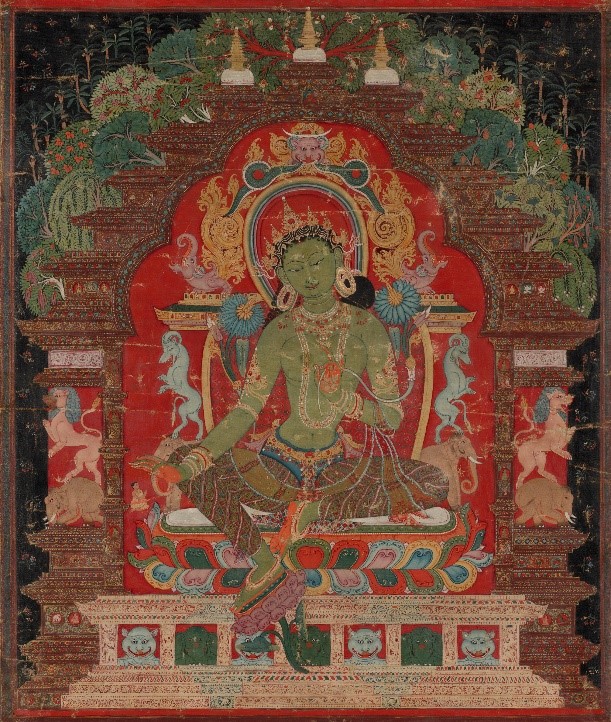
Green Tara: The historical background, Iconography, Belief of Tibetan and Thai Buddhists
Keywords:
Green Tara, Vajrayana Buddhism, Iconography, Belief, Tibetan and Thai BuddhistsAbstract
This academic article aims to present the story of Green Tara, Shayama Tara, was highly respected female Bodhisattva in Vajrayana Buddhism. Firstly, the history of the Bodhisattva was revealed after studying various sources for mainly explained the similarities from the different data sources. Then, the analysis of Iconography symbols in the creation of idols and Tangga paintings were criticized according to Silpa-sastra Scriptures including with the idol creation Sutra and The sub-commentaries of the idol creation Sutra. Finally, the belief of Tibetan Buddhists forwards Green Tara was represented; likewise, the trail of Bodhisattva worship has been continued in Thai society from past to present.
Downloads
References
กรมศิลปากร. (2563, 19 พฤศจิกายน). พระพุทธศาสนาในภาคใต้ของไทย. https://www.youtube.com/watch?v=lIA7ZUISyzQ
กฤษดาวรรณ เมธาวิกุล. (2561). วัชรยาน: พระพุทธศาสนามหายานแบบทิเบต. ใน ปกรณ์ ลิมปนุสรณ์ (บ.ก.), พุทธศาสนามหายานในเอเชียตะวันออก (น. 67-93). ชวนอ่าน.
ชวนไปอธิษฐานจิต...ภาวนา ณ “ถ้ำอารยตารามหาโพธิสัตว์หมื่นพระองค์”. (2558, 1 มีนาคม). ไทยรัฐ. เด่นดาว ศิลปานนท์. (ม.ป.ป.). เล่าเรื่องประติมานวิทยา: อัพชะ (Abja). https://www.finearts.go.th/promotion/view/14502-เล่าเรื่องประติมานวิทยา--อัพชะ--Abja-
ปิยะแสง จันทรวงศ์ไพศาล. (2558). ศิลปะทิเบต. จุฬาลงกรณ์มหาวิทยาลัย.
ผาสุข อินทราวุธ. (2543). พุทธปฏิมาฝ่ายมหายาน. อักษรสมัย.
พระเทพวัชรบัณฑิต (สมจินต์ สมฺมาปญฺโญ). (2564, 4 พฤษภาคม). พระพุทธศาสนาในทิเบต. https://www.mcu.ac.th/article/detail/35360
พระพงษ์ระวี อุตฺตรภทฺโท. (2565, 26 กุมภาพันธ์). พุทธ พราหมณ์ ผี: พื้นที่ผสมผสานพหุวัฒนธรรมล้านนา. https://www.youtube.com/watch?fbclid=IwAR3LtEDfe3uW5p0hNgaDnaSt2asEPVxrs-1JodiQyK8-hZV66WTikWH1RrU&v=B1ncLutarqc&feature=youtu.be
แม่ชีศันสนีย์ เสถียรสุต. (2563, 26 พฤษภาคม). โอม ตา เร. https://www.youtube.com/watch?v=CgIDHL-5Csw&t=1534s
วัดโพธิ์แมนคุณาราม. (ม.ป.ป.). ประวัติพระมหาคณาจารย์จีนธรรมสมาธิวัตรฯ โพธิ์แจ้งมหาเถระ. https://www.pumenbaoensi.com/index.php?lay=show&ac=article&Ntype=7&Id=539054929
สมเกียรติ โล่ห์เพชรัตน์. (2561). พุทธตันตระ พระกษิติครรภ์มหาปณิธานสูตร. สยามอินเตอร์เนชั่นแนลบุคส์.
สำนักนายกรัฐมนตรี. (2543). เกณฑ์การถ่ายถอดเสียงภาษาจีนแมนดารินด้วยอักขรวิธีไทย. มหาวิทยาลัยธรรมศาสตร์.
สุรสวัสดิ์ ศุขสวัสดิ์. (2560). พระพุทธรูปล้านนากับคติพระพุทธศาสนามหายานแบบตันตระนิกายวัชรยาน. มหาวิทยาลัยเชียงใหม่.
สุรสิทธิ์ อมรวณิชศักดิ์. (2561). เจ้าหญิงเหวินเฉิงกับอาณาจักรถู่ปัว. วารสารจีนศึกษา มหาวิทยาลัยเกษตรศาสตร์, 11(1), 13-43.
เสถียรธรรมสถาน. (ม.ป.ป. ก). ขอเชิญร่วมทำบุญมหากุศลสนับสนุนการทำงาน 25 ปี ของเสถียรธรรมสถาน. https://www.sdsweb.org/sdsweb/index.php?option=com_content&view=article&id=362:2011-03-14-10-14-12&catid=36&Itemid=134
เสถียรธรรมสถาน. (ม.ป.ป. ข). พิธีหล่อ‘พระอารยตารามหาโพธิสัตว์’ ร่วมหนึ่งในประวัติศาสตร์การสร้าง ‘พระอารยตารามหาโพธิสัตว์ที่ใหญ่ที่สุดในโลก’. https://www.sdsweb.org/new/view&id=273
เสริมกิจ ชัยมงคล. (2558). พระนางตารา. ใน เด่นดาว ศิลปานนท์ (บ.ก.), เทวสตรี: คติพุทธ พราหมณ์ และความเชื่อในประเทศไทย (น.68-74). กรมศิลปากร.
Huo, K. S. (2011). The Faith of Tibetan Buddhism Forward Green Tara. The Silk Road, 8, 73-74.
Sheng, L. (2011). An Analysis of The Symbolic Connotation of The Statue of Green Tara. Journal of Panzhihua University, 28(5), 58-89.
The Cleveland Museum of Art. (n.d.). Green Tara. https://www.clevelandart.org/art/1970.156
Yin, C. (2005). Hidden Agenda Profound of Thangka. Chongqing Press.
Zeng, L. P. (2014). Green Tara as Tibetan of Guanyin Bodhisattva. Oriental Collection, 2, 20-21.
Zhuoma, D. (2006). The Legend of Green Tara and Tibetan Culture. Tibetan Studies, 4, 24-29.
Downloads
Published
How to Cite
Issue
Section
License
Copyright (c) 2023 Chandrakasem Rajabhat University

This work is licensed under a Creative Commons Attribution-NonCommercial-NoDerivatives 4.0 International License.
บทความที่ได้รับการตีพิมพ์เป็นลิขสิทธิ์ของมหาวิทยาลัยราชภัฏจันทรเกษม
ข้อความที่ปรากฏในบทความแต่ละเรื่องในวารสารวิชาการเล่มนี้เป็นความคิดเห็นส่วนตัวของผู้เขียนแต่ละท่านไม่เกี่ยวข้องกับมหาวิทยาลัยราชภัฎจันทรเกษม และคณาจารย์ท่านอื่นๆในมหาวิทยาลัยฯ แต่อย่างใด ความรับผิดชอบองค์ประกอบทั้งหมดของบทความแต่ละเรื่องเป็นของผู้เขียนแต่ละท่าน หากมีความผิดพลาดใดๆ ผู้เขียนแต่ละท่านจะรับผิดชอบบทความของตนเองแต่ผู้เดียว