
The Soft Skills Development Approaches of Rajapruk University Students Based on High Value-Added Industries
Keywords:
Work Skills, Development Soft Skills, Industry GroupsAbstract
The objectives of this research were to study: 1) the soft skills required by employers, 2) employer satisfaction with students’ work performance, 3) student satisfaction with soft-skills enhancement activities integrating general education, cooperative education, and work-integrated learning, and 4) the development guidelines for enhancing soft skills of Rajapruk University students based on high value-added industry groups. The research instruments consisted of: 1) a survey on essential soft skills for work, 2) an employer satisfaction evaluation form regarding student work performance, 3) a student satisfaction evaluation form regarding soft-skills enhancement activities, and 4) an interview form for experts' opinions on guidelines for soft-skills development. The data were collected from three sample groups. Groups 1 and 2 were selected using a quota sampling method based on industry groups. Group 1 comprised 116 representatives of establishments, and Group 2 comprised 129 students who undertook internships in the first semester of the 2023 academic year. Group 3 consisted of five experts who validated the appropriateness of the proposed soft-skills development guidelines. Data were analyzed using frequency, percentage, mean, and standard deviation.
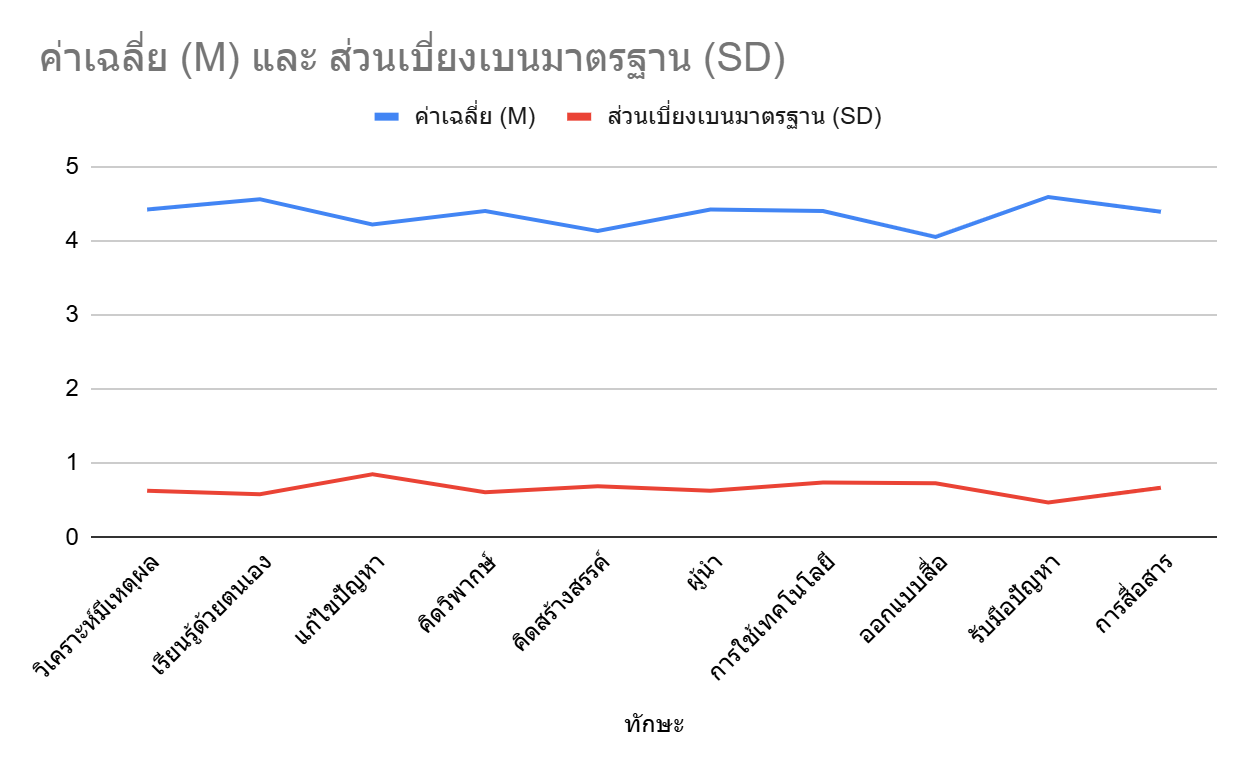
The results showed that: 1) The most urgently required skill in the medical hub industry was Leadership and Social Influence (M = 5.00). The aviation and logistics, digital, and workforce-and-education industry groups required Resilience, Stress Tolerance, and Flexibility (M = 4.35, 4.57, and 4.69, respectively). The high-income and medical tourism industry groups required both Communication Skills and Resilience, Stress Tolerance, and Flexibility (M = 5.00). 2) Employers were highly satisfied with students’ overall work performance (M = 4.36). 3) Students were highly satisfied with soft-skills enhancement activities integrating CWIE (M = 4.36) and with their overall skills (M = 4.30). 4) The guidelines for soft-skills development were categorized into five approaches based on the contexts of high value-added industries, and these were integrated into five general education courses and three cooperative and work-training courses.
Downloads
References
กระทรวงศึกษาธิการ. (2564, 3 มิถุนายน). พระราชบัญญัติการศึกษาแห่งชาติ พ.ศ. 2542 (ฉบับล่าสุด). https://shorturl.asia/d5cYO
เติมเพชร สุขคณาภิบาล,วัชรี ไพสาทย์, ไตรภพ จตุรพาณิชย์, ภาตย์ สังข์แก้ว, ภูวดล คงทวี, และอนุสรา ศรีสรวล. (2565). การบูรณาการการศึกษาทั่วไปกับสหกิจศึกษาเพื่อพัฒนาคุณลักษณะบัณฑิตอันพึงประสงค์ในโลกที่มีการเปลี่ยนแปลงอย่างฉับพลันของมหาวิทยาลัยเทคโนโลยีพระจอมเกล้าพระนครเหนือ. ใน การบูรณาการการศึกษาทั่วไปกับสหกิจศึกษาเพื่อพัฒนาคุณลักษณะบัณฑิตอันพึงประสงค์ในโลกที่มีการเปลี่ยนแปลงอย่างฉับพลัน (น. 44-53). เครือข่ายเพื่อการพัฒนาอุดมศึกษา ภาคกลางตอนบน.
ทิศนา แขมมณี. (2556). ศาสตร์การสอน: องค์ความรู้เพื่อการจัดกระบวนการเรียนรู้ที่มีประสิทธิภาพ (พิมพ์ครั้งที่ 17). สำนักพิมพ์แห่งจุฬาลงกรณ์มหาวิทยาลัย.
ปกรณ์ โปรยรุ่งโรจน์ และณกมล จันทร์สม. (2564). ปัจจัยด้านจรณทักษะ (Soft Skill) ที่ส่งผลต่อประสิทธิภาพการปฏิบัติงานของพนักงานกลุ่มเจเนอเรชั่นวายในกรุงเทพมหานคร. วารสารรัชต์ภาคย์ สาขามนุษยศาสตร์และสังคมศาสตร์, 15(42), 117-128.
ไพฑูรย์ สินลารัตน์. (2558). ปฏิรูปการเรียนรู้: ปฏิรูปการศึกษากลับทางจากล่างขึ้นบน. สำนักงานเลขาธิการคุรุสภา.
มหาวิทยาลัยเทคโนโลยีพระจอมเกล้าธนบุรี. (2564, 3 มิถุนายน). Assessment method. https://shorturl.asia/qWCIf
เรวดี ศักดิ์ดุลยธรรม และอาภาภรณ์ ดิษฐเล็ก. (2565). การบูรณาการการศึกษาทั่วไปกับสหกิจศึกษาเพื่อพัฒนาคุณลักษณะบัณฑิตอันพึงประสงค์ในโลกที่มีการเปลี่ยนแปลงอย่างฉับพลันของมหาวิทยาลัยราชพฤกษ์. ใน การบูรณาการการศึกษาทั่วไปกับสหกิจศึกษาเพื่อพัฒนาคุณลักษณะบัณฑิตอันพึงประสงค์ในโลกที่มีการเปลี่ยนแปลงอย่างฉับพลัน (น. 120-133). เครือข่ายเพื่อการพัฒนาอุดมศึกษา ภาคกลางตอนบน.
วิจารณ์ พานิช. (2555). วิถีสร้างการเรียนรู้เพื่อศิษย์ (พิมพ์ครั้งที่ 3). มูลนิธิสดศรี สฤษดิ์วงศ์.
วีระพงษ์ อาตมา. (2564). ซอฟท์สกิล (Soft Skills) ที่ส่งผลต่อความสําเร็จในการปฏิบัติงานของ พนักงาน บริษัทเอกชน กรณีศึกษาพนักงานบริษัทเอกชน ในเขตกรุงเทพฯ และ ปริมณฑล. มหาวิทยาลัยรามคำแหง.
หมวดวิชาศึกษาทั่วไป มหาวิทยาลัยราชพฤกษ์. (2566). หลักสูตรหมวดวิชาศึกษาทั่วไป (หลักสูตรปรับปรุง พ.ศ. 2566). มหาวิทยาลัยราชพฤกษ์.
สุวิธิดา จรุงเกียรติกุล, ณุวีร์ ประภัสรกุล, ชูพงศ์ ปัญจมะวัต, รัศมี เอกศิริ, และชญาพิมพ์ อรินหมะพันธ์. (2565). การเสริมศักยภาพนิสิตแบบองค์รวมผ่านการบูรณาการรายวิชาศึกษาทั่วไปกับสหกิจศึกษา จุฬาลงกรณ์มหาวิทยาลัย. ใน การบูรณาการการศึกษาทั่วไปกับสหกิจศึกษาเพื่อพัฒนาคุณลักษณะบัณฑิตอันพึงประสงค์ในโลกที่มีการเปลี่ยนแปลงอย่างฉับพลัน (น. 20-27). เครือข่ายเพื่อการพัฒนาอุดมศึกษา ภาคกลางตอนบน.
สุวิมล ว่องวาณิช. (2562). การวิจัยประเมินความต้องการจำเป็น (พิมพ์ครั้งที่ 4). สำนักพิมพ์แห่งจุฬาลงกรณ์มหาวิทยาลัย.
สุรพงษ์ โพธิ์ขาว. (2560). ความต้องการกิจกรรมในการพัฒนาทักษะที่เกี่ยวกับการทำงาน และการใช้ชีวิต (Soft Skills) สำหรับนักศึกษาปริญญาโท ภาคปกติ สถาบันบัณฑิตพัฒนบริหารศาสตร์. สถาบันบัณฑิตพัฒนบริหารศาสตร์.
สำนักงานสภานโยบายการอุดมศึกษา วิทยาศาสตร์ วิจัยและนวัตกรรมแห่งชาติ. (2563). สมรรถนะบุคลากรในอนาคต สำหรับ 12 กลุ่มอุตสาหกรรมเป้าหมาย (พ.ศ. 2563-2567). สำนักงานสภานโยบายการอุดมศึกษา วิทยาศาสตร์ วิจัยและนวัตกรรมแห่งชาติ.
สำนักสหกิจศึกษาและแนะแนวอาชีพ มหาวิทยาลัยราชพฤกษ์. (2566). สรุปผลการดำเนินงานสำนักสหกิจศึกษาและแนะแนวอาชีพ. สำนักสหกิจศึกษาและแนะแนวอาชีพ มหาวิทยาลัยราชพฤกษ์.
อาภาภรณ์ ดิษฐเล็ก. (2567). การพัฒนาทักษะ Soft Skills ของนิสิตมหาวิทยาลัยราชพฤกษ์ตามกลุ่มอุตสาหกรรม. หมวดวิชาศึกษาทั่วไป มหาวิทยาลัยราชพฤกษ์.
Leicester, G., & Sharpe, B. (2018). Transforming Higher Education. (18th ed.). McGraw-Hill.
Marlina, M. A. E. (2021, May 20). Developing Students’ Soft Skills Through Group-Work Method in Cost Accounting Learning. Jurnal Pendidikan Indonesia (JPI). 10(1), 34-45. DOI: https://doi.org/10.23887/jpi-undiksha.v10i1.24994
Tem, S., Kuroda, A., & Tang, K. N. (2020). The Importance of Soft Skills Development to Enhance Entrepreneurial Capacity. International Educational Research. 3(3), 1-7.
The Partnership for 21st Century Learning (P21). (2021, May 20). Framework for 21st Century Learning. https://resources.finalsite.net/images/v1594647800/olentangyk12ohus/puaarsvptybkegnjhe8p/P21_framework_0816.pdf
World Economic Forum. (2021, May 20). The Future of Jobs Report 2020. https://www.weforum.org/publications/the-future-of-jobs-report-2020/
Downloads
Published
How to Cite
Issue
Section
License
Copyright (c) 2025 Chandrakasem Rajabhat University

This work is licensed under a Creative Commons Attribution-NonCommercial-NoDerivatives 4.0 International License.
บทความที่ได้รับการตีพิมพ์เป็นลิขสิทธิ์ของมหาวิทยาลัยราชภัฏจันทรเกษม
ข้อความที่ปรากฏในบทความแต่ละเรื่องในวารสารวิชาการเล่มนี้เป็นความคิดเห็นส่วนตัวของผู้เขียนแต่ละท่านไม่เกี่ยวข้องกับมหาวิทยาลัยราชภัฎจันทรเกษม และคณาจารย์ท่านอื่นๆในมหาวิทยาลัยฯ แต่อย่างใด ความรับผิดชอบองค์ประกอบทั้งหมดของบทความแต่ละเรื่องเป็นของผู้เขียนแต่ละท่าน หากมีความผิดพลาดใดๆ ผู้เขียนแต่ละท่านจะรับผิดชอบบทความของตนเองแต่ผู้เดียว