
An Artistic Research on Composing Music for Animated Media from Fighting Games: Music Composition “K.O.”
Keywords:
Artistic Research in Music, Music for Animated Media, Sound Effect, Sound DesignAbstract
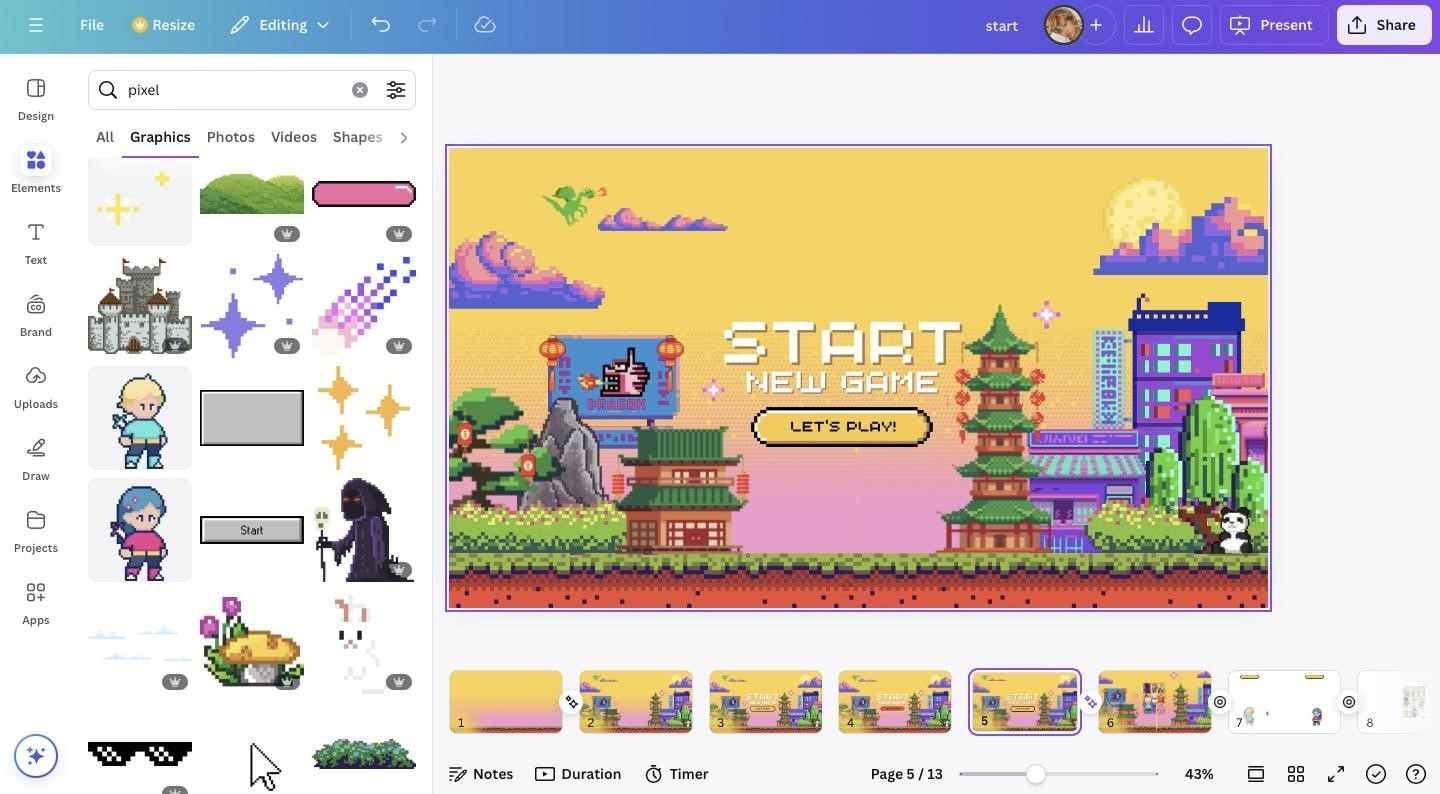
This research aims to compose the song “K.O.” as a music score for animated media, inspired by fighting games and traditional Chinese culture. The song integrates techniques from sound design, Foley, and automation, using an artistic research methodology based on practice-based research. The creative process is supported by both hardware and software tools for music and animation production. The research procedures include composition, animation production, and live performance.
The findings reveal that “K.O.” consists of 135 measures, has a tempo of 125 BPM, and is a primarily in the key of E minor. The song mainly employs 4/4time signature, with occasional changes in key and meter. The musical form is hybrid, comprising the following sections: Introduction / A1 / B1 / A2 / Bridge / B2 / B3 / A3 / C1 / B4 / Transition1 / Transition 2 / C2 / Coda. The song is presented alongside an animation narrative themed around fighting games, featuring Chinese-style scenes and elements. The music and animation are synchronized to enhance an experience characterized by power, excitement, and intensity.
Downloads
References
ศักดิเดชน์ เดชมณี และปองภพ สุกิตติวงศ์. (2567). การวิจัยสร้างสรรค์ทางดนตรี: บทประพันธ์ “400 Stab Wounds” ในสไตล์สแลมมิงบรูทัลเดธเมทัล. วารสารมนุษยศาสตร์และสังคมศาสตร์ มหาวิทยาลัยราชภัฏสุราษฎร์ธานี, 16(2), 1–20.
Barrett, E., & Bolt, B. (2007). Practice as research: Approaches to creative arts enquiry. I.B. Tauris.
Candy, L. (2006). Practice-based research: A guide. Creativity & Cognition Studios, University of Technology Sydney.
Green, J. (2010). Understanding the score: Film music communicating to and influencing the audience. The Journal of Aesthetic Education, 44(4), 81–94. https://doi.org/10.5406/jaesteduc.44.4.0081
Khan, I., Nguyen, T. V., Nimpattanavong, C., & Thawonmas, R. (2023). Adaptive background music for a fighting game: A multi-instrument volume modulation approach. arXiv:2303.15734. https://doi.org/10.48550/arXiv.2303.15734
Nelson, R. (2022). Practice as research in the arts (and beyond): Principles, processes, contexts, achievements (2nd ed.). Palgrave Macmillan. https://doi.org/10.1007/978-3-030-90542-2
Piccini, A. (2004). An historiographic perspective on practice as research. Studies in Theatre and Performance, 23(3), 191–207. https://doi.org/10.1386/STAP.23.3.191/3
Speller, A. (2024, October 10). Fighting Game Interactive Music Study. Fighting Game Interactive Music Study. Axel Speller. https://www.checkthesplitter.com/post/fighting-game-interactive-music-study/
Zager, M. (2021). Music production: A manual for producers, composers, arrangers, and students (3rd ed.). Rowman & Littlefield.
Zheng, H. (2024, October 10). Effects of music tempo on flow in rhythm-fighting game Master’s thesis, Northeastern University. https://pdfs.semanticscholar.org/aaef/695f6b34f5d36728aaf6b2a213cfaeea4834.pdf
Downloads
Published
How to Cite
Issue
Section
License
Copyright (c) 2025 Chandrakasem Rajabhat University

This work is licensed under a Creative Commons Attribution-NonCommercial-NoDerivatives 4.0 International License.
บทความที่ได้รับการตีพิมพ์เป็นลิขสิทธิ์ของมหาวิทยาลัยราชภัฏจันทรเกษม
ข้อความที่ปรากฏในบทความแต่ละเรื่องในวารสารวิชาการเล่มนี้เป็นความคิดเห็นส่วนตัวของผู้เขียนแต่ละท่านไม่เกี่ยวข้องกับมหาวิทยาลัยราชภัฎจันทรเกษม และคณาจารย์ท่านอื่นๆในมหาวิทยาลัยฯ แต่อย่างใด ความรับผิดชอบองค์ประกอบทั้งหมดของบทความแต่ละเรื่องเป็นของผู้เขียนแต่ละท่าน หากมีความผิดพลาดใดๆ ผู้เขียนแต่ละท่านจะรับผิดชอบบทความของตนเองแต่ผู้เดียว