
การเรียนรู้โดยอิงปรากฎการณ์ส่งผ่านประสบการณ์จากมหาวิทยาลัยเฮลซิงกิและโรงเรียนอูโลลา เมืองเอสปู ประเทศฟินแลนด์
คำสำคัญ:
การเรียนรู้, การจัดประสบการณ์การเรียนรู้โดยอิงปรากฎการณ์, ประสบการณ์บทคัดย่อ
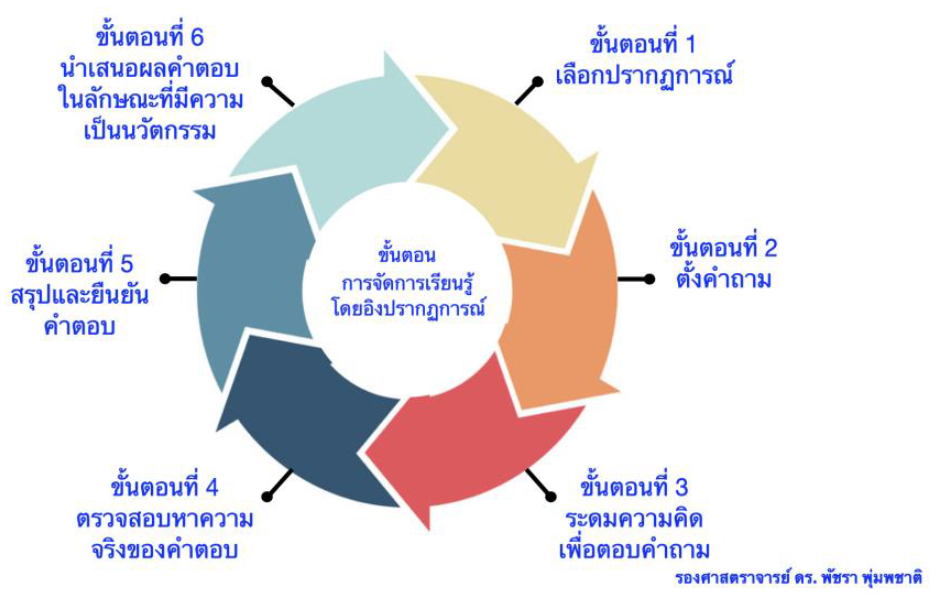
การเรียนรู้โดยอิงปรากฏการณ์เป็นการจัดการเรียนรู้โดยยึดผู้เรียนเป็นสำคัญด้วยการใช้ปรากฏการณ์ที่เกิดขึ้นแล้วในโลกแห่งความเป็นจริงมาเป็นจุดเริ่มต้นของการเรียนรู้ เป็นวิธีการเรียนรู้แบบสหวิทยาการที่สนับสนุนให้ผู้เรียนได้นำความรู้มาเชื่อมโยงกันทั้งภายในศาสตร์และเชื่อมโยงระหว่างศาสตร์มาประยุกต์รวมกันเพื่อศึกษาและทำความเข้าใจกับปรากฏการณ์จากการตั้งคำถาม การสืบค้น การตอบคำถามและแก้ปัญหาด้วยด้วยตนเองโดยใช้วิธีการปฏิบัติที่หลากหลายจนทำให้เกิดเป็นการเรียนรู้อย่างเข้าใจ กว้าง ลึกและตรงประเด็นที่ช่วยให้ผู้เรียนได้พัฒนาสมรรถนะและทักษะชีวิตที่จำเป็นเพื่อการเข้าใจโลกอย่างรอบด้าน สามารถปรับตัวให้เข้ากับสถานการณ์ รู้จักแก้ปัญหา ยอมรับและเคารพในความคิดเห็นที่แตกต่าง และดำรงชีวิตอยู่ด้วยความรักและเห็นอกเห็นใจกัน นับเป็นแนวทางการจัดการเรียนรู้ที่เหมาะสมกับการพัฒนาผู้เรียนให้เป็นพลเมืองโลกที่มีคุณภาพสามารถพัฒนาตนเองและสังคมได้อย่างยั่งยืน
Downloads
เอกสารอ้างอิง
Chris, D. (2020). What is Finland's Phenomenon-based Learning approach? Retrieved February 12, 2022 from https://www.teachermagazine.com/au_en/articles/what-is-finlands-phenomenon-based-learning-approach
Emma, C. (2021). 4 Ways to Encourage Students to Ask Questions. Retrieved March 2, 2022 from https://www.edutopia.org/article/4-ways-encourage-students-ask-questions
Finnish National Board of Education. (2016). New national core curriculum for basic education: focus on school culture and integrative approach. Retrieved January 7, 2022, from https://www.oph.fi/sites/default/files/documents/new-national-core-curriculum-for-basic-education.pdf
Halinen, I. (2018). The new educational curriculum in Finland. In Matthes, M., Pulkkinen, L., National Core Curriculum for Basic Education 2014. Brussels, Belgium: The Finnish National Agency of Education.
John, D. (2016). 10 Reasons to ‘Phenomenon Teach’. Retrieved January 14, 2022, from https://www.teachertoolkit.co.uk/2016/11/12/phenomenon-based-teaching/?fbclid=IwAR25xIFRZy0OFdc8xhG5q2XnpCQDGzQ3WSdAYwp0-kIY0YexVc0mAvNoMWU
Liisa, P. (2021). Phenomenon based learning. Retrieved January 12, 2022, from https://hundred.org/en/innovations/phenomenon-based-learning#29596c58
Silander, P. (2015). Digital pedagogy. In Mattila, P. & Silander, P. (Eds.) How to create the school of the future: Revolutionary thinking and design from Finland (pp.9-26). Oulu, Finland: University of Oulu Center for Internet Excellence.
Symeonidis, V., & Schwarz, J. F. (2016). Phenomenon-based teaching and learning through the pedagogical lenses of phenomenology: The recent curriculum reform in Finland. Forum Oświatowe, 28(2), 31–47.
VALAMIS. (2019). Phenomenon-based Learning. Retrieved January 23, 2022, from https://www.valamis.com/hub/phenomenon-based-learning#what-is-phenomenon-based-learning
Vasileios, S. & Johanna, F. (2016). Phenomenon-Based Teaching and Learning through the Pedagogical Lenses of Phenomenology: The Recent Curriculum Reform in Finland. Retrieved January 20, 2022, from https://www.researchgate.net/publication/313696751_Phenomenon-Based_Teaching_and_Learning_through_the_Pedagogical_Lenses_of_Phenomenology_The_Recent_Curriculum_Reform_in_Finland
Waterford. (2021). 7 Tips for Teaching Students How to Ask Questions in Class. Retrieved January 29, 2022, from https://www.waterford.org/education/how-to-ask-questions/
ดาวน์โหลด
เผยแพร่แล้ว
รูปแบบการอ้างอิง
ฉบับ
ประเภทบทความ
สัญญาอนุญาต
ลิขสิทธิ์ (c) 2022 มหาวิทยาลัยราชภัฏจันทรเกษม

อนุญาตภายใต้เงื่อนไข Creative Commons Attribution-NonCommercial-NoDerivatives 4.0 International License.
บทความที่ได้รับการตีพิมพ์เป็นลิขสิทธิ์ของมหาวิทยาลัยราชภัฏจันทรเกษม
ข้อความที่ปรากฏในบทความแต่ละเรื่องในวารสารวิชาการเล่มนี้เป็นความคิดเห็นส่วนตัวของผู้เขียนแต่ละท่านไม่เกี่ยวข้องกับมหาวิทยาลัยราชภัฎจันทรเกษม และคณาจารย์ท่านอื่นๆในมหาวิทยาลัยฯ แต่อย่างใด ความรับผิดชอบองค์ประกอบทั้งหมดของบทความแต่ละเรื่องเป็นของผู้เขียนแต่ละท่าน หากมีความผิดพลาดใดๆ ผู้เขียนแต่ละท่านจะรับผิดชอบบทความของตนเองแต่ผู้เดียว