
คุณค่าทางสังคมของงานอาสาสมัครของอาสาสมัครชุมชน
คำสำคัญ:
คุณค่าทางสังคม, งานอาสาสมัคร, อาสาสมัครชุมชน, ความคาดหวังต่อค่าตอบแทนบทคัดย่อ
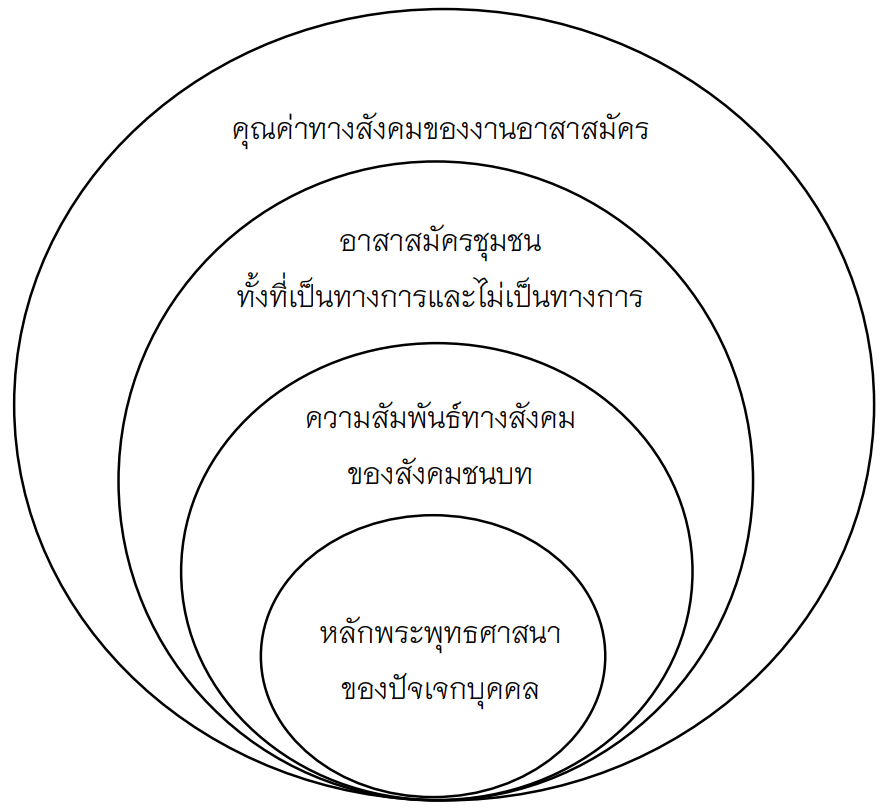
บทความวิจัยนี้มีวัตถุประสงค์เพื่อ 1) ศึกษาคุณค่าทางสังคมของงานอาสาสมัครของอาสาสมัครชุมชน และ 2) ศึกษาความคาดหวังของอาสาสมัครชุมชนต่อค่าตอบแทนในการทำงานอาสาสมัคร โดยใช้ระเบียบวิธีวิจัยเชิงคุณภาพที่มีระดับการวิเคราะห์ในระดับปัจเจกบุคคล โดยดำเนินการสัมภาษณ์เชิงลึกกับกลุ่มเป้าหมายหลัก คือ อาสาสมัครชุมชนที่ทำงานอาสาสมัครทั้งที่เป็นทางการและไม่เป็น ที่ได้รับค่าตอบแทนและไม่ได้รับค่าตอบแทน จำนวน 20 คน ด้วยวิธีการคัดเลือกแบบเจาะจง (Purposive Sampling) โดยใช้แนวทางการสัมภาษณ์ (Interview Guideline) เป็นเครื่องมือในการเก็บรวบรวมข้อมูล และใช้วิธีการวิเคราะห์เนื้อหา (Content Analysis) ในการวิเคราะห์ข้อมูล
ผลการวิจัยพบว่า คุณค่าทางสังคมของงานอาสาสมัครนั้นเกิดขึ้นทั้งในระดับบุคคลและระดับชุมชน โดยในระดับบุคคลก่อให้เกิดการเรียนรู้สิ่งใหม่ ๆ และพัฒนาตนเองในด้านต่าง ๆ เช่น การสื่อสารกับบุคคล การปรับเปลี่ยนพฤติกรรม และการเสริมสร้างเครือข่าย ส่วนในระดับชุมชนก่อให้เกิดการขับเคลื่อนการพัฒนาภายในชุมชน เช่น การส่งเสริมการมีส่วนร่วม การใช้เวลาว่างให้เป็นประโยชน์ การส่งเสริมภาพลักษณ์ของชุมชน ตลอดจนก่อให้เกิดความรัก ความสามัคคี และการช่วยเหลือเกื้อกูลซึ่งกันและกัน ในส่วนของความคาดหวังต่อค่าตอบแทนในการทำงานอาสาสมัคร พบว่า อาสาสมัครชุมชนส่วนใหญ่ไม่ได้คาดหวังค่าตอบแทนในการทำงานอาสาสมัครแต่อย่างใด แต่หากมีการพิจารณาการให้ค่าตอบแทน อาสาสมัครชุมชนก็เล็งเห็นเป็นเรื่องที่ดีและมีประโยชน์ เนื่องจากการทำงานอาสาสมัครมีต้นทุนและค่าใช้จ่ายต่าง ๆ เช่น ค่าเดินทาง ค่าอินเทอร์เน็ต และค่าอาหารและเครื่องดื่ม แต่ถึงไม่ได้รับค่าตอบแทนใด ๆ ก็ไม่ได้เป็นข้อจำกัดในการเข้าร่วมทำงานอาสาสมัคร เนื่องจากอาสาสมัครชุมชนทำงานอาสาสมัครด้วยใจรัก ด้วยความเสียสละ และถือเป็นหน้าที่ที่ต้องปฏิบัติ
Downloads
เอกสารอ้างอิง
ชาญณรงค์ วงค์วิชัย. (2560). คุณลักษณะอาสาสมัครที่มีผลต่อบทบาทอาสาสมัครสาธารณสุข. วารสารมหาวิทยาลัยราชภัฏลำปาง, 6(2), 40-58.
นงนุช จิตตะเสโณ. (2561). อาสาสมัครกับการพัฒนาคุณภาพชีวิต: กรณีศึกษาอาสาสมัครพัฒนาสังคมและความมั่นคงของมนุษย์ จังหวัดสงขลา [วิทยานิพนธ์ปริญญามหาบัณฑิต, มหาวิทยาลัยสงขลานครินทร์]. PSUKB. http://kb.psu.ac.th/psukb/handle/2016/12739
บุษกร เชี่ยวจินดากานต์. (2561). เทคนิคการวิจัยเชิงคุณภาพแบบกรณีศึกษา. วารสารศิลปศาสตร์ปริทัศน์, 13(25), 103-117.
ปิยากร หวังมหาพร. (2556). พัฒนาการเชิงนโยบายอาสาสมัครไทย: จากความมั่นคงสู่การพัฒนาสังคม. วารสารวิชาการศรีปทุม ชลบุรี, 10(2), 15-26.
รัจน์ชีวาต์ ตั๋นติกุลวรา, โยธิน แสวงดี, และสุกัญญา บูรณเดชาชัย. (2564). การสื่อสารความเชื่อเพื่อการดำรงอยู่ของศิลปะการแสดงพื้นบ้านละครชาตรีเท่งตุ๊ก จังหวัดจันทบุรี. วารสารดุษฎีบัณฑิตทางสังคมศาสตร์, 11(3), 748-759.
ศุภรัตน์ รัตนมุขย์. (2548). อาสาสมัคร: การพัฒนาตนเองและสังคม. วารพัฒนศาสตร์, 1(2), 1-9.
ศุภรัตน์ รัตนมุขย์. (2551). ระบบการบริหารจัดการงานอาสาสมัคร ศึกษากรณี: มูลนิธิพุทธฉือจี้ ไต้หวัน. ศูนย์ส่งเสริมและพัฒนาพลังแผ่นดินเชิงคุณธรรม สำนักงานบริหารและพัฒนาองค์ความรู้ (องค์การมหาชน).
สัมพันธ์ คงพูนทรัพย์. (2560). การใช้หลักพุทธธรรมในการทำงานจิตอาสา. Journal of Roi Kaensarn Academi, 2(1), 1-14.
สุนิตย์ เชรษฐา และวินย์ เมฆไตรภพ. (2548). รายงานฉบับสมบูรณ์: การศึกษาและประยุกต์บทเรียนงานอาสาสมัครจากต่างประเทศเพื่อการพัฒนาระบบอาสาสมัครในประเทศไทย. มูลนิธิบูรณะชนบทแห่งประเทศไทย ในพระบรมราชูปถัมภ์.
อภิรดี วงศ์ศิริ. (2563). รายงานวิจัยฉบับสมบูรณ์: อาสาสมัครสาธารณะกับธรรมาภิบาลท้องถิ่น ศึกษากรณีเขตพื้นที่การปกครองขององค์การบริหารส่วนตำบลในเขตอำเภอเมืองหนองคาย จังหวัดหนองคาย. คณะมนุษยศาสตร์และสังคมศาสตร์ มหาวิทยาลัยขอนแก่น.
อภิรดี วงศ์ศิริ. (2566). จิตสาธารณะและองค์กรภาคประชาสังคม [เอกสารไม่ได้ตีพิมพ์]. คณะมนุษยศาสตร์และสังคมศาสตร์ มหาวิทยาลัยขอนแก่น.
อานันท์ กาญจนพันธุ์. (2565). คนไทยใจดี: ทบทวนแนวคิดจิตสาธารณะกับสังคมไทย. คณะเศรษฐศาสตร์ มหาวิทยาลัยเชียงใหม่.
Bittman, M., & Fisher, K. (2006). Exploring the economic and social value of the present patterns of volunteering in Australia. FaHCSIA Research Paper 28.
Chinman, M. J., & Wandersman, A. (1999). The benefits and costs of volunteering in community organizations: Review and practical implications. Nonprofit and Voluntary Sector Quarterly, 28(1), 46-64.
Handy, F., & Mook, L. (2011). Volunteering and volunteers: Benefit-cost analyses. Research on Social Work Practice, 21(4), 412-420.
Herman, M. (n.d.). Employee or Volunteer: What’s the Difference? https://nonprofitrisk.org/resources/articles/employee-or-volunteer-whats-the-difference/
Meier, S., & Stutzer, A. (2004). Is volunteering rewarding in itself? Evidence from a natural experiment (No. 2004-12). CREMA Working Paper.
Rochester, C., Paine, A. E., Howlett, S., Zimmeck, M., & Paine, A. E. (2010). Volunteering and Society in the 21st Century. Palgrave Macmillan.
VolunteeringWA. (2015). The economic, social, and cultural value of volunteering to Western Australia. Institute of Project Management.
Western Connecticut State University. (n.d.). Community engagement: benefits of community service. https://www.wcsu.edu/community-engagement/benefits-of-volunteering/
ดาวน์โหลด
เผยแพร่แล้ว
รูปแบบการอ้างอิง
ฉบับ
ประเภทบทความ
สัญญาอนุญาต
ลิขสิทธิ์ (c) 2023 มหาวิทยาลัยราชภัฏจันทรเกษม

อนุญาตภายใต้เงื่อนไข Creative Commons Attribution-NonCommercial-NoDerivatives 4.0 International License.
บทความที่ได้รับการตีพิมพ์เป็นลิขสิทธิ์ของมหาวิทยาลัยราชภัฏจันทรเกษม
ข้อความที่ปรากฏในบทความแต่ละเรื่องในวารสารวิชาการเล่มนี้เป็นความคิดเห็นส่วนตัวของผู้เขียนแต่ละท่านไม่เกี่ยวข้องกับมหาวิทยาลัยราชภัฎจันทรเกษม และคณาจารย์ท่านอื่นๆในมหาวิทยาลัยฯ แต่อย่างใด ความรับผิดชอบองค์ประกอบทั้งหมดของบทความแต่ละเรื่องเป็นของผู้เขียนแต่ละท่าน หากมีความผิดพลาดใดๆ ผู้เขียนแต่ละท่านจะรับผิดชอบบทความของตนเองแต่ผู้เดียว