
การพัฒนาสื่อเทคโนโลยี Augmented Reality จากวรรณกรรมเรื่องเล่าศาลเจ้าจีนริมน้ำปิงเขตจังหวัดนครสวรรค์ในรายวิชาวรรณกรรมท้องถิ่น สำหรับชั้นมัธยมศึกษาตอนปลาย
คำสำคัญ:
สื่อเทคโนโลยี Augmented Reality, วรรณกรรมเรื่องเล่าศาลเจ้าจีน, จังหวัดนครสวรรค์, รายวิชาวรรณกรรมท้องถิ่นบทคัดย่อ
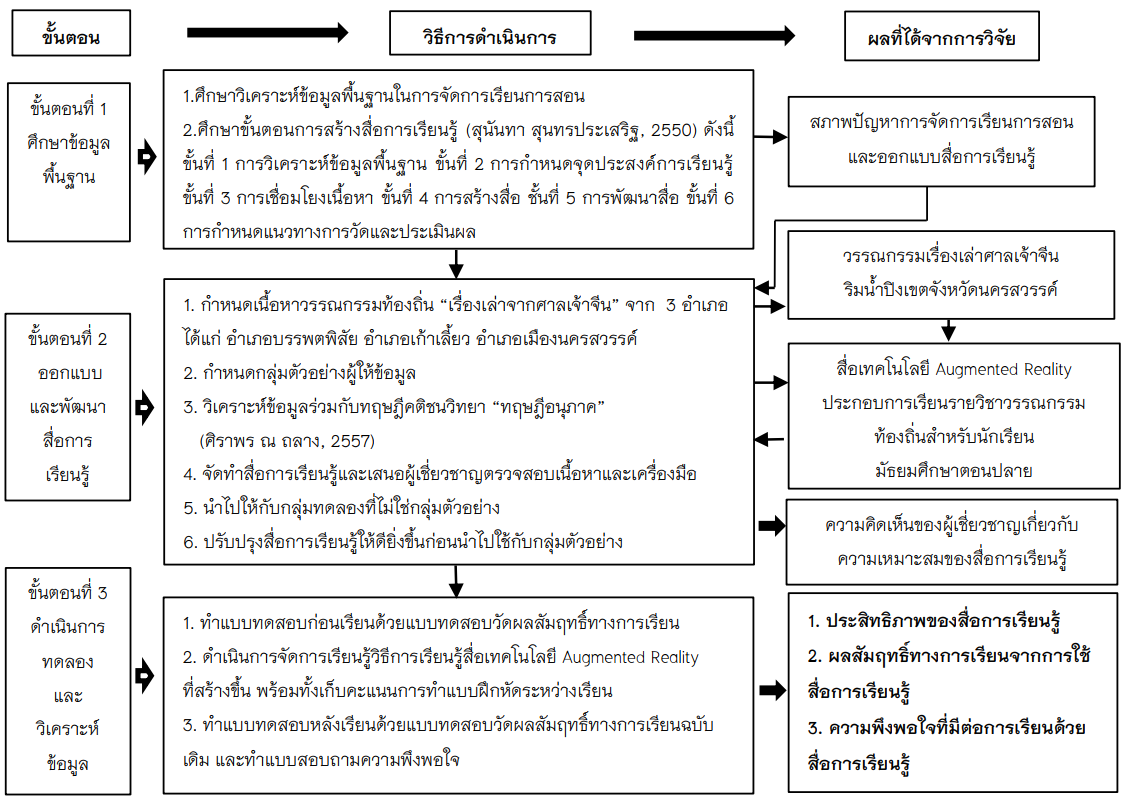
บทความวิจัยนี้มีวัตถุประสงค์เพื่อ 1) ศึกษาวรรณกรรมเรื่องเล่าจากศาลเจ้าจีนที่ตั้งอยู่ริมแม่น้ำปิงในจังหวัดนครสวรรค์ 2) สร้างและหาประสิทธิภาพของสื่อเทคโนโลยี Augmented Reality ประกอบการเรียนรายวิชาวรรณกรรมท้องถิ่นสำหรับนักเรียนมัธยมศึกษาตอนปลายให้มีประสิทธิภาพตามเกณฑ์ 80.00/80.00 และ 3) ศึกษาความพึงพอใจที่มีต่อการเรียนด้วยสื่อเทคโนโลยี Augmented Reality เครื่องมือที่ใช้ในการวิจัย ได้แก่ แบบสัมภาษณ์ สื่อเทคโนโลยี Augmented Reality ประกอบการเรียนรายวิชาวรรณกรรมท้องถิ่นสำหรับนักเรียนมัธยมศึกษาตอนปลาย แบบทดสอบวัดผลสัมฤทธิ์ทางการเรียนก่อนและหลังเรียน และแบบประเมินความพึงพอใจ กลุ่มตัวอย่างที่ใช้ในการวิจัยครั้งนี้ คือ นักเรียนชั้นมัธยมศึกษาปีที่ 6 จำนวน 30 คน จากโรงเรียนบรรพตพิสัยพิทยาคม โดยเลือกกลุ่มตัวอย่างแบบกลุ่ม (Cluster Random Sampling) แล้ววิเคราะห์หาประสิทธิภาพของสื่อเทคโนโลยี Augmented Reality โดยใช้ E1/E2 เปรียบเทียบผลสัมฤทธิ์ทางการเรียนก่อนและหลังศึกษาสื่อเทคโนโลยี Augmented Reality โดยทดสอบค่าที (t–test แบบ Dependent) วิเคราะห์ความพึงพอใจของนักเรียนโดยการหาค่าเฉลี่ย (M) และส่วนเบี่ยงเบนมาตรฐาน (SD)
ผลการวิจัยพบว่า 1) วรรณกรรมเรื่องเล่าจากศาลเจ้าหน้าผา อำเภอเมืองนครสวรรค์ แล้วทวนลำน้ำปิงขึ้นไปศาลเจ้าเก้าเลี้ยว อำเภอเก้าเลี้ยว ถึงศาลเจ้าพ่อกวนอู ศาลเจ้าส้มเสี้ยว และศาลเจ้าหว่ากวาง ของอำเภอบรรพตพิสัย พบ 3 อนุภาค ได้แก่ การลอยน้ำของเทวรูป การบูชาจระเข้เป็นสัตว์ศักดิ์สิทธิ์ และการประดิษฐานเทวรูปตามธรรมเนียมจีน 2) การประเมินสื่อเทคโนโลยี Augmented Reality ประกอบการเรียนรายวิชาวรรณกรรมท้องถิ่นสำหรับนักเรียนมัธยมศึกษาตอนปลาย มีความเหมาะสมอยู่ในระดับมาก (M = 4.47) ประสิทธิภาพของสื่อเทคโนโลยี Augmented Reality ประกอบการเรียนรายวิชาวรรณกรรมท้องถิ่นสำหรับนักเรียนมัธยมศึกษาตอนปลาย มีประสิทธิภาพ 82.67/81.67 ซึ่งสูงกว่าเกณฑ์ที่กำหนดไว้ คือ 80.00/80.00 ผลสัมฤทธิ์ทางการเรียนหลังเรียนสูงกว่าก่อนเรียนอย่างมีนัยสำคัญทางสถิติที่ระดับ .05 และ 3) ความพึงพอใจที่มีต่อการเรียนด้วยสื่อเทคโนโลยี Augmented Reality อยู่ในระดับมาก (M = 4.23)
Downloads
เอกสารอ้างอิง
กิ่งกาญจน์ บูรณสินวัฒนกูล. (2562). การพัฒนาสื่อการเรียนรู้บอร์ดเกม การศึกษาเพื่อส่งเสริมความสามารถการเรียนรู้ในรายวิชาพัฒนาการแบบเรียนภาษาไทยและความสุขในการเรียนรู้สำหรับนิสิตระดับปริญญาตรี (รายงานการวิจัย). มหาวิทยาลัยศรีนครินทรวิโรฒ.
คณะกรรมการศาลเจ้าพ่อเก้าเลี้ยว. (2565). ศาลเจ้าพ่อเก้าเลี้ยว. นครสวรรค์.
จิรวดี โยยรัมย์ และสิทธิโชค น้อยเกิดพะเนาว์. (2562). การพัฒนาบทเรียนคอมพิวเตอร์ช่วยสอนสอดแทรกการ์ตูนแอนิเมชัน 2 มิติ ร่วมกับเทคโนโลยีความจริงเสริม (AR) เรื่อง ดาราศาสตร์และอวกาศ นักเรียนชั้นมัธยมศึกษาปีที่ 3. ใน วรปภา อารีราษฎร์ (บ.ก.), การจัดการเทคโนโลยีและนวัตกรรม ครั้งที่ 5. การประชุมวิชาการ ระดับชาติการจัดการเทคโนโลยีและนวัตกรรม มหาวิทยาลัยราชภัฏมหาสารคาม ประจำปี 2562 (น. 2064-2069). มหาวิทยาลัยราชภัฏมหาสารคาม.
ฐาปนีย์ ธรรมเมธา. (2557). สื่อการศึกษาเบื้องต้น (พิมพ์ครั้งที่ 2). มหาวิทยาลัยศิลปากร.
ดุสิต ขาวเหลือง และอภิชาติ อนุกูล. (2562). การพัฒนาสื่อการเรียนรู้สามมิติแบบมีปฏิสัมพันธ์เสมือนจริง โดยใช้เทคโนโลยีความเป็นจริงเสริม Augmented Reality (AR) เพื่อพัฒนาทักษะการคิดของนักศึกษาอาชีวศึกษาที่มีระดับการคิดอย่างมี วิจารณญาณต่างกัน (รายงานการวิจัย). มหาวิทยาลัยบูรพา.
ถาวร สิกขโกศล. (2562). ปุนเถ้าก๋งเทพคุ้มครองชาวจีนโพ้นทะเล. วารสารศิลปวัฒนธรรม. 40(3), 152-169.
บุญเรือง อินทวรันต์, สุรวัฒน์ ปริญญะจิตตะ, จำรัส นวลนิ่ม, สุทินตา ก้อนทอง, และนิกรรดาขันธะรัตน์. (2542). วัฒนธรรม พัฒนาการทางประวัติศาสตร์ เอกลักษณ์ และภูมิปัญญา จังหวัดนครสวรรค์. โรงพิมพ์คุรุสภาลาดพร้าว.
เมตตา คงคากูล และบุรินทร์ นรินทร์. (2561). การพัฒนาศูนย์รวมแหล่งท่องเที่ยวโดยใช้เทคโนโลยีเสมือนจริงผ่านอุปกรณ์อิเล็กทรอนิกส์แบบพกพาเพื่อส่งเสริมการท่องเที่ยวแบบยั่งยืนในเขตจังหวัดราชบุรี. ใน ชฎาพร โพคัยสวรรค์ (บ.ก.), การเกษตรก้าวไกล สังคมไทยยั่งยืน. การประชุมวิชาการระดับชาติ มหาวิทยาลัยราชภัฏหมู่บ้านจอมบึง ประจำปี 2561 (น. 1510-1520). มหาวิทยาลัยราชภัฏหมู่บ้านจอมบึง.
โรงเรียนบรรพตพิสัยพิทยาคม. (ม.ป.ป.). หลักสูตรสถานศึกษาโรงเรียนบรรพตพิสัยพิทยาคมฉบับปรับปรุง พุทธศักราช 2564 ตามหลักสูตรแกนกลางการศึกษาขั้นพื้นฐาน พุทธศักราช 2551 (ฉบับปรับปรุง 2560). โรงเรียนบรรพตพิสัยพิทยาคม.
ศิราพร ณ ถลาง. (2557). ทฤษฎีคติชนวิทยา: วิธีวิทยาในการวิเคราะห์ตำนาน-นิทานพื้นบ้าน (พิมพ์ครั้งที่ 3). จุฬาลงกรณ์มหาวิทยาลัย.
สายป่าน ปุริวรรณชนะ. (2556). ตำนานประจำถิ่นริมแม่น้ำและชายฝั่งทะเลภาคกลาง: ความสมานฉันท์ และความหลากหลาย. จุฬาลงกรณ์มหาวิทยาลัย.
สำนักศิลปะและวัฒนธรรม. (2564). ศิลปวัฒนวิจักร์. สำนักศิลปะและวัฒนธรรม มหาวิทยาลัยราชภัฏนครสวรรค์.
สุจินดา เจียมศรีพงษ์. (2528). ชุมชนชาวจีนและการเติบโตทางการค้าในจังหวัดนครสวรรค์. ใน สุภรณ์ โอเจริญ (บ.ก.). นครสวรรค์รัฐกึ่งกลาง (น. 213-224). วิทยาลัยครูนครสวรรค์.
สุนันทา สุนทรประเสริฐ. (2550). การสร้างสื่อการสอนและนวัตกรรมการเรียนรู้สู่การพัฒนาผู้เรียน. โรงเรียนสุวรรณภูมิ.
เอนก พุทธิเดช, กานต์พิชชา แตงอ่อน, และวาฤทธิ์ กันแก้ว. (2561). การพัฒนาบทเรียนเรื่องการประยุกต์ปริพันธ์จำกัดเขต โดยประยุกต์ใช้เทคนิคความจริงเสริมบนโทรศัพท์เคลื่อนที่สมาร์ทโฟน (รายงานการวิจัย). มหาวิทยาลัยเทคโนโลยีราชมงคลสุวรรณภูมิ.
Skinner, G. W. (2564). สังคมจีนในประเทศไทยประวัติศาสตร์เชิงวิเคราะห์. มติชน.
ดาวน์โหลด
เผยแพร่แล้ว
รูปแบบการอ้างอิง
ฉบับ
ประเภทบทความ
สัญญาอนุญาต
ลิขสิทธิ์ (c) 2024 มหาวิทยาลัยราชภัฏจันทรเกษม

อนุญาตภายใต้เงื่อนไข Creative Commons Attribution-NonCommercial-NoDerivatives 4.0 International License.
บทความที่ได้รับการตีพิมพ์เป็นลิขสิทธิ์ของมหาวิทยาลัยราชภัฏจันทรเกษม
ข้อความที่ปรากฏในบทความแต่ละเรื่องในวารสารวิชาการเล่มนี้เป็นความคิดเห็นส่วนตัวของผู้เขียนแต่ละท่านไม่เกี่ยวข้องกับมหาวิทยาลัยราชภัฎจันทรเกษม และคณาจารย์ท่านอื่นๆในมหาวิทยาลัยฯ แต่อย่างใด ความรับผิดชอบองค์ประกอบทั้งหมดของบทความแต่ละเรื่องเป็นของผู้เขียนแต่ละท่าน หากมีความผิดพลาดใดๆ ผู้เขียนแต่ละท่านจะรับผิดชอบบทความของตนเองแต่ผู้เดียว