
อิทธิพลของวัฒนธรรมองค์การและองค์การการเรียนรู้ที่มีต่อประสิทธิผลองค์การ:กรณีศึกษา องค์การบริหารส่วนตำบลวังทอง อำเภอเมืองกำแพงเพชร จังหวัดกำแพงเพชร
คำสำคัญ:
วัฒนธรรมองค์การ, องค์การการเรียนรู้, ประสิทธิผลองค์การบทคัดย่อ
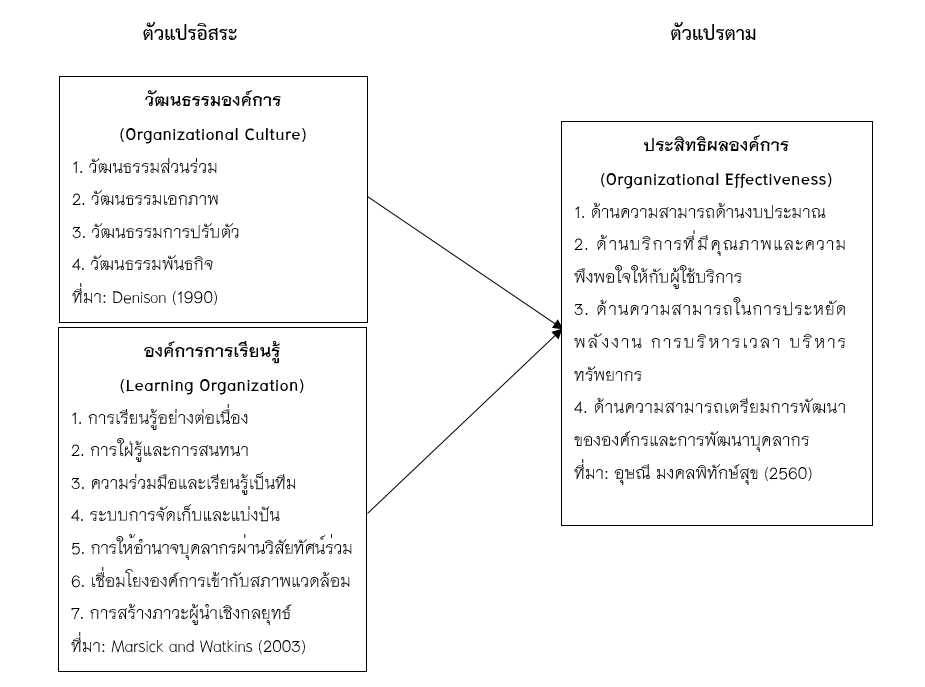
การวิจัยครั้งนี้ มีวัตถุประสงค์เพื่อ 1) ศึกษาระดับความคิดเห็นเกี่ยวกับวัฒนธรรมองค์การ องค์การแห่งการเรียนรู้ และประสิทธิผลองค์การ ขององค์การบริหารส่วนตำบลวังทอง อำเภอเมืองกำแพงเพชร จังหวัดกำแพงเพชร และ 2) ศึกษาอิทธิพลของวัฒนธรรมองค์การและองค์การแห่งการเรียนรู้ที่มีอิทธิพลต่อประสิทธิผลองค์การขององค์การบริหารส่วนตำบลวังทอง อำเภอเมืองกำแพงเพชร จังหวัดกำแพงเพชร
การวิจัยนี้เป็นการวิจัยแบบผสานวิธี โดยใช้ทั้งเชิงปริมาณและเชิงคุณภาพ โดยเก็บรวบรวมข้อมูลเชิงปริมาณด้วยแบบสอบถามจากประชากรทั้งหมด 66 คน และสถิติที่ใช้ในการวิเคราะห์ข้อมูล ได้แก่ ค่าความถี่ ร้อยละ ค่าเฉลี่ย และการถดถอยเชิงพหุ การเก็บข้อมูลเชิงคุณภาพเก็บจากการสัมภาษณ์แบบมีโครงสร้างกับผู้ให้ข้อมูลสำคัญ 5 คน และนำมาวิเคราะห์เนื้อหาโดยการเรียบเรียง จำแนกกลุ่ม และตีความเชื่อมโยงความสัมพันธ์เพื่อสรุปผลอย่างเป็นระบบ ทั้งสองวิธีช่วยสนับสนุนและยืนยันผลการวิจัยร่วมกันอย่างมีความน่าเชื่อถือ
ผลการวิจัยพบว่า 1) ภาพรวมของวัฒนธรรมองค์การขององค์การบริหารส่วนตำบลวังทอง อำเภอเมืองกำแพงเพชร จังหวัดกำแพงเพชร อยู่ในระดับมาก ภาพรวมขององค์การแห่งการเรียนรู้ขององค์การบริหารส่วนตำบลวังทอง อำเภอเมืองกำแพงเพชร จังหวัดกำแพงเพชรอยู่ในระดับมาก (μ=3.71) ภาพรวมของระดับประสิทธิผลองค์การขององค์การบริหารส่วนตำบลวังทอง อำเภอเมืองกำแพงเพชร จังหวัดกำแพงเพชร อยู่ในระดับมาก (μ= 4.06) และ 2) วัฒนธรรมองค์การและองค์การแห่งการเรียนรู้มีอิทธิพลต่อประสิทธิผลขององค์การอย่างมีนัยสำคัญทางสถิติที่ระดับ 0.05 โดยเฉพาะวัฒนธรรมการปรับตัวและพันธกิจ รวมถึงการเรียนรู้อย่างต่อเนื่อง การสร้างวิสัยทัศน์ร่วม การเชื่อมโยงกับสภาพแวดล้อม และภาวะผู้นำเชิงกลยุทธ์ ซึ่งล้วนเป็นปัจจัยสำคัญที่ส่งผลต่อประสิทธิผลองค์การ ทั้งนี้ผลการวิจัยเชิงคุณภาพยังสอดคล้องกับเชิงปริมาณ ยืนยันว่าทั้งวัฒนธรรมองค์การและองค์การแห่งการเรียนรู้มีบทบาทสำคัญต่อการพัฒนาประสิทธิผลอย่างชัดเจน
Downloads
เอกสารอ้างอิง
กัลยา วาณิชย์บัญชา. (2560). สถิติสำหรับงานวิจัย (พิมพ์ครั้งที่ 11). สามลดา.
ฐิติพงศ์ กัญจนาภรณ์. (2562). การบริหารทรัพยากรมนุษย์ยุคใหม่. สำนักพิมพ์แห่งจุฬาลงกรณ์มหาวิทยาลัย.
เด่นชัย เอี่ยมสุวรรณ. (2556). การพัฒนาสู่การเป็นองค์การแห่งการเรียนรู้ของกรมทางหลวง [วิทยานิพนธ์ปริญญามหาบัณฑิต, มหาวิทยาลัยเกษตรศาสตร์]. BUUIR.
ปริณ บุญฉลวย. (2556). วัฒนธรรมองค์การ องค์การการเรียนรู้ กับประสิทธิผลองค์การของ ศาลยุติธรรม: ตัวแบบสมการโครงสร้าง. วารสารศิลปศาสตร์ มหาวิทยาลัยอุบลราชธานี, 9(1), 1–21.
สนิษา บุตรกริม. (2565). วัฒนธรรมองค์การที่ส่งผลต่อประสิทธิภาพการทำงานเป็นทีมของ พนักงาน: กรณีศึกษาบริษัทเอกชนแห่งหนึ่งในจังหวัดสุราษฎร์ธานี [วิทยานิพนธ์ปริญญา มหาบัณฑิต ไม่ได้ตีพิมพ์]. มหาวิทยาลัยราชภัฏสุราษฎร์ธานี.
องค์การบริหารส่วนตำบลวังทอง. (2567). ข้อมูลจำนวนบุคลากรประจำปีงบประมาณ 2567. กองทรัพยากรบุคคล องค์การบริหารส่วนตำบลวังทอง อำเภอเมืองกำแพงเพชร จังหวัดกำแพงเพชร.
อุษณี มงคลพิทักษ์สุข. (2560). การประเมินผลการปฏิบัติงานขององค์การปกครองส่วนท้องถิ่น. สำนักพิมพ์แห่งจุฬาลงกรณ์มหาวิทยาลัย.
อุษณี มงคลพิทักษ์สุข. (2561). ความสัมพันธ์ระหว่างวัฒนธรรมองค์การกับประสิทธิผลองค์การ: กรณีศึกษาหน่วยงานภาครัฐ. Research Community and Social Development Journal. 12(3), 66–78.
Cameron, K. S. (1981). The enigma of organizational effectiveness. In D. Baugher (Ed.), Measuring effectiveness (pp. 1–13). Jossey-Bass.
Denison, D. R. (1990). Corporate culture and organizational effectiveness. John Wiley & Sons.
Denison, D. R., & Mishra, A. K. (1995). Toward a theory of organizational culture and effectiveness. Organization Science, 6(2), 204–223.
Hood, C. (1991). A public management for all seasons?. Public Administration, 69(1), 3–19.
Kimberly, J. R. (1979). Issues in the creation of organizations: Initiation, innovation, and institutionalization. Academy of Management Journal, 22(3), 437–457.
Khunsoonthornkit, A., & Panjakajornsak, V. (2018). Thai research and development organization performance: A structural equation model analysis of organizational culture and learning organizations. Asia-Pacific Social Science Review, 17(3), 109-121.
Marsick, V. J., & Watkins, K. E. (1993). Informal and incidental learning in the workplace. Routledge.
Marsick, V. J., & Watkins, K. E. (2003). Demonstrating the value of an organization's learning culture: The dimensions of the learning organization questionnaire. Advances in Developing Human Resources, 5(2), 132–151.
Petrova, K., & Špatenka, J. (2022). The Denison organizational culture survey (DOCS): Empirical review of a digital organizational cultures’ effectiveness. Ad Alta: Journal of Interdisciplinary Research, 12(2), 198–203.
Radnui, U., Pranee, S., Pungnirund, B., & Kortana, T. (2024). Strategic leadership, creativity, organizational culture, and learning organization affecting operational effectiveness of local administrative organizations. Journal of Logistics and Supply Chain Operations, 10(1), 53–68.
ดาวน์โหลด
เผยแพร่แล้ว
รูปแบบการอ้างอิง
ฉบับ
ประเภทบทความ
สัญญาอนุญาต
ลิขสิทธิ์ (c) 2025 มหาวิทยาลัยราชภัฏจันทรเกษม

อนุญาตภายใต้เงื่อนไข Creative Commons Attribution-NonCommercial-NoDerivatives 4.0 International License.
บทความที่ได้รับการตีพิมพ์เป็นลิขสิทธิ์ของมหาวิทยาลัยราชภัฏจันทรเกษม
ข้อความที่ปรากฏในบทความแต่ละเรื่องในวารสารวิชาการเล่มนี้เป็นความคิดเห็นส่วนตัวของผู้เขียนแต่ละท่านไม่เกี่ยวข้องกับมหาวิทยาลัยราชภัฎจันทรเกษม และคณาจารย์ท่านอื่นๆในมหาวิทยาลัยฯ แต่อย่างใด ความรับผิดชอบองค์ประกอบทั้งหมดของบทความแต่ละเรื่องเป็นของผู้เขียนแต่ละท่าน หากมีความผิดพลาดใดๆ ผู้เขียนแต่ละท่านจะรับผิดชอบบทความของตนเองแต่ผู้เดียว