
การใช้ดินซีเมนต์แทนหินคลุกในการก่อสร้างถนน
Article Sidebar
Main Article Content
บทคัดย่อ
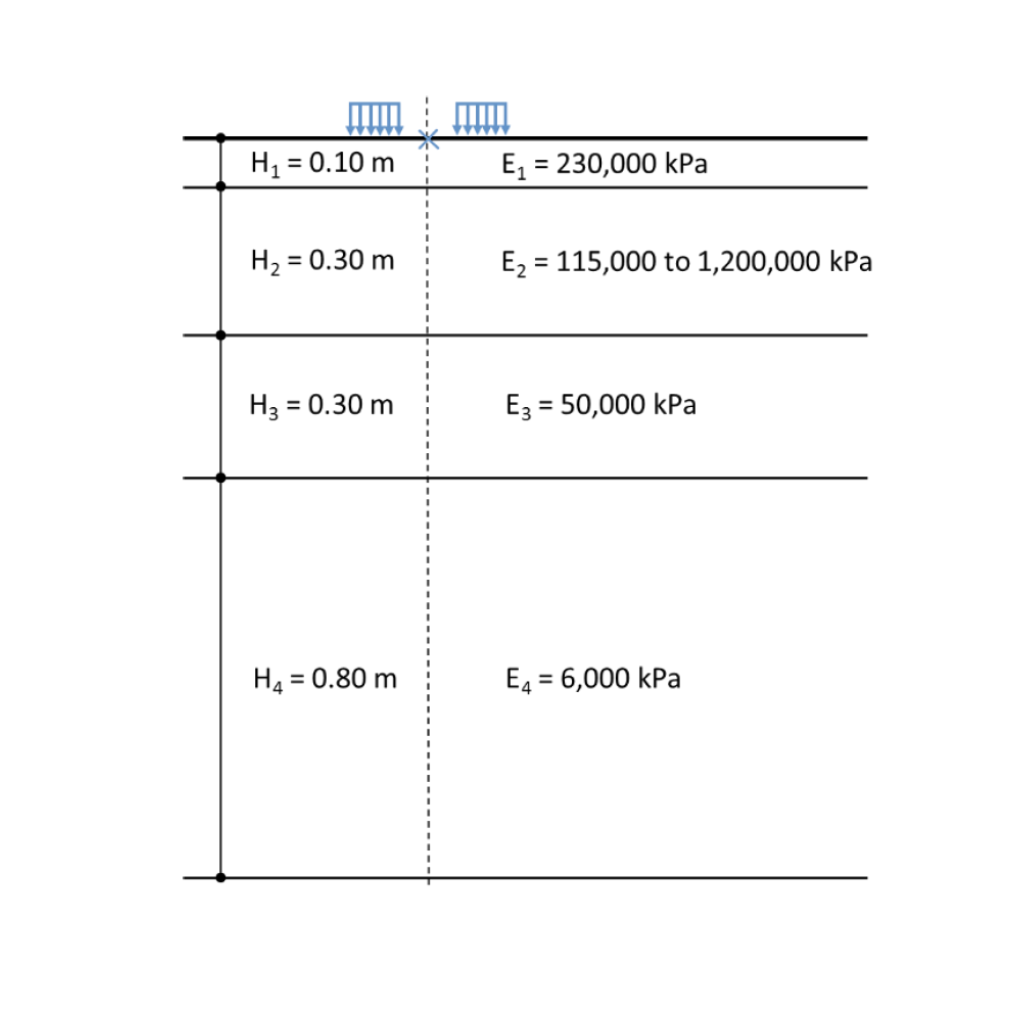
เนื่องจากปัจจุบันมีการขาดแคลนปริมาณหินคลุกในพื้นที่ ซึ่งเป็นปัญหาสำคัญและเร่งด่วนสำหรับการหาแหล่งวัสดุในการก่อสร้างถนน จึงมีความจำเป็นที่จะต้องนำดินลูกรังผสมซีเมนต์มาใช้เป็นวัสดุพื้นทางทดแทนการใช้หินคลุก การใช้ดินซีเมนต์แทนหินคลุกจะทำให้ได้วัสดุทำถนนที่มีราคาถูก เนื่องจากใช้วัสดุจากพื้นที่ก่อสร้าง งานวิจัยนี้ทำการศึกษาคุณสมบัติทางวิศวกรรมของดินซีเมนต์สำหรับใช้เป็นวัสดุพื้นทางแทนชั้นหินคลุก เพื่อช่วยลดโอกาสการเกิดอุบัติเหตุจากการขนส่งวัสดุจากแหล่งหินคลุกที่อยู่ห่างไกลมายังพื้นที่ก่อสร้าง และจากผลการทดสอบดินซีเมนต์พบว่าค่ากำลังอัดของดินลูกรังผสมซีเมนต์มีค่ามากกว่า 17.50 กิโลกรัมต่อตารางเซนติเมตร (ksc) ที่ระยะเวลาบ่ม 7 วัน อยู่ในเกณฑ์ที่กำหนดตามมาตรฐานของกรมทางหลวง คุณสมบัติทางวิศวกรรมของดินซีเมนต์มีความแข็งแรงและทนทานเมื่ออัดแน่นแล้ว จากผลการศึกษาโดยใช้โปรแกรมคอมพิวเตอร์สำหรับการวิเคราะห์การเคลื่อนตัวของดินซีเมนต์พบว่าค่าการทรุดตัวของถนนน้อยกว่า 3 เซนติเมตร ช่วยลดปัญหาการทรุดตัวของถนน
Article Details

อนุญาตภายใต้เงื่อนไข Creative Commons Attribution-NonCommercial-NoDerivatives 4.0 International License.
เนื้อหาและข้อมูลในบทความที่ลงตีพิมพ์ในวารสารวิชชา มหาวิทยาลัยราชภัฏนครศรีธรรมราช ถือเป็นข้อคิดเห็นและความรับผิดชอบของผู้เขียนบทความโดยตรง ซึ่งกองบรรณาธิการวารสารไม่จำเป็นต้องเห็นด้วยหรือร่วมรับผิดชอบใด ๆ
บทความ ข้อมูล เนื้อหา รูปภาพ ฯลฯ ที่ได้รับการตีพิมพ์ในวารสารวิชชา มหาวิทยาลัยราชภัฏนครศรีธรรมราช ถือเป็นลิขสิทธ์ของวารสารวิชชา มหาวิทยาลัยราชภัฏนครศรีธรรมราช หากบุคคลหรือหน่วยงานใดต้องการนำข้อมูลทั้งหมดหรือส่วนหนึ่งส่วนใดไปเผยแพร่ต่อหรือเพื่อการกระทำการใด ๆ จะต้องได้รับอนุญาตเป็นลายลักษณ์อักษรจากวารสารวิชชา มหาวิทยาลัยราชภัฏนครศรีธรรมราชก่อนเท่านั้น
The content and information in the article published in Wichcha journal Nakhon Si Thammarat Rajabhat University, It is the opinion and responsibility of the author of the article. The editorial journals do not need to agree. Or share any responsibility.
เอกสารอ้างอิง
Advance Standards Transforming Markets (ASTM). (2007). ASTM D1632-07: Standard practice for making and curing soil-cement compression and flexure test specimens in the laboratory. Pennsylvania: ASTM International.
Advance Standards Transforming Markets (ASTM). (2017). ASTM D1633-17: Standard test methods for compressive strength of molded soil-cement cylinders. Pennsylvania: ASTM International.
Balmer, G.G. (1958). Shear strength and elastic properties of soil-cement mixtures under triaxial loading. In Proceedings of American Society for Testing Materials (pp. 1187-1204). Illinois: Portland Cement Association Research and Development Laboratories.
Briaud, J.L., Smith, B.E. and Meyer, B.R. (2000). Behavior of pile foundations under cyclic loading. Journal of Geotechnical and Geoenvironmental Engineering, 126(4), 333-344.
Clough, G.W., Sitar, N., Bachus, R.C. and Rad, N.S. (1981). Cemented sands under static loading. Journal of the Geotechnical Engineering Division, 107(6), 799-817, doi: https://doi.org/10.1061/AJGEB6.0001152.
Consoli, N.C., Foppa, D., Festugato, L. and Heineck, K.S. (2007). Key parameters for strength control of artificially cemented soils. Journal of Geotechnical and Geoenvironmental Engineering, 133(2), 197-205, doi: https://doi.org/10.1061/(ASCE)1090-0241(2007)133:2(197).
Consoli, N.C., Rosa, A.D., Corte, M.B., Lopes, L.D.S. and Consoli, B.S. (2011). Porosity-cement ratio controlling strength of artificially cemented clays. Journal of Materials in Civil Engineering, 23(8), 1249-1254, doi: https://doi.org/10.1061/(ASCE)MT.1943-5533.0000283.
Consoli, N.C., Vendruscolo, M.A. and Prietto, P.D.M. (2003). Behavior of plate load tests on soil layers improved with cement and fiber. Journal of Geotechnical and Geoenvironmental Engineering, 129(1), 96-101, doi: https://doi.org/10.1061/(ASCE)1090-0241(2003)129:1(96).
Dass, R.N., Yen, S.C., Puri, V.K., Das, B.M. and Wright, M.A. (1994). Tensile stress-strain characteristics of lightly cemented sand. Geotechnical Testing Journal, 17(3), 305-314, doi: https://doi.org/10.1520/GTJ10105J.
Huang, Y.H. (2004). Pavement analysis and design. New Jersey: Pearson, Prentice Hall.
Ingles, O.G. and Metcalf, J.B. (1972). Soil stabilization principles and practice. Sydney: Butterworths.
Jaritngam, S., Somchainuek, O. and Taneerananon, P. (2014). Feasibility of laterite-cement mixture as pavement base course aggregate. Iranian Journal of Science and Technology - Transactions of Civil Engineering, 38(C1), 275-284.
Jaritngam, S., Yandell, W.O. and Taneerananon, P. (2013). Development of strength model of lateritic soil-cement. Engineering Journal, 17(1), 69-78.
Kukko, H. (2000). Stabilization of clay with inorganic by-products. Journal of Materials in Civil Engineering, 12(4), 307-309, doi: https://doi.org/10.1061/(ASCE)0899-1561(2000)12:4(307).
Kulhawy, F.H. and Mayne, P.W. (1990). Manual on estimating soil properties for foundation design. California: Electric Power Research Institute.
Lee, F.H., Lee, Y., Chew, S.H. and Yong, K.Y. (2005). Strength and modulus of marine clay-cement mixes. Journal of Geotechnical and Geoenvironmental Engineering, 131(2), 178-186, doi: https://doi.org/10.1061/(ASCE)1090-0241(2005)131:2(178).
Little, D.N. and Nair, S. (2009). Recommended practice for stabilization of subgrade soils and base materials (NCHRP Report 20-07). Texas: Texas Transportation Institute.
Lorenzo, G. and Bergado, D.T. (2006). Fundamental characteristics of cement-admixed clay in deep mixing. Journal of Materials in Civil Engineering, 18(2), 161-174, doi: https://doi.org/10.1061/(ASCE)0899-1561(2006)18:2(161).
McCarthy, J.E. (1994). Soil stabilization for pavements. Washington, DC: Department of the Army and Air Force of the United States.
Mitchell, J.K., Ueng, T.S. and Monismith, C.L. (1972). Behavior of stabilized soils under repeated loading: Report 5, performance evaluation of cement-stabilized soil layers and its relationship to pavement design. California: University of California.
Rutherford, C., Biscontin, G. and Briaud, J.L. (2005). Design manual for excavation support using deep mixing technology. Texas: Texas A&M University.
Uddin, K., Balasubramaniam, A.S. and Bergardo, D.T. (1997). Engineering behaviors of cement treated Bangkok soft clay. Journal of Geotechnical and Geoenvironmental Engineering, 28(1), 89-119.
Wang, D., Olowokere, D. and Zhang, L. (2014). Interpretation of soil-cement properties and application in numerical studies of ground settlement due to tunneling under existing metro line. Geotechnical and Geological Engineering, 32(5), 1275-1289, doi: https://doi.org/10.1007/s10706-014-9803-2.
Winterkorn, H.F. and Fang, H.Y. (1991). Soil technology and engineering properties of soils. In Fang, H.Y. (Ed.). Foundation engineering handbook, pp. 88-143. New York: Springer.
