บทบรรณาธิการ
บทคัดย่อ
วารสารวิจัยและส่งเสริมวิชาการเกษตร ปีที่ 41 ฉบับที่ 1 (มกราคม – เมษายน 2567) วารสารวิจัย ฯ ฉบับนี้ เป็นฉบับแรกของปี 2567 การเปลี่ยนแปลงสภาพภูมิอากาศ ยังคงครองแชมป์ที่ทั่วโลกและประเทศไทยให้ความสำคัญ ในขณะที่ปัญหาฝุ่น PM 2.5 ที่ต่อเนื่องมาตั้งแต่ปลายปีที่ผ่านมา โดยประเทศไทยได้มีการเพิ่มระดับความเข้มงวดปรับค่ามาตรฐานของ PM 2.5 โดยปรับค่าเฉลี่ย 24 ชั่วโมง เป็น 37.5 ไมโครกรัมต่อลูกบาศก์เมตร จากเดิม 50 ไมโครกรัมต่อลูกบาศก์เมตร ปัญหาทรัพยากรน้ำ ก็เป็นปัญหาสำคัญโดยเฉพาะวิกฤตที่เกิดขึ้นจากการเปลี่ยนแปลงสภาพภูมิอากาศ ทั้งน้ำท่วมและน้ำแล้ง จึงควรมีการวางแผนการใช้ประโยชน์จากน้ำให้เกิดประโยชน์สูงสุด เราควรจัดการที่ดินให้ชุมชนทำเกษตรกรรมที่ไม่ทำลายสิ่งแวดล้อม เพิ่มขีดความสามารถในการปรับตัวต่อการเปลี่ยนแปลงสภาพภูมิอากาศ โดยเฉพาะในภาคการเกษตร ประมง และกลุ่มเปราะบางด้วยการให้ความรู้ มุ่งเน้นการพัฒนาเศรษฐกิจที่ลดผลกระทบต่อสังคม และการรักษาสมดุลสิ่งแวดล้อม ลดการปล่อยก๊าซเรือนกระจก โดยใช้วิทยาศาสตร์ เทคโนโลยี และนวัตกรรม เข้ามาเพิ่มมูลค่าสินค้าและบริการ สร้างรายได้ลดความเหลื่อมล้าโดยไม่ทิ้งใครไว้ข้างหลัง
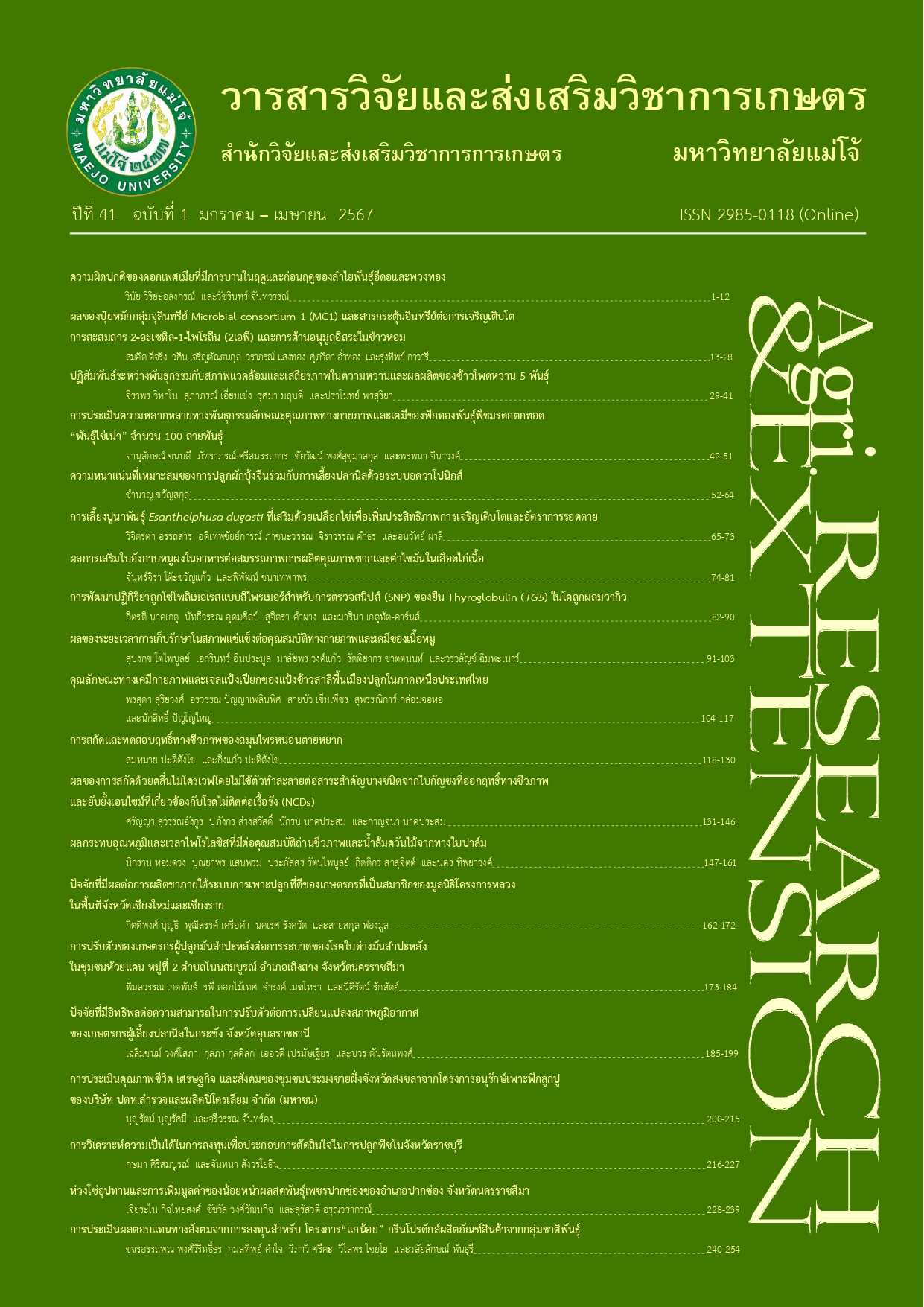
วารสารวิจัย ฯ ฉบับนี้ มีบทความวิจัยที่น่าสนใจที่หลากหลายและสอดคล้องกับสถานการณ์การเปลี่ยนแปลงสภาพภูมิอากาศ เช่น ปฏิสัมพันธ์ระหว่างพันธุกรรมกับสภาพแวดล้อมและเสถียรภาพในความหวานและผลผลิตของข้าวโพดหวาน ความผิดปกติของดอกเพศเมียที่มีการบานในฤดูและก่อนฤดูของลำไยพันธุ์อีดอและพวงทอง ปัจจัยที่มีอิทธิพลต่อความสามารถในการปรับตัวต่อการเปลี่ยนแปลงสภาพภูมิอากาศของเกษตรกรผู้เลี้ยงปลานิลในกระชังจังหวัดอุบลราชธานี ตลอดจนบทความวิจัยที่ด้านเกษตรอินทรีย์ เช่น การสกัดและทดสอบฤทธิ์ทางชีวภาพของสมุนไพรหนอนตายหยาก ผลของการสกัดด้วยคลื่นไมโครเวฟโดยไม่ใช้ตัวทำละลายต่อสารสำคัญบางชนิดจากใบกัญชง ที่ออกฤทธิ์ทางชีวภาพและยับยั้งเอนไซม์ ที่เกี่ยวข้องกับโรคไม่ติดต่อเรื้อรัง (NCDs) คุณลักษณะทางเคมีกายภาพและเจลแป้งเปียกของแป้งข้าวสาลีพื้นเมือง ปลูก ในภาคเหนือประเทศไทย ผลกระทบอุณหภูมิและเวลาไพโรไลซิสที่มีต่อคุณสมบัติถ่านชีวภาพและน้ำส้มควันไม้จากทางใบปาล์ม ปัจจัยที่มีผลต่อการผลิตชาภายใต้ระบบการเพาะปลูกที่ดีของเกษตรกร ที่เป็นสมาชิกของมูลนิธิโครงการหลวงในพื้นที่จังหวัดเชียงใหม่และเชียงราย ตลอดจนงานวิจัยด้านการส่งเสริมการเกษตร ตามบริบทภูมิสังคมต่าง ๆ ที่น่าสนใจอีกหลาย ๆ เรื่องครับ แล้วพบกันใหม่ในฉบับที่ 2 เดือนพฤษภาคม – สิงหาคม ครับ
ดาวน์โหลด
เผยแพร่แล้ว
รูปแบบการอ้างอิง
ฉบับ
ประเภทบทความ
สัญญาอนุญาต

อนุญาตภายใต้เงื่อนไข Creative Commons Attribution-NonCommercial-NoDerivatives 4.0 International License.
บทความนี้ได้รับการเผยแพร่ภายใต้สัญญาอนุญาต Creative Commons Attribution-NonCommercial-NoDerivatives 4.0 International (CC BY-NC-ND 4.0) ซึ่งอนุญาตให้ผู้อื่นสามารถแชร์บทความได้โดยให้เครดิตผู้เขียนและห้ามนำไปใช้เพื่อการค้าหรือดัดแปลง หากต้องการใช้งานซ้ำในลักษณะอื่น ๆ หรือการเผยแพร่ซ้ำ จำเป็นต้องได้รับอนุญาตจากวารสาร