ปัจจัยที่มีอิทธิพลต่อพฤติกรรมการใช้สารเคมีกำจัดศัตรูพืชของเกษตรกรผู้ปลูกมันสำปะหลัง อำเภอท่าคันโท จังหวัดกาฬสินธุ์
DOI:
https://doi.org/10.14456/jare-mju.2026.19คำสำคัญ:
เกษตรกรผู้ปลูกมันสำปะหลัง , พฤติกรรมการใช้สารเคมี, สารเคมีกำจัดศัตรูพืชบทคัดย่อ
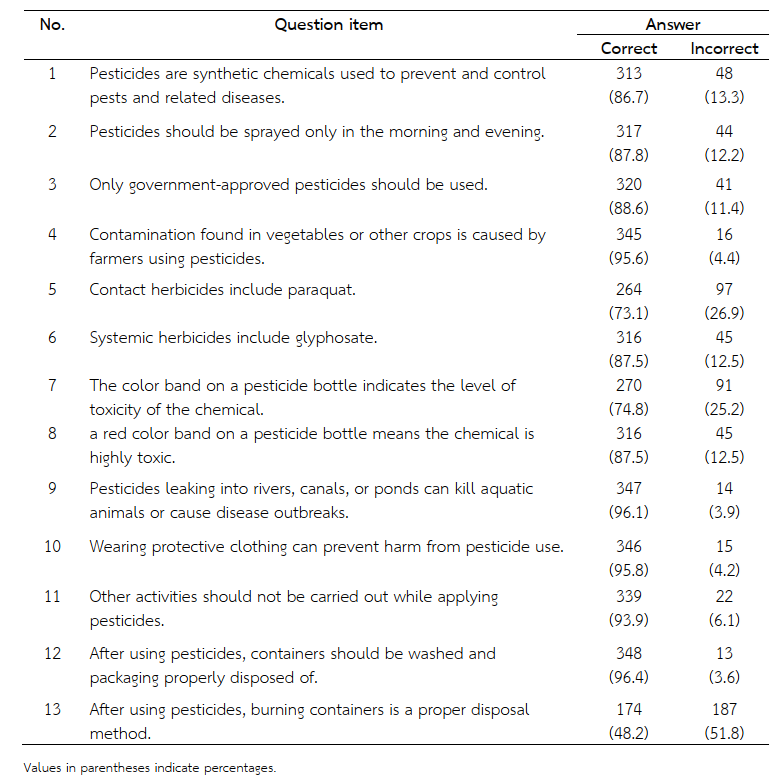
การวิจัยครั้งมีวัตถุประสงค์เพื่อศึกษาลักษณะทางเศรษฐกิจสังคม ระดับความรู้และความคิดเห็น ที่มีอิทธิพลต่อพฤติกรรมการใช้สารเคมีกำจัดศัตรูพืชของเกษตรกรผู้ปลูกมันสำปะหลัง อำเภอท่าคันโท จังหวัดกาฬสินธุ์ โดยใช้แบบสัมภาษณ์ในการเก็บข้อมูลจากเกษตรกร จำนวน 361 ราย สถิติที่ใช้ในการวิเคราะห์ข้อมูล ได้แก่ ค่าร้อยละ ค่าเฉลี่ย ส่วนเบี่ยงเบนมาตรฐาน ค่าต่ำสุด ค่าสูงสุด และการวิเคราะห์การถดถอยแบบพหุคูณ ผลการศึกษาพบว่า เกษตรกรส่วนใหญ่เป็น เพศหญิงอายุเฉลี่ย 46–55 ปี สมรสแล้ว จบการศึกษา ชั้นประถมศึกษา มีสมาชิกในครัวเรือน เฉลี่ย 4-7 คน มีรายได้จากการปลูกมันสำปะหลังเฉลี่ยน้อยกว่า 50,000 บาทต่อปี ถือครองที่ดิน เฉลี่ย 10–20 ไร่ ใช้แรงงานและเงินทุนของตนเองเป็นหลัก ผลการศึกษาด้านความรู้พบว่า เกษตรกรส่วนใหญ่มีความรู้เกี่ยวกับการใช้สารเคมีกำจัดศัตรูพืชอยู่ในระดับมาก (8.68–13.00 คะแนน) แม้ยังมีความเข้าใจคลาดเคลื่อนบางประเด็น เช่น การกำจัดภาชนะบรรจุสารเคมี และมีพฤติกรรมการใช้สารเคมีกำจัดศัตรูพืชอย่างเป็นขั้นตอนทั้งก่อนใช้ ขณะใช้ และหลังการใช้ โดยส่วนใหญ่ปฏิบัติได้ถูกต้องและปลอดภัย ในระดับสูง โดยคำนึงถึงความปลอดภัยของตนเอง ครอบครัว และสิ่งแวดล้อม ผลการทดสอบสมมติฐานพบว่า ระดับการศึกษา ความรู้พื้นฐาน และทัศนคติการใช้สารเคมี เมื่อพบการระบาดรุนแรง มีความสัมพันธ์เชิงบวกกับพฤติกรรมการใช้สารเคมีอย่างมีนัยสำคัญ (P<0.10) ขณะที่ทัศนคติต่อการปนเปื้อนของผลผลิตมีความสัมพันธ์เชิงลบอย่างมีนัยสำคัญ (P<0.10) ข้อเสนอแนะเชิงนโยบาย ได้แก่ การสนับสนุนเครื่องจักร ปุ๋ย สารชีวภาพ เงินกู้ดอกเบี้ยต่ำ และเงินอุดหนุน จัดอบรมลดการใช้สารเคมี ให้คำปรึกษาจากผู้เชี่ยวชาญ รับประกันราคาผลผลิตปลอดสาร เชื่อมโยงตลาด ออกกฎหมายส่งเสริมการลดการใช้สารเคมี และลดภาษีแก่เกษตรกรที่ปฏิบัติตาม
เอกสารอ้างอิง
Abate,T., A. van Huis and J.K.O. Ampofo. 2000. Pest management strategies in traditional agriculture: an African perspective. Annual Review of Entomology 45(1): 631–659.
Bureau of Epidemiology, Department of Disease Control. 2011. Pesticide Poisoning. pp. 136–138. In Annual Surveillance Report 2011. Bangkok: Department of Disease Control. [in Thai]
Bureau of Occupational and Environmental Diseases. 2015. Situation of diseases and health hazards from pesticides. Retrieved from http://envocc.ddc.moph.go.th/contents/view/106 [in Thai]
Damalas, C.A. and I.G. Eleftherohorinos. 2011. Pesticide exposure, safety issues, and risk assessment indicators. International Journal of Environmental Research and Public Health 8(5): 1402–1419.
Department of Agriculture. 2019. Quantity and value of agricultural hazardous substances imports, 2008–2018. Retrieved from http://www.oae.go.th/view/1/ปัจจัยการผลิต/TH-TH [in Thai]
Janposri, P., W. Iamchum and B. Sombatthira. 2024. Factors influencing household indebtedness of farmers: a case study of Borabu district, Maha Sarakham province. Journal of Management and Development Ubon Ratchathani Rajabhat University 11(1): 227–240. [in Thai]
Jørs, E., R.C. Morant, G.C. Aguilar, O. Huici, F. Lander, J. Baelum and F. Konradsen. 2006. Occupational pesticide intoxications among farmers in Bolivia: a cross-sectional study. Environmental Health: A Global Access Science Source 5(10): 1–9.
Kalasin Provincial Agriculture Office. 2023. Report on the registration of cassava farmers. 2023/24 Kalasin province. Retrieved from https://farmer.doae.go.th/report/report66/report_cassava66_fmdfbd [in Thai]
Kalasin Provincial Public Health Office. 2023. Report on Screening for Risks from Occupational and Environmental Exposure to Pesticides for the Past 3 Years (2020–2022). Kalasin Province: Kalasin Provincial Public Health Office 3 p. [in Thai]
Kanjanajitra, C. 2012. Thai Health 2012: Food Security – The Illusion of Money vs The Reality of Food. Bangkok: Amarin Printing and Publishing. 120 p. [in Thai]
Moathong, P., W. Thongkhot and S. Uengpanyatwarn. 2017. Determining the sample size by the Yamane’s formula. Retrieved from http://sc2.kku.ac.th/stat/statweb/images/Eventpic/60/Seminar/01_9_Yamane.pdf [in Thai]
Netrathip, D. 1997. Pesticide Use of the Small Farm Holding Farmers in Tambon Pua, Amphoe Pua, Changwat Nan. Master Thesis. Chiang Mai University. 104 p. [in Thai]
Ngowi, A.V., D.N. Maeda, C. Wesseling, T.J. Partanen, M.P. Sanga and G. Mbise. 2007. Smallholder vegetable farmers in Northern Tanzania: pesticides use practices, perceptions, cost and health effects. Crop Protection 26(11): 1617–1624.
Pradubwong, A. 2010. Pollution from hazardous chemicals in Thailand. Environmental Health Journal 12: 3–13. [in Thai]
Praneetvatakul, S., P. Schreinemachers, P. Pananurak and P. Tipraqsa. 2013. Pesticides, external costs and policy options for Thai agriculture. Environmental Science & Policy 27: 103–113.
Ramaiwong, P. and L. Charerntanyarak. 2020. Factor associated with cholinesterase levels of agriculturists in Yangom sub-district, Thakhantho district, Kalasin province. KKU Journal for Public Health Research 13(4): 1–13. [in Thai]
Ronnarongnuruk, P. 2015. Factor Affecting Agricultural Debt of Sugarcane Farmers, Cassava Farmers and Rice Farmers: An Empirical Study Base on Kanchanaburi and Petchaburi Province in Thailand. Master Thesis. Thammasat University. 69 p. [in Thai]
Tha Khantho District Agriculture Office. 2021. Report on pest outbreaks, 2021, Tha Khantho district, Kalasin province. Retrieved from https://report-ppsf.doae.go.th/site/login [in Thai]
Tha Khantho District Agriculture Office. 2022. Report on the registration of cassava farmers, 2022/23, Tha Khantho district, Kalasin province. Retrieved from https://farmer.doae.go.th/report/report65/report_cassava65_fmdfbd [in Thai]
Thai Tapioca Starch Association. 2023. Cassava prices as of October. Retrieved from http://thaitapioca.org/2023-27-15/ [in Thai]
Thanomsit, C. and N. Malaram. 2017. Effects of glyphosate on aquatic life. Kochchasarn Journal of Science 39(1): 98–109. [in Thai]
Wannaudom, P. 2018. Factors that make communication to reduce the use of agricultural chemicals in Thailand unsuccessful. CRRU Journal of Communication Chiangrai Rajabhat University 1(3): 42–65. [in Thai]
ดาวน์โหลด
เผยแพร่แล้ว
รูปแบบการอ้างอิง
ฉบับ
ประเภทบทความ
สัญญาอนุญาต
ลิขสิทธิ์ (c) 2026 วารสารวิจัยและส่งเสริมวิชาการเกษตร

อนุญาตภายใต้เงื่อนไข Creative Commons Attribution-NonCommercial-NoDerivatives 4.0 International License.
บทความนี้ได้รับการเผยแพร่ภายใต้สัญญาอนุญาต Creative Commons Attribution-NonCommercial-NoDerivatives 4.0 International (CC BY-NC-ND 4.0) ซึ่งอนุญาตให้ผู้อื่นสามารถแชร์บทความได้โดยให้เครดิตผู้เขียนและห้ามนำไปใช้เพื่อการค้าหรือดัดแปลง หากต้องการใช้งานซ้ำในลักษณะอื่น ๆ หรือการเผยแพร่ซ้ำ จำเป็นต้องได้รับอนุญาตจากวารสาร