Diversity and Nutritional Value of Local Vegetable Side Dishes (Pak Nhor) in Muang Khon–Style Thai Rice Noodle Meals within the Kao–Pa–Na–Lay Context of Nakhon Si Thammarat
Article Sidebar
Main Article Content
Abstract
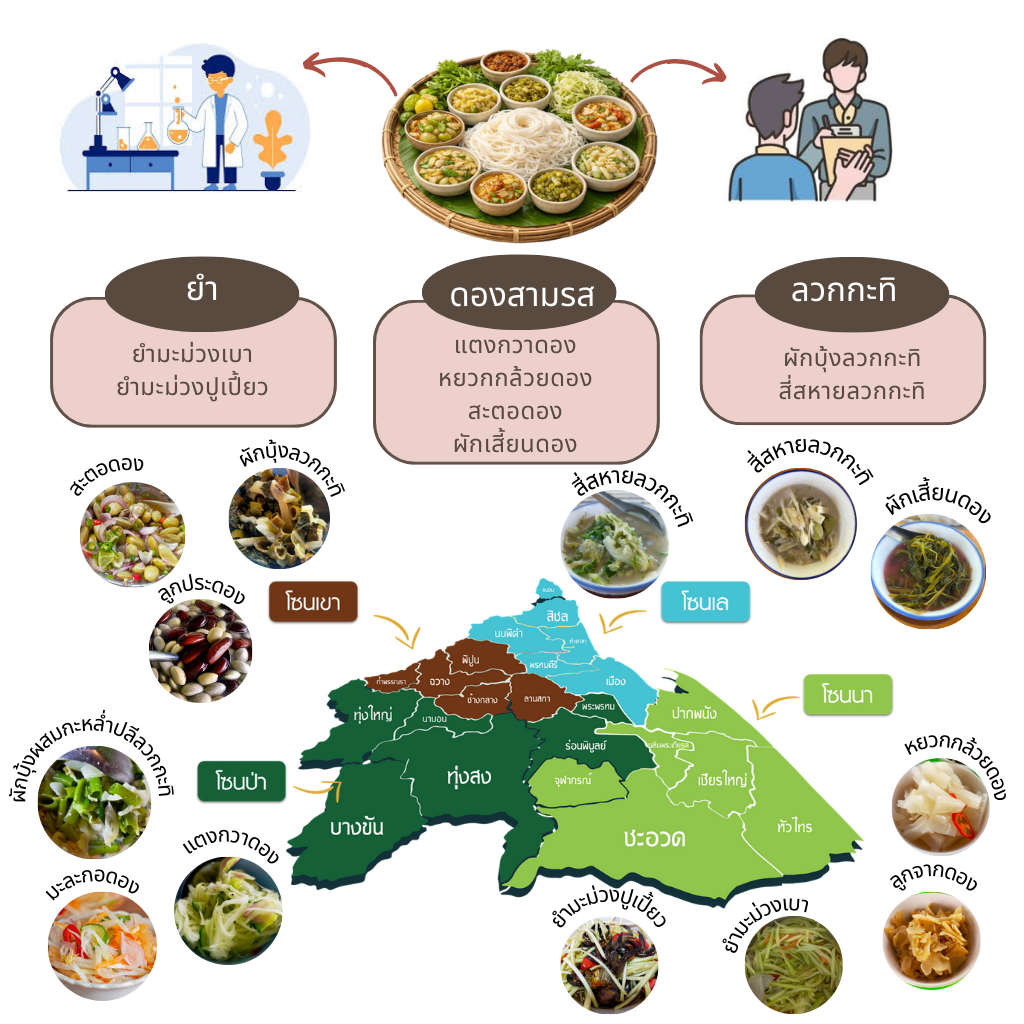
This study aimed to investigate the diversity and nutritional value of processed local vegetable side dishes (Pak Nhor) served with Khanom Jeen (Thai rice noodles) in four distinct geographical contexts mountain (Kao), forest (Pa), rice field (Na), and coastal (Lay) areas of Nakhon Si Thammarat Province, Thailand. Data were collected through field interviews and laboratory-based nutritional analyses. The results indicated that processed Pak Nhor could be classified into three main categories: pickled vegetables, coconut-blanched vegetables, and traditional salad-type preparations. Pickled cucumber, pickled papaya, and coconut-blanched vegetables were commonly found across all four areas. Traditional salad-type preparations were found exclusively in the rice field (Na) area, including young mango salad and young mango salad with local freshwater crab (Pu Piaw). Distinctive processed vegetables in the mountain (Kao) area included pickled Luk Pra (local wild legume pods) and pickled bitter bean (Sator). The coastal (Lay) area featured pickled mustard greens and a coconut-blanched mixed vegetable dish locally known as “Four Friends,” while the forest (Pa) area was characterized by Ajaad-style pickled cucumber and a coconut-blanched mixture of water spinach and banana stalks. Nutritional analysis revealed that different types of processed Pak Nhor exhibited distinct nutrient profiles. Pickled vegetables generally contained higher sodium and sugar contents. Pickled nipa palm fruit, pickled banana pith, and pickled cucumber showed high sugar contents (15.09±0.04, 11.20±0.03, and 9.74±0.04 g per 100 g edible portion, respectively). In contrast, pickled Luk Pra, pickled Sator, and pickled mustard greens were high in sodium (1,256.70±0.57, 1,102.40±0.25, and 829.40±0.06 mg per 100 g edible portion, respectively). In addition, each type of processed vegetable demonstrated distinctive vitamin and mineral contents depending on the plant species and processing method used. This study highlights the potential of processed local vegetables (Pak Nhor) as traditional functional foods that contribute to dietary diversity, support local food systems, promote community-based economic development, and aid in the preservation of regional culinary heritage.
Article Details

This work is licensed under a Creative Commons Attribution-NonCommercial-NoDerivatives 4.0 International License.
เนื้อหาและข้อมูลในบทความที่ลงตีพิมพ์ในวารสารวิชชา มหาวิทยาลัยราชภัฏนครศรีธรรมราช ถือเป็นข้อคิดเห็นและความรับผิดชอบของผู้เขียนบทความโดยตรง ซึ่งกองบรรณาธิการวารสารไม่จำเป็นต้องเห็นด้วยหรือร่วมรับผิดชอบใด ๆ
บทความ ข้อมูล เนื้อหา รูปภาพ ฯลฯ ที่ได้รับการตีพิมพ์ในวารสารวิชชา มหาวิทยาลัยราชภัฏนครศรีธรรมราช ถือเป็นลิขสิทธ์ของวารสารวิชชา มหาวิทยาลัยราชภัฏนครศรีธรรมราช หากบุคคลหรือหน่วยงานใดต้องการนำข้อมูลทั้งหมดหรือส่วนหนึ่งส่วนใดไปเผยแพร่ต่อหรือเพื่อการกระทำการใด ๆ จะต้องได้รับอนุญาตเป็นลายลักษณ์อักษรจากวารสารวิชชา มหาวิทยาลัยราชภัฏนครศรีธรรมราชก่อนเท่านั้น
The content and information in the article published in Wichcha journal Nakhon Si Thammarat Rajabhat University, It is the opinion and responsibility of the author of the article. The editorial journals do not need to agree. Or share any responsibility.
References
กามีละห์ ยะโกะ. (2566). ประสิทธิภาพในการต้านอนุมูลอิสระของผักพื้นบ้านในจังหวัดสุราษฎร์ธานี. วารสารวิชชา มหาวิทยาลัยราชภัฏนครศรีธรรมราช, 42(1), 93-103, doi: https://doi.org/10.65217/wichchajnstru.2023.v42i1.256643.
จารุวรรณ ธรรมวัตร. (2543). ภูมิปัญญาอีสาน. โครงการตำรา. คณะมนุษยศาสตร์และสังคมศาสตร์ มหาวิทยาลัยมหาสารคาม.
ชุตินุช สุจริต และไวกูณฐ์ ฤทธิรุฒม์. (2556). การผลิตกุ้งส้มบรรจุในภาชนะปิดที่ผ่านการแปรรูปด้วยความร้อน. รายงานวิจัย. มหาวิทยาลัยเทคโนโลยีราชมงคลศรีวิชัย.
นฤมล มีบุญ เยาวมาลย์ เขียวสะอาด สมพร เรืองอ่อน สมรักษ์ รอดเจริญ และสิริลักษณ์ สินธุพาชี. (2568). การประเมินความหลากหลาย ปริมาณสารอาหาร และฤทธิ์ต้านอนุมูลอิสระของผักพื้นบ้านในเมนูขนมจีนเมืองนครศรีธรรมราช ประเทศไทย. วารสารวิชชา มหาวิทยาลัยราชภัฏนครศรีธรรมราช, 44(2), 102-120, doi: https://doi.org/10.65217/wichchajnstru.2025.v44i2.264856.
นฤมล มีบุญ วันดี แก้วสุวรรณ อุษา นุ้ยจันทร์ ฐิรารัตน์ แก้วจำนง และจีราภรณ์ สังข์ผุด. (2563). การพัฒนากระบวนการแปรรูปผลิตภัณฑ์ลูกประ กรณีศึกษา: ผลิตภัณฑ์ลูกประดอง และลูกประทอด. รายงานวิจัย. มหาวิทยาลัยราชภัฏนครศรีธรรมราช.
นันทวัน เอื้อวงศ์กูล ชนาพร รัตนมาลี และศักดา ดาดวง. (2560). การวิเคราะห์หาปริมาณวิตามินซีในผักและผลไม้พื้นบ้าน จังหวัดนครพนม. วารสารมหาวิทยาลัยสวนดุสิต, 10(1), 153-169.
นุจรินทร์ ศิริวาลย์. (2551). การหาปริมาณธาตุอาหารบางชนิดในผักพื้นบ้าน จังหวัดสกลนคร. การประชุมวิชาการมหาวิทยาลัยเกษตรศาสตร์ ครั้งที่ 46 (สาขาวิทยาศาสตร์) (หน้า 624-630). กรุงเทพฯ: มหาวิทยาลัยเกษตรศาสตร์.
มยูร หลําสุบ. (2553). การหาปริมาณเหล็กในผักพื้นบ้านภาคใต้บางชนิดโดยวิธีเฟลมอะตอมมิกแอบซอร์พชันสเปกโตรเมตรี. วิทยานิพนธ์วิทยาศาสตรมหาบัณฑิต (เคมี). มหาวิทยาลัยวลัยลักษณ์, นครศรีธรรมราช.
ลลิตา ธีระสิริ. (2545). ผักพื้นบ้านคุณค่าธรรมชาติของผักไทย. (พิมพ์ครั้งที่ 4). กรุงเทพฯ: พร้อมทรรศน์.
วาริชัย พิมพ์บุตร. (2554). ปริมาณสารประกอบฟีนอลิก คลอโรฟิลล์ แคโรทีนอยด์ และฤทธิ์การต้านออกซิเดชันในใบ อ่อนของผักพื้นบ้าน. วิทยานิพนธ์วิทยาศาสตรมหาบัณฑิต (เทคโนโลยีการผลิตพืช). มหาวิทยาลัยมหาสารคาม, มหาสารคาม.
วิชุดา เกตุใหม่ ทิพย์ทิวา สัมพันธ์มิตร และนันทิดา สุธรรมวงศ์. (2553). คุณค่าทางโภชนาการและสมบัติต้านอนุมูลอิสระของผักพื้นบ้าน 4 ชนิด ที่คัดเลือกได้จากอำเภอกงหรา จังหวัดพัทลุง. วารสารมหาวิทยาลัยทักษิณ, 13(3), 133-140.
สำนักโภชนาการ กรมอนามัย กระทรวงสาธารณสุข. (2561). ตารางแสดงคุณค่าทางโภชนาการของอาหารไทย. กรุงเทพฯ: สำนักงานกิจการโรงพิมพ์องค์การสงเคราะห์ทหารผ่านศึก.
สำนักโภชนาการ กรมอนามัย กระทรวงสาธารณสุข. (2563). ตารางปริมาณสารอาหารอ้างอิงที่ควรได้รับประจำวันสำหรับคนไทย พ.ศ. 2563. กรุงเทพฯ: ห้างหุ้นส่วนจำกัด เอ.วี. โปรเกรสซีฟ.
อชิรญา คําจันทร์ศุภสิน จุรีภรณ์ นวนมุสิก วราศรี แสงกระจ่าง และวันดี แก้วสุวรรณ. (2556). ความหลากหลายและการใช้ประโยชน์ทางอาหารของพืชผักท้องถิ่นในพื้นที่ตำบลกรุงชิง อำเภอนบพิตํา จังหวัดนครศรีธรรมราช. วารสารวิชชา มหาวิทยาลัยราชภัฏนครศรีธรรมราช, 34(2), 52-63.
อ้อมใจ วงษ์มณฑา. (2547). ธรรมชาติบำบัด. วารสารรูสมิแล, 25(1), 52-57.
AOAC International. (2000). Official methods of analysis. (17th ed). Maryland: The Association of Official Analytical Chemists.
AOAC International. (2016). Official methods of analysis. (20th ed). Washington DC: The Association of Official Analytical Chemists.
Bogdanov, S. (2010). Nutritional and functional properties of honey. Voprosy Pitaniia, 79(6), 4-13.
Kongkachuichai, R., Charoensiri, R., Yakoh, K., Kringkasemee, A. and Insung, P. (2015). Nutrients value and antioxidant content of indigenous vegetables from Southern Thailand. Food Chemistry, 173, 838-846, doi: https://doi.org/10.1016/j.foodchem.2014.10.123.
Panpipat, W., Suttirak, W. and Chaijan, M. (2010). Free radical scavenging activity and reducing capacity of five Southern Thai indigenous vegetable extracts. Walailak Journal of Science and Technology, 7(1), 51-60.
Ramful, D., Tarnus, E., Aruoma, O.I., Bourdon, E. and Bahorun, T. (2011). Polyphenol compostion, vitamin C content and antioxidant capacity of Mauritian citrus fruit pulps. Food Research International, 44(7), 2088-2099, doi: https://doi.org/10.1016/j.foodres.2011.03.056.
Singh, J., Upadhyay, A.K., Prasad, K., Bahadur, A. and Rai, M. (2007). Variability of carotenes, vitamin C, E and phenolics in brassica vegetables. Journal of Food Composition and Analysis, 20(2), 106-112, doi: https://doi.org/10.1016/j.jfca.2006.08.002.
Speek, A.J., Temalilwa, C.R. and Schrijver, J. (1986). Determination of β-carotene content and vitamin A activity of vegetables by high-performance liquid chromatography and spectrophotometry. Food Chemistry, 19(1), 65-74, doi; https://doi.org/10.1016/0308-8146(86)90128-7.
Spínola, V., Mendes, B., Câmara, J.S. and Castilho, P.C. (2013). Effect of time and temperature on vitamin C stability in horticultural extracts UHPLC-PDA vs iodometric titration as analytical methods. LWT-Food Science and Technology, 50(2), 489-495, doi: https://doi.org/10.1016/j.lwt.2012.08.020.
