Development of Ready-made Mor Hom Natural Dyes Using Pure Microbial Inoculum powder
DOI:
https://doi.org/10.14456/jare-mju.2025.49Keywords:
bioinnovation, Assam indigo, indigo paste, Leuco indigo, Mor Hom natural dyesAbstract
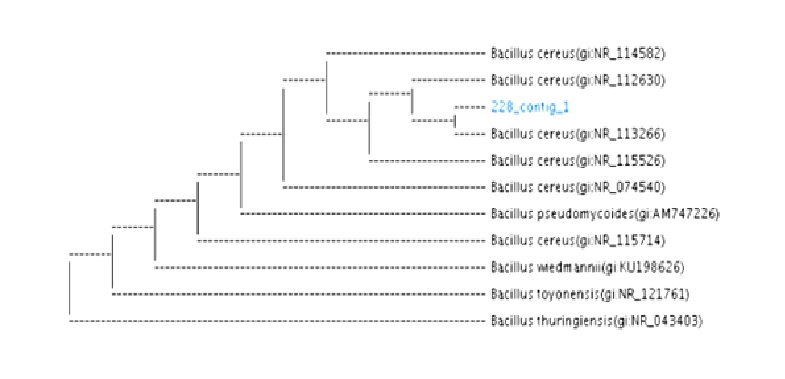
In this work a commercial ready-made Mor Hom natural dyes was developed using pure dried materials obtained from natural dyeing water, Hom powder from indigo paste, acid powder from tamarind and lye powder from various wood ashes. It was found that a bacterial strain of Bacillus cereus isolated from natural dyeing factories in the area of Phrae province provided the best color quality. Meanwhile, Hom powder and acid powder should be dried at 60 °C for 72 and 10 hrs, respectively. In addition, lye powder from wood ash lye, which can improve fabric dyeing efficiency (136.42) and deep blue quality (L* 0.26, a* -0.07 and b* 0.67). Furthermore, it could reduce dyeing fermentation time without polluting the environment. Moreover, the fabric product obtained showed good natural color.
References
Aino, K., T. Narihiro, K. Minamida, Y. Kamagata, K. Yoshimune and I. Yumoto. 2010. Bacterial community characterization and dynamics of indigo fermentation. FEMS Microbiology Ecology 74: 174–183.
Chanchay, N. 2021. Mor-Hom Phare by Dying Natural Process for Commercial. Chiang Mail: Smart Coating and Services. 202 p. [in Thai]
Chanchay, N. and A. Boonpajaub. 2021. Effect of pH on growth and indigo coloring quality of Hom (Baphicacanthus cusia (Nees.) Bremek.) at Phrae province. Thai Forest Ecological Research Journal 5(1): 91–104. [in Thai]
Compton, R.G. Welch, C.M. C.E. Bank and A.O. Sim. 2005. Silver nanoparticle assemblies supported on glassy-carbon electrodes for the electro-analytical detection of hydrogen peroxide. Analytical and Bioanalytical Chemistry 1: 12–21.
Herbst, W. and K. Hunger. 2000. Industrial Organic Pigment: Production, Properties. Weinheim: Application VCH Verlagsgesellschaft. 660 p.
Li, H.X., B. Xu, L.Tang, J.H. Zhang and Z.G. Mao. 2015. Reductive decolorization of indigo carmine dye with Bacillus sp. MZS10. International Biodeterioration & Biodegradation 103: 30–37.
Nakajima, K., K. Hirota, Y. Nodasaka and I. Yumoto. 2005. Alkalibacterium iburiense sp. Nov., and obligate alkaliphile that reduce an indigo dye. International Journal of Systematic and Evolutionary Microbiology 55(4): 1525–1530.
Nicholson, S.K. and P. John. 2005. The mechanism of bacterial indigo reduction. APPL MICROBIOL BIOT Journal 68(1): 117–123.
O-Thong, S. and B. Buakhun. 2013. Local Wisdom Innovation in Cultural Heritage of Development of Starter Culture for Fermenting Indigo Blue: Indigofera tinctoria and Indigo Dye Storage for Dying Process. Songkhla: Thaksin University. 65 p. [in Thai]
Sukka, K., C. Sompark, T. Thanananta and N. Sakkayawong. 2019. Isolation of bacteria from the indigo dyeing water in the dyed pot and indigo dyeing area soil for the application of dyeing process and wastewater treatment. Thai Journal of Science and Technology 8(5): 552–564. [in Thai]
Yumoto, I., K. Hirota, Y. Nodasaka, Y. Yokota, T. Hoshino and K. Nakajima. 2004. Alkalibacterium psychrotolelerans sp. Nov., a psychrotolerant obligate alkaliphile that reduces an indigo dye. International Journal of Systematic and Evolutionary Microbiology 54: 2379–2583.
Downloads
Published
How to Cite
Issue
Section
License
Copyright (c) 2025 Journal of Agricultural Research and Extension

This work is licensed under a Creative Commons Attribution-NonCommercial-NoDerivatives 4.0 International License.
This article is published under a Creative Commons Attribution-NonCommercial-NoDerivatives 4.0 International License (CC BY-NC-ND 4.0), which allows others to share the article with proper attribution to the authors and prohibits commercial use or modification. For any other reuse or republication, permission from the journal and the authors is required.