
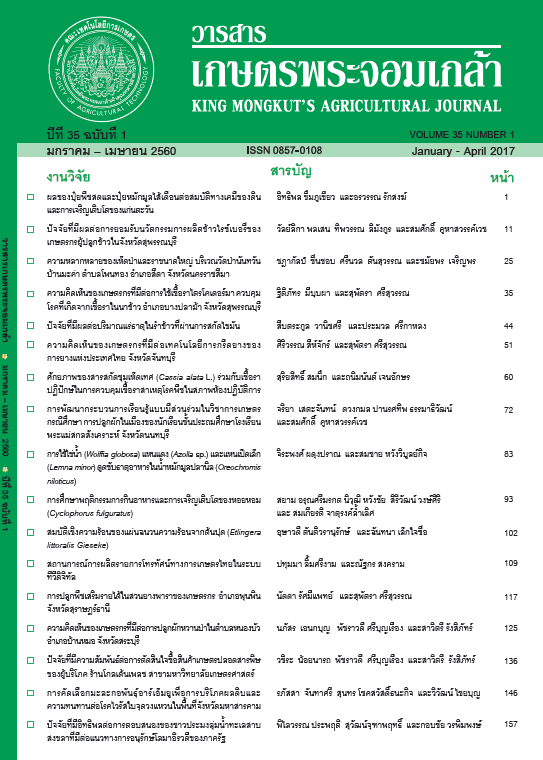
ปัจจัยที่มีผลต่อการยอมรับนวัตกรรมการผลิตข้าวไรซ์เบอรี่ของเกษตรกรผู้ปลูกข้าว ในจังหวัดสุพรรณบุรี
Article Sidebar
Main Article Content
บทคัดย่อ
การวิจัยนี้มีวัตถุประสงค์เพื่อ ศึกษาข้อมูลพื้นฐานส่วนบุคคลของเกษตรกร ต้นทุนการผลิตข้าวไรซ์เบอรี่
การยอมรับนวัตกรรมการผลิตข้าวไรซ์เบอรี่ ปัจจัยที่มีผลต่อการยอมรับนวัตกรรมการผลิตข้าวไรซ์เบอรี่ และปัญหา
อุปสรรคในการผลิตข้าวไรซ์เบอรี่ของเกษตรกร โดยใช้แบบสัมภาษณ์แบบมีโครงสร้างเป็นเครื่องมือ เก็บข้อมูลจาก
ประชากรทั้งหมด 155 ราย วิเคราะห์ข้อมูลโดยใช้สถิติเชิงพรรณา.ได้แก่.ค่าความถี่ค่าร้อยละค่าเฉลี่ย และวิเคราะห์
ความถดถอยเชิงพหุแบบมีขั้นตอนเพื่อทดสอบสมมติฐาน
ผลวิจัยพบว่าเกษตรกรส่วนใหญ่เป็นเพศชาย มีอายุเฉลี่ย 50.97 ปี จบชั้นประถมศึกษาปีที่ 4 มีประสบการณ์
ในการปลูกข้าวเฉลี่ย 25.88 ปีและข้าวไรซ์เบอรี่เฉลี่ย 2.26 ปีตามลำดับ ขนาดพื้นที่ปลูกข้าวไรซ์เบอรี่เฉลี่ย 7.20 ไร่
สมาชิกในครัวเรือนเฉลี่ย 4.25 คนและปฏิบัติงานกับข้าวไรซ์เบอรี่เฉลี่ย 1.89 คนตามลำดับ รายได้ต่อปีของครอบครัว
เฉลี่ย 245,402.26 บาท/ปี รายได้จากข้าวเปลือกไรซ์เบอรี่และข้าวไรซ์เบอรี่ที่สีแล้วเฉลี่ยต่อไร่.13,192.52. และ
43,436.13 บาท/ไร่/รอบการเก็บเกี่ยวตามลำดับ ราคาจำหน่ายข้าวเปลือกไรซ์เบอรี่และข้าวไรซ์เบอรี่ที่สีแล้วเฉลี่ย 10.74
และ 70.26 บาท/กิโลกรัม จำหน่ายด้วยตนเองมากที่สุด.โดยมีฉลากสินค้าเป็นของตัวเอง..ส่วนใหญ่เป็นสมาชิกกลุ่ม
เกษตรกรมีทัศนคติปานกลางต่อข้าวไรซ์เบอรี่ในด้านสุขภาพ.มีค่าเฉลี่ย.3.15 ต้นทุนการผลิตข้าวไรซ์เบอรี่แบบทำนา
หว่านน้ำตมเฉลี่ย.4,586.42.บาทต่อไร่ต่อรอบการผลิต
เกษตรกรมีการยอมรับนวัตกรรมการผลิตข้าวไรซ์เบอรี่อยู่ในระดับเร็ว ร้อยละ 87.7 โดยมีวัตถุประสงค์คือปลูก
เพื่อบริโภคในครัวเรือนและเพื่อจำหน่าย เลือกปลูกเพราะมีสรรพคุณดี โดยได้เมล็ดพันธุ์จากศูนย์วิจัยพันธุ์ข้าวลพบุรี
จำนวนเมล็ดพันธุ์ที่ใช้ต่อไร่เฉลี่ย 13.35 กิโลกรัม/ไร่ โดยมากปลูกแบบหว่านน้ำตมทั้งฤดูนาปีและนาปรัง ปลูกถั่วเขียว
หลังเก็บผลผลิต สภาพพื้นที่เป็นที่ราบ-ราบลุ่มระบายน้ำได้ ส่วนใหญ่เป็นดินร่วนปนทราย ใช้แหล่งน้ำจากชลประทาน
ใช้ปุ๋ยอินทรีย์เฉลี่ย 69.72 กิโลกรัม/ไร่ วิธีจัดการศัตรูพืชหลังปลูกใช้สารสมุนไพร วิธีจัดการวัชพืชหลังปลูกใช้แรงงาน
คน เก็บเกี่ยวด้วยรถเกี่ยวข้าว อายุการเก็บเกี่ยวเฉลี่ย 126.12 วัน ผลผลิตข้าวเปลือกต่อไร่เฉลี่ย 605.16 กิโลกรัม/ไร่
ปัญหาด้านการปลูกคือเรื่องปริมาณน้ำไม่เพียงพอปัญหาด้านต้นทุนการผลิตคือเรื่องค่าจ้างแรงงานสูง ปัญหาด้านผล
ตอบแทนคือเรื่องราคามีความผันผวน..ปัจจัยที่มีผลต่อการยอมรับนวัตกรรมการผลิตข้าวไรซ์เบอรี่อย่างมีนัยสำคัญ
ทางสถิติ (p < 0.05) มี 8 ปัจจัย ได้แก่ วิธีการจำหน่ายโดยขายให้กับโรงสีราคาจำหน่ายข้าวเปลือก ประสบการณ์ใน
การปลูกข้าว ประสบการณ์ในการปลูกข้าวไรซ์เบอรี่ วิธีการจำหน่ายด้วยตนเอง..รายได้จากการปลูกข้าวไรซ์เบอรี่..
เพศ.และต้นทุนการผลิตข้าวไรซ์เบอรี่
Article Details
วารสารเกษตรพระจอมเกล้า
