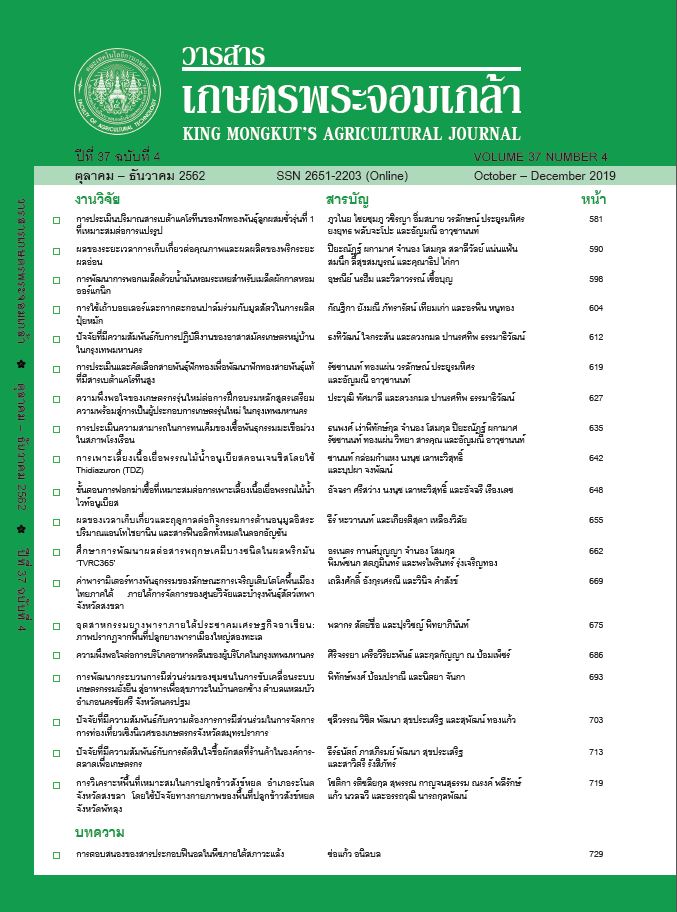
การใช้เถ้าบอยเลอร์และกากตะกอนปาล์มร่วมกับมูลสัตว์ในการผลิตปุ๋ยหมัก
Article Sidebar
Main Article Content
บทคัดย่อ
ดินในประเทศไทยส่วนใหญ่มีปัญหาขาดอินทรียวัตถุและขาดความอุดมสมบูรณ์ เนื่องมาจากการใช้ปุ๋ยเคมีเพียง
อย่างเดียวติดต่อกันเป็นเวลานาน และการทำการเกษตรแบบเข้มข้น การใช้ปุ๋ยอินทรีย์จะช่วยเพิ่มอินทรียวัตถุในดินและส่งเสริมให้สมบัติของดินดีขึ้น ในพื้นที่ภาคใต้นิยมปลูกปาล์มน้ำมันทำให้มีของเสียประเภทอินทรีย์ที่เกิดหลังจากกระบวนการสกัดน้ำมันปาล์มปริมาณมาก การทดลองนี้สนใจใช้เถ้าบอยเลอร์และกากตะกอนปาล์มร่วมกับมูลสัตว์ (มูลโค มูลไก่ และมูลสุกร) และ พด.1 เป็นวัสดุในการผลิตปุ๋ยหมัก วางแผนการทดลองแบบ Factorial in CRD ทำการทดลอง 3 ซ้ำ ประกอบด้วย 2 ปัจจัย
ที่ศึกษา ปัจจัยที่ 1 คือ ชนิดของเสียที่ใช้หมักประกอบด้วย เถ้าบอยเลอร์ และกากตะกอนปาล์ม ปัจจัยที่ 2 คือ ชนิดของมูลสัตว์ประกอบด้วย มูลโค มูลไก่ และมูลสุกร ทำการหมักเป็นระยะเวลา 45 วัน และเก็บข้อมูลสมบัติของปุ๋ยแต่ละทรีตเมนต์ ได้แก่
พีเอช ธาตุอาหารหลัก โซเดียม ค่าการนำไฟฟ้า อินทรียวัตถุ อินทรีย์คาร์บอน อัตราส่วนคาร์บอนต่อไนโตรเจน ความชื้น และดัชนีการงอกของเมล็ด พบว่า ชนิดของเสียที่ใช้หมักและชนิดของมูลสัตว์ที่ใช้หมักส่งผลให้ค่าพีเอช ปริมาณไนโตรเจนทั้งหมดปริมาณโพแทสเซียมทั้งหมด ปริมาณโซเดียมแตกต่างกัน แต่ไม่ส่งผลให้ค่าการนำไฟฟ้า ปริมาณฟอสฟอรัสทั้งหมด อินทรียวัตถุอินทรีย์คาร์บอน อัตราส่วนคาร์บอนต่อไนโตรเจน ดัชนีการงอกของเมล็ด และความชื้นให้แตกต่างกันอย่างมีนัยสำคัญทางสถิติโดยทรีตเมนต์ที่ดีที่สุดคือการหมักกากตะกอนปาล์ม 26.7 กิโลกรัม ร่วมกับมูลสุกร 6.7 กิโลกรัม โดยมีค่าพีเอช 6.64 (เป็นกลาง) ค่าการนำไฟฟ้า 2.53 dS/m ปริมาณไนโตรเจนทั้งหมด 2.91% ปริมาณฟอสฟอรัสทั้งหมด 3.37% ปริมาณโพแทสเซียมทั้งหมด 0.88% ปริมาณโซเดียม 0.03% อินทรียวัตถุ 35.15% อินทรีย์คาร์บอน 20.39% อัตราส่วนคาร์บอนต่อไนโตรเจน 7 : 1 ความชื้น 51.95% และดัชนีการงอกของเมล็ด 82.2% สามารถนำไปใช้ประโยชน์ได้เมื่อหมักเป็นเวลา 45 วัน
Article Details
วารสารเกษตรพระจอมเกล้า
เอกสารอ้างอิง
กรุงเทพฯ: กรมวิชาการเกษตร.
กรมพัฒนาที่ดิน. 2558. คู่มือการพัฒนาที่ดินสำหรับหมอดินอาสาและเกษตรกร. กรมพัฒนาที่ดิน. http://www.ldd.go.th/www/lek_web/web.jsp?id=18995 (11 มกราคม 2562).
กรมพัฒนาที่ดิน. 2560. ธาตุโพแทสเซียม (K) จากขี้เถ้า. กรมพัฒนาที่ดิน. https://www.ldd.go.th/photos/a. 871390189662610 /992340350900926/?type=3&theater (10 พฤศจิกายน 2561).
กาญจนดิษฐ์น้ำมันปาล์ม. 2558. ประเภทของเสียโรงงานบริษัท กาญจนดิษฐ์น้ำมันปาล์ม.
https://www.บริษัทกาญจนดิษฐ์น้ำมันปาล์มจำกัด-203575600161787/ (10 มกราคม 2562).
ณัฎฐาทัศน์ เจ้ยเปี้ยว. 2558. การจัดการของเสียในอุตสาหกรรมปาล์มน้ำมัน กรณีศึกษาการผลิตปุ๋ยหมักร่วมจากทะลายปาล์มน้ำมันและกากตะกอนดีแคนเตอร์. วิทยานิพนธ์วิทยาศาสตรมหาบัณฑิต, มหาวิทยาลัยสงขลานครินทร์.
ทัศนีย์ แก้วมรกฏ. 2557. การผลิตปุ๋ยหมักจากเศษหอมแดง กระดูกโคเผาป่น และมูลแพะ. วิทยานิพนธ์วิทยาศาสตรมหาบัณฑิต, มหาวิทยาลัยสงขลานครินทร์.
พรศิลป์ สีเผือก, ปุณพิชญ์ ผดุงมาศ, พิชยา แก้วมโน และวุฒิชัย สีเผือก. 2557. การใช้กากสลัดจ์ปาล์มน้ำมันเป็นอาหารเสริมสำหรับเพาะเห็ดนางฟ้าภูฐาน. ว.แก่นเกษตร 42 (ฉบับพิเศษ): 374-379.
สุกัญญา จัตตุพรพงษ์ และวราพันธุ์ จินตณวิชญ์. 2548. การใช้ประโยชน์เศษเหลือจากมันสำปะหลัง. นครปฐม: สถาบันสุวรรณวาจกกสิกิจฯมหาวิทยาลัยเกษตรศาสตร์ วิทยาเขตกำแพงแสน.
Prasertsan, S. and P. Prasertsan. 1996. Biomass residues from palm oil mills in Thailand: An overview on quantity and potential usage. Biomass Bioenergy. 11: 387-395.
Tom, L.R., Hamelers, H.V.M. (Bert), Adrie, V. and S. Tiago. 2002. Moisture relationship in composting process.
Compost. Sci. Util. 10: 286-302.
Yamada, Y. and Y. Kawase. 2005. Aerobic composting of waste activated sludge: Kinetic analysis for microbiological reaction and oxygen consumption. Waste. Manag. 26: 49-61.
