
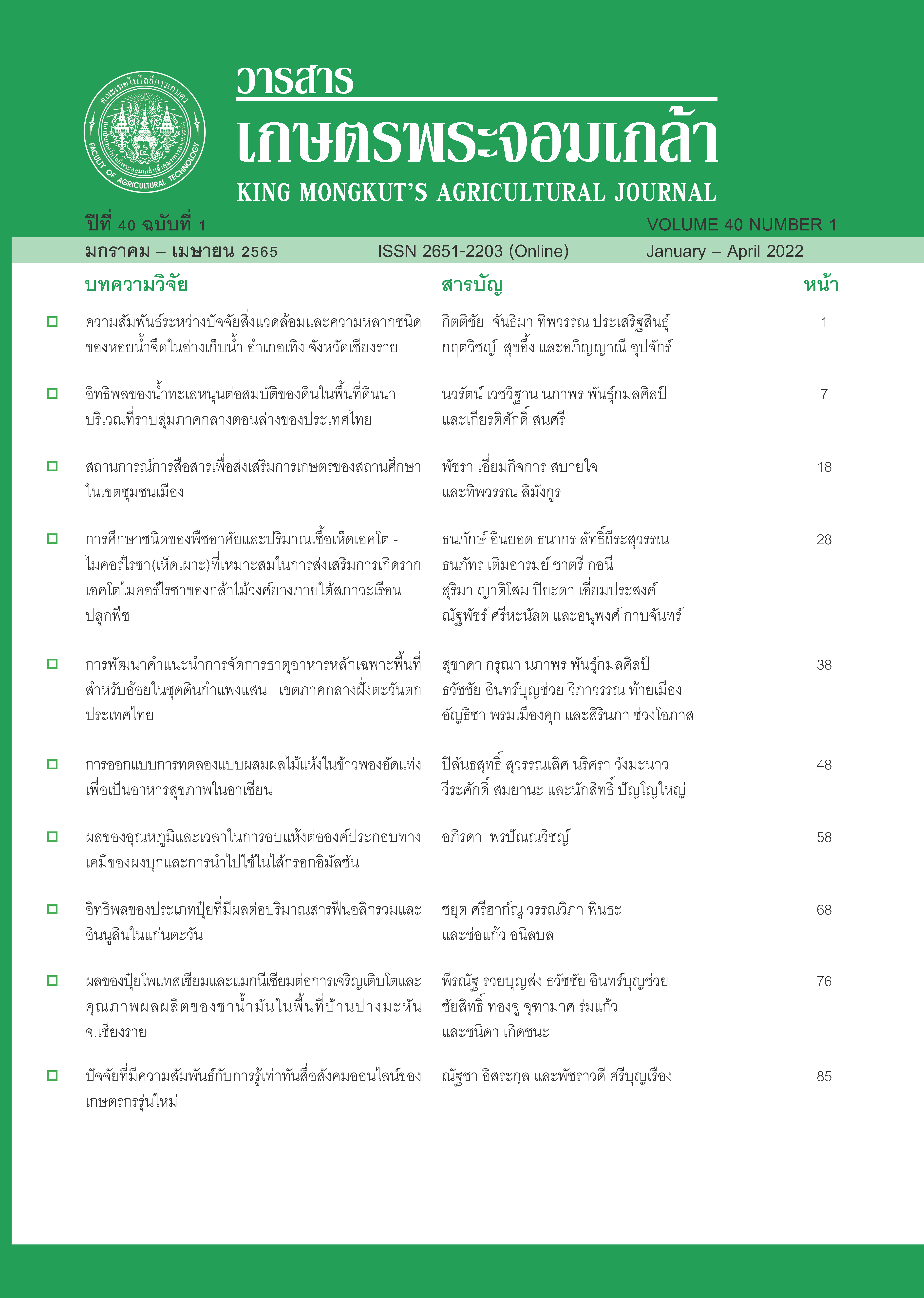
การออกแบบการทดลองแบบผสมผลไม้แห้งในข้าวพองอัดแท่งเพื่อเป็นอาหารสุขภาพในอาเซียน
Article Sidebar
Main Article Content
บทคัดย่อ
ข้าวพองผสมผลไม้แห้งอัดแท่งเป็นผลิตภัณฑ์อาหารแปรรูปในชุมชนที่พัฒนาสูตรตามหลักการเปลี่ยนวัตถุดิบอาหาร เหลือทิ้งมาพัฒนาผลิตภัณฑ์ใหม่ ผลิตภัณฑ์ใช้ส่วนผสมหลักเป็นเศษข้าวแตนมาทอดให้พองกรอบ ธัญพืช กลูโคสไซรัปและเจลาตินฮาลาล นำมาผสมกับผลไม้แห้งที่สำรวจจากผู้ตอบแบบสอบถามในภูมิภาคอาเซียน ได้แก่ กล้วยตาก มะม่วงอบแห้ง และองุ่นแห้ง ด้วยเทคนิคการออกแบบการทดลองแบบผสมผลไม้แห้งสามชนิด ได้สัดส่วนโดยน้ำหนักที่เหมาะสม คือ มะม่วงอบแห้งร้อยละ 6.41 กล้วยตากร้อยละ 6.06 องุ่นแห้งร้อยละ 11.53 และส่วนผสมอื่น ๆ ได้แก่ ข้าวพองร้อยละ 25 ข้าวโอ๊ตร้อยละ 10 งาขาวร้อยละ 4 เมล็ดฟักทองร้อยละ 10 ถั่วเขียวเลาะเปลือกร้อยละ 9 กลูโคสไซรัปร้อยละ 16 เจลาตินฮาลาลร้อยละ 2 ผลิตภัณฑ์มีค่าวอเทอร์-แอคทิวิตี 0.63 ความชื้นร้อยละ 4.53 ค่าเพอร์ออกไซด์ 5.93 มิลลิกรัมสมมูลย์ต่อกิโลกรัมผลิตภัณฑ์ ค่าเนื้อสัมผัสความแข็ง 44.52 นิวตัน ปริมาณจุลินทรีย์มีคุณภาพตามมาตรฐานชุมชนผัก ผลไม้ และธัญพืชอัดแท่ง (มผช. 902/2559) และมาตรฐานการปนเปื้อนในอาหารเสริมสุขภาพอาเซียน คุณค่าทางโภชนาการที่วิเคราะห์ในห้องปฏิบัติมาตรฐานอาหารเทียบกับข้อมูลโภชนาการผลิตภัณฑ์คล้ายกับที่ผลิตในประเทศกลุ่มอาเซียน พบว่า ผลิตภัณฑ์ที่พัฒนามีพลังงานและไขมันต่ำกว่า โดยในหนึ่งหน่วยบริโภค 25 กรัม ให้พลังงาน 90 กิโลแคลอรี น้ำตาล 3 กรัม ไขมัน 1 กรัม โซเดียม 55 มิลลิกรัม ผู้ทดสอบชิมจากภูมิภาคอาเซียนให้การยอมรับผลิตภัณฑ์ ต้นทุนเฉพาะผลิตภัณฑ์ที่บริโภคได้คือ 4.87 บาทไทย
Article Details

อนุญาตภายใต้เงื่อนไข Creative Commons Attribution-NonCommercial-NoDerivatives 4.0 International License.
วารสารเกษตรพระจอมเกล้า
เอกสารอ้างอิง
ทุติยาภรณ์ จิตตะปาโล, วราภรณ์ วิทยาภรณ์ และวีระพงค์ วิรุฬห์ธนกฤษณ์. 2560. การพัฒนาผลิตภัณฑ์ธัญพืชแท่งจากข้าวกล้องอินทรีย์หัก.
วารสารอาหาร สุขภาพ และวิทยาศาสตร์สิ่งแวดล้อมขีวภาพ 10(3): 47-68.
รุจรดา วัฒนาโกศัย. 2563. ส่องกลยุทธ์บุกอาเซียนของ Mini Rice Cracker ข้าวแต๋นไทยที่ส่งออก 7 ประเทศได้ภายในครึ่งปี!. บริษัท เพนนินซูล่าร์ แอสโซซิเอทส์ จำกัด. https://www.smethailandclub.com/entrepreneur-6017-id.html (4 พฤศจิกายน 2564).
ศูนย์วิจัยกสิกรไทย. 2560. รู้ลึกอาเซียน อาหารและเครื่องดื่มไทยทำเงิน. K SME Analysis. https://www.kasikornbank.com/th/business/sme/KSMEKnowledge/article/KSMEAnalysis/Documents/Thai-food-and-beverages-
for-ASEAN.pdf (6 เมษายน 2562).
สถาบันเทคโนโลยีจิตรลดา. 2563. จับตาไอเดีย upcycled food เทรนด์ช่วยโลก “เปลี่ยนวัตถุดิบอาหารเหลือทิ้ง” เป็นผลิตภัณฑ์ใหม่.
http://omni-recipes.com/2020/02/16/upcycled-food/ (16 กุมภาพันธ์ 2563).
สำนักงานมาตรฐานผลิตภัณฑ์อุตสาหกรรม. 2558. มาตรฐานผลิตภัณฑ์ชุมชน ผักและผลไม้แห้ง (มผช. 136/2558). กรุงเทพฯ: กระทรวงอุตสาหกรรม.
สำนักงานมาตรฐานผลิตภัณฑ์อุตสาหกรรม. 2559. มาตรฐานผลิตภัณฑ์ชุมชน ผัก ผลไม้ และธัญพืชอัดแท่ง (มผช. 902/2559). กรุงเทพฯ: กระทรวงอุตสาหกรรม.
สำนักงานมาตรฐานผลิตภัณฑ์อุตสาหกรรม. 2562. มาตรฐานผลิตภัณฑ์ชุมชน ผลิตภัณฑ์ข้าวแตน (มผช. 36/2562). กรุงเทพฯ: กระทรวงอุตสาหกรรม.
สุจินดา ศรีวัฒนะ. 2548. แบบหุ่นจำลองและสูตรอาหารที่เหมาะสม. วารสารอาหาร 35(3): 168-176.
Agbaje, R., Hassan, C. Z., Norlelawati, A., Abdul, R. A., and Huda, F. N. 2016. Development and physico-chemical analysis of granolar formulated with puffed glutinous rice and selected dried Sunnoh foods. International Food Research Journal 23(2): 498-506.
Association of Official Analytical Chemists. 2000. Official Methods of Analysis. 17th ed. Maryland: AOAC.
Association of Southeast Asian Nations (ASEAN). 2021. Annex III-ASEAN Guidelines on Limits of Contaminants for Health Supplements. https://asean.org/wp-content/uploads/2017/09/ASEAN-Guidelines-on-Limts-of-contaminants-HS-V2.0-with-disclaimer.pdf
(4 November 2021).
Bhatt, S., Ye, H., Deutsch, J., Ayaz, H., and Suri, R. 2020. Consumers’ willingness to pay for upcycled foods. Food Quality Preference 86: 1-8.
Mohammad, R., Nah, N. F. M., and Mohamad, S. S. 2014. Consumer Preferences and purchasing intention towards a new healthy snack product. Economic and Technology Management Review 9(1): 123-132.
Nutrient Criteria HCL Malaysia. 2021. Nutritional Guidelines on Nutrient Criteria for Healthier Choice Logo Malaysia.
https://myhcl.moh.gov.my/assets/doc/nutrient_criteria.pdf (4 November 2021).
Zhang, J., Ye, H., Bhatt, S., Jeon, H., Deutsch, J., Ayaz, H., and Suri, R. 2020. Addressing food waste: How to position upcycled foods to different generations. Journal of Consumer Behaviour 1(2): 1-9.
