
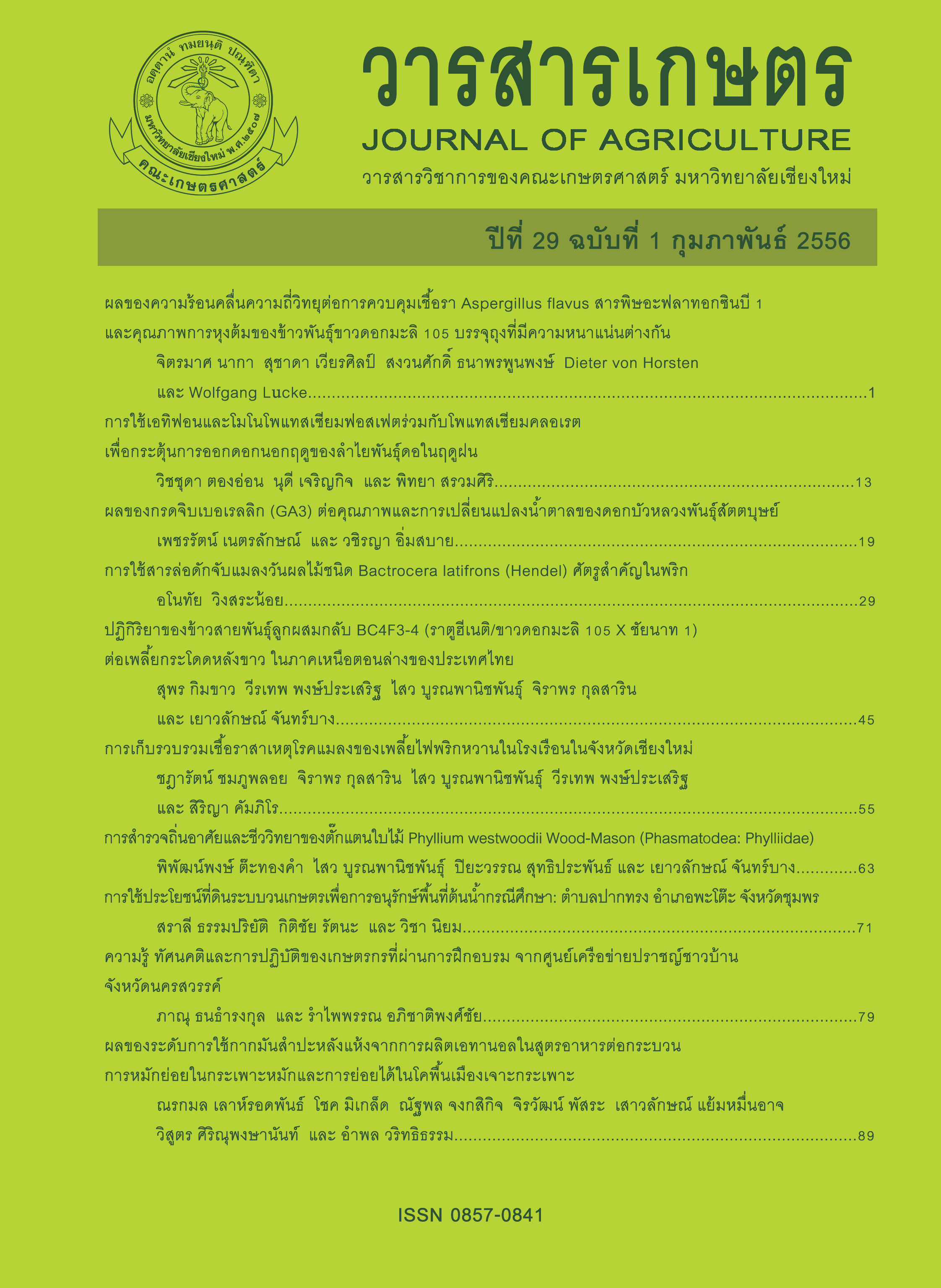
ผลของความร้อนคลื่นความถี่วิทยุต่อการควบคุมเชื้อรา <I> Aspergillus flavus </I> สารพิษอะฟลาทอกซินบี 1 และคุณภาพการหุงต้มของข้าวพันธุ์ขาวดอกมะลิ 105 บรรจุถุงที่มีความหนาแน่นต่างกัน
Article Sidebar
Main Article Content
บทคัดย่อ
วัตถุประสงค์ของการศึกษานี้เพื่อศึกษาผลของความร้อนจากคลื่นความถี่วิทยุต่อการควบคุมเชื้อรา Aspergillus flavus สารพิษอะฟลาทอกซิน บี 1 และการเปลี่ยนแปลงคุณภาพการหุงต้มของข้าวขาวดอกมะลิ 105 บรรจุถุงที่มีความหนาแน่นต่างกัน ซึ่งเริ่มทำการทดลองตั้งแต่เดือนพฤษภาคมถึงกันยายน 2553 ณ สถาบันวิจัยเทคโนโลยีหลังการเก็บเกี่ยว มหาวิทยาลัยเชียงใหม่ โดยการทดลองเริ่มจากการปลูกเชื้อรา A. flavus ระดับความเข้มข้น 1×10⁶ แก่ข้าวที่มีระดับความชื้นเริ่มต้น 14 เปอร์เซ็นต์ แล้วบรรจุลงถุง 3 ลักษณะการบรรจุ ได้แก่ บรรจุแบบหลวมโดยมีพื้นที่บรรจุประมาณ 85 เปอร์เซ็นต์ บรรจุแบบแน่นเต็มถุง 100 เปอร์เซ็นต์ และบรรจุแน่นเต็มถุง 100 เปอร์เซ็นต์ ภายใต้สูญญากาศ จากนั้นผ่านคลื่นความถี่วิทยุระดับความถี่ 27.12 MHz. ที่ระดับอุณหภูมิ 80, 85, 90 องศาเซลเซียส ระยะเวลา 1 และ 3 นาที เปรียบเทียบกับชุดควบคุมที่ไม่ผ่านคลื่นความถี่วิทยุ ผลการทดลองพบว่าความชื้นของข้าวขาวดอกมะลิ 105 ไม่แตกต่างกันในแต่ละกรรมวิธี ในขณะที่เปอร์เซ็นต์การติดเชื้อรา A. flavus พบว่าอิทธิพลร่วมระหว่างการบรรจุถุงที่มีความหลวมแน่นต่างกันกับระดับอุณหภูมิมีผลทำให้เปอร์เซ็นต์การติดเชื้อราลดลงในทุกลักษณะการบรรจุเมื่ออุณหภูมิเพิ่มสูงขึ้น โดยเฉพาะการบรรจุภายใต้สูญญากาศสามารถลดการติดเชื้อรา A. flavus ได้ดีที่สุดในทุกระดับอุณหภูมิของการให้คลื่นความถี่วิทยุ และการบรรจุภายใต้สูญญากาศร่วมกับการให้คลื่นความถี่วิทยุที่ระดับ 90 องศาเซลเซียส ระยะเวลา 3 นาที สามารถลดปริมาณอะฟลาทอกซินบี 1 ได้ดีที่สุด สำหรับคุณภาพการหุงต้มของข้าวสุกพบว่าการบรรจุแบบสูญญากาศร่วมกับและอุณหภูมิที่เพิ่มขึ้นสามารถทำให้ปริมาณอะไมโลสและอัตราการยืดตัวของข้าวสุกเพิ่มขึ้น ส่วนคุณภาพเนื้อสัมผัสพบว่าค่า hardness และ cohesiveness เพิ่มขึ้น ส่วนค่า adhesiveness ลดลงเมื่ออุณหภูมิเพิ่มขึ้น ดังนั้นการบรรจุภายใต้สูญญากาศร่วมกับการให้ RF ที่ระดับอุณหภูมิ 90 องศาเซลเซียส ระยะเวลานาน 3 นาทีสามารถลดการติดเชื้อรา A. flavus และปริมาณสารพิษอะฟลาทอกซิน บี 1 ได้ดีที่สุด รวมทั้งคุณภาพในการหุงต้มดีขึ้น
Article Details
เอกสารอ้างอิง
กฤษณา สุเมธะ. 2552. ผลของการใช้คลื่นความถี่วิทยุต่อมอดหัวป้อม Rhyzopertha dominica (F.) และคุณภาพของข้าวสารพันธุ์ขาวดอกมะลิ 105. วิทยานิพนธ์มหาบัณฑิต สาขาวิชาวิทยาการหลังการเก็บเกี่ยว บัณฑิตวิทยาลัย มหาวิทยาลัยเชียงใหม่, เชียงใหม่. 69 หน้า.
กระทรวงสาธารณสุข. 2529. มาตรฐานอาหารที่มีสารปนเปื้อน. ประกาศกระทรวงสาธารสุข ฉบับที่ 98 (พ.ศ.2529). ราชกิจจานุเบกษาฉบับพิเศษ เล่มที่ 103 ตอนที่ 23 ลงวันที่ 16 กุมภาพันธ์ พ.ศ. 2529. 2 หน้า.
กุลธิดา ไชยสถิตวานิช Wolfgang LÜcke สงวนศักดิ์ ธนาพรพูนพงษ์ ณัฐศักดิ์ กฤติการเมษ แสงทิวา สุริยงค์ และสุชาดา เวียรศิลป์. 2553. ผลของการให้คลื่นความถี่วิทยุในการกำจัดเชื้อรา Aspergillus flavus ที่ติดมากับเมล็ดข้าวโพดเลี้ยงสัตว์. วารสารวิทยาศาสตร์เกษตร 41: 1 (พิเศษ): 341-344.
ไกรสีห์ พิสิษฐ์กุล ศักดิ์ดา จงแก้ววัฒนา สุกัญญา วงศ์พรชัย วรรณนา ตุลยธัญ และสาวิตร มีจุ้ย. 2549. การดัดแปลงคุณภาพการหุงต้มของข้าวขาวดอกมะลิ 105. วารสารวิทยาศาสตร์เกษตร 37(5): 187-190.
งามชื่น คงเสรี. 2546. การอบรมหลักสูตรหลักและวิธีการวิเคราะห์คุณภาพข้าว. สถาบันวิจัยข้าว. กรมวิชาการเกษตร, กรุงเทพฯ. 70 หน้า.
ณคณิณ ลือชัย วิชชา สะอาดสุด เยาวลักษณ์ จันทร์บาง และ ณัฐศักดิ์ กฤติกาเมษ. 2551. การใช้คลื่นความถี่วิทยุในการควบคุมผีเสื้อข้าวสาร Corcyra cephalonica (Stainton) และผลต่อคุณภาพของข้าวสารพันธุ์ขาวดอกมะลิ 105. วารสารวิทยาศาสตร์เกษตร 39: 3(พิเศษ): 347-350.
ทะนง ภัครัชพันธุ์. 2535. การใช้ความร้อนในขบวนการแปรรูป. ภาควิชาวิทยาศาสตร์และเทคโนโลยีการอาหาร คณะอุตสาหกรรมเกษตร มหาวิทยาลัยเกษตรศาสตร์, กรุงเทพ. 160 หน้า.
ปุ่น คงเจริญเกียรติ และสมพร คงเจริญเกียรติ. 2541. บรรจุภัณฑ์อาหาร. กรมส่งเสริมอุตสาหกรรม กระทรวงอุตสาหกรรมและสมาคมการบรรจุภัณฑ์ไทย, กรุงเทพฯ. 358 หน้า.
พรอารีย์ ศิริผลกุล. 2545. ผลของวิธีการอบแห้งและอายุการเก็บรักษาต่อคุณภาพของข้าวกล้อง. วิทยา นิพนธ์ปริญญา วิทยาศาสตรมหาบัณฑิต สาขา วิชาเทคโนโลยีหลังการเก็บเกี่ยว คณะทรัพยากรชีวภาพและเทคโนโลยี มหาวิทยาลัยเทคโนโลยีพระจอมเกล้าธนบุรี, กรุงเทพฯ. 102 หน้า.
พลากร สำรีราษฎร์ สงวนศักดิ์ ธนาพรพูนพงษ์ และสุชาดา เวียรศิลป์. 2551. การดัดแปลงคุณภาพการหุงต้มของข้าวขาวดอกมะลิ 105 ด้วยคลื่นความถี่วิทยุ. วารสารวิทยาศาสตร์เกษตร 39(3): 354-358.
รังสินี โสธรวิทย์. 2550. การควบคุมการเจริญของจุลินทรีย์ในอาหาร. เคมีและจุลชีววิทยาเบื้องต้นของอาหาร. สำนักพิมพ์มหาวิทยาลัย เกษตรศาสตร์, กรุงเทพฯ. หน้า 166-167.
ละมุล วิเศษ. 2541. ผลของอุณหภูมิและระยะเวลาการเก็บรักษาต่อการเปลี่ยนแปลงปริมาณไขมัน คุณสมบัติทางกายภาพและเคมีของข้าวกล้องพันธุ์ขาวดอกมะลิ105. วิทยานิพนธ์ปริญญาวิทยาศาสตรมหาบัณฑิต สาขาวิชาเทคโนโลยีหลังการเก็บเกี่ยว คณะทรัพยาการชีวภาพและเทคโนโลยี มหาวิทยาลัยพระจอมเกล้าธนบุรี, ปทุมธานี. 69 หน้า.
อนงค์ บิณฑวิหค. 2546. สารพิษจากเชื้อรา: อะฟลาทอกซิน. พิมพ์ครั้งที่ 1. โรงพิมพ์แห่งจุฬาลงกรณ์มหาวิทยาลัย, กรุงเทพฯ. 322 หน้า.
อมรา ชินภูมิ ชวเลิศ ตรีกรุณาสวัสดิ์ และ ลิลลี่ พรานุสร. 2549. โครงการผลิตชุดตรวจสอบสารแอฟลาทอกซินสำเร็จรูปเชิงพานิชย์ (Production of Aflatoxin ELISA Test Kit as Commercial). สำนักวิจัยและพัฒนาวิทยาการหลังการเก็บเกี่ยวและแปรรูปผลิตผลเกษตร กรมวิชาการเกษตร, กรุงเทพฯ. 9 หน้า.
อมรา ชินภูติ และศุภรา อัคคะสาระกุล. 2552. การปนเปื้อนของสารแอฟลาทอกซิน บี 1 และสาร โอคราทอกซิน เอ ในข้าวกล้องและข้าวขาว. วารสารวิชาการข้าว 3 (2): 57–65.
อรุณศรี วงษ์อุไร. 2540. อะฟลาทอกซินในถั่วลิสง. คู่มือวิชาการเรื่องอะฟลาทอกซินในถั่วลิสง. กรมส่งเสริมการเกษตร กระทรวงเกษตรและสหกรณ์, กรุงเทพฯ. หน้า 41-65.
Akaranuchat P., P. Noimanee, N. Krittigamas, D. von Hörsten and S. Vearasilp. 2007. Control seed borne fungi by radio frequency heat treatment as alternative seed treatment in barley (Hordeum vulgare). Paper Presented at Utilisation of Diversity in Land Use Systems: Sustainable and Organic Approaches to Meet Human Needs. October 9-11, 2007. Witzenhausen, Germany. 4 p.
Bandara, J. M. R. S., A. K. Vithanege and G. A. Bean. 1991. Occurrence of aflatoxins in parboiled rice in Sri Lanka. Mycopathologia. 116(2): 65-70.
Champagne, E. T., B. G. Lyon, B. K. Min, B. T. Vinyard, K. L. Bett, F. E. Bartonll, B. D. Webb, A. M. McClung, K. A. Moldenhauer, S. Linscombe, K. S. McKenzie and D. E. Kohlwey. 1998. Effects of postharvest processing on texture profile analysis of cooked rice. Cereal Chemistry 75(2): 181-186.
Ester, A., De Putter, H., and Van Bilsen, J. G. P. M. (2003). Film coating the seed of cabbage (Brassica oleracea L. convar. Capitata L.) and Cualiflower (Brassica oleracea L. var. Botryti L.) with inidaloprid and spinsad to control insect pests. Crop production 22 : 761-768.
Gujral, H. S. and V. Kumar. 2003. Effect of accelerated aging on the physicochemical and textural properties of brown and milled rice. Journal Food Engineering 59: 117-121.
Janhang, P., N. Kritigamas, L. Wolfgang and S. Vearsilp. 2005. Using radio frequency heat treatment to control seed-borne Trichiconis padwickii in rice seed (Oryza sativa L.) Deutcher Tropentag 2005, Stuttgart-Hohenheim, Germany. 4 p.
Juliano, B. O. and G. M. Perez. 1984. Results of a collaborative test on the measurement of grain elongation of milled rice during cooking. Journal of Cereal Science 2: 281-292.
Nelson, S. O. 1991. Review of dielectric properties of agricultural products. IEEE Transactions on Electrical Insulation 20(5): 845-869.
Nelson, S. O., C. Y. Lu, L. R. Beuchat and M. A. Harrison. 2002. Radio-frequency heating of alfalfa seeds for reducing human pathogens. Transactions of the ASAE 45(6): 1937–1942.
Reddy, K. R. N., C. S. Reddy and K. Muralidharan. 2009. Detection of Aspergillus spp. and aflatoxin B1 in rice in India. Food Microbiology 26: 27–31.
Sodhi, N. S., N. Singh, M. Arora and J. Singh. 2003. Changes in physico-chemical thermal, cooking and textural properties of rice during aging. Journal of Food Processing and Preservation 27: 387-400.
Theanjumpol, P., S. Thanapornpoonpong, E. Pawelzik and S. Vearasilp. 2007. Milled rice physical properties after various radio frequency heat treatments. Deutcher Tropentag 2007, Stuttgart-Hohenheim, Germany. 4 p.
Vassanacharoen P., P. Janhang., N. Krittigamas., D. von Hörsten.,W. Lücke and S. Vearasilp. 2006. Radio frequency heat treatment to eradicate Fusarium semitectum in Corn Grain (Zea mays). Agricultural Science Journal 37: 5 (Suppl.): 180-182.
Vearasilp, S., K. Chaisathidvanich, S. Thanapornpoonpong, D. von Hörsten and W. Lücke. 2011. Aging Milled Rice by Radio Frequency Heat Treatment. Conference on International Research on Food Security, Natural Resource Management and Rural Development. October 5–7, 2011. University of Bonn. 4 p.
Zhao, S., S. Xiong, C. Qiu and Y. Xu. 2007. Effect of microwave on rice quality. Journal of Stored Products Research 43: 496-502.
