สถานภาพการผลิต พันธุ์ และแนวทางพัฒนาลำไยเพื่ออุตสาหกรรมในเขตภาคเหนือ
Article Sidebar
Main Article Content
บทคัดย่อ
การวิจัยนี้มีวัตถุประสงค์เพื่อรวบรวมข้อมูลเกี่ยวกับสภาพพื้นที่ปลูกลำไยในจังหวัดเชียงใหม่และลำพูนสภาพการผลิต เทคโนโลยีชาวบ้านพันธุ์ ลำไยที่ใช้ปลูกตลอดจนสถานภาพอุตสาหกรรมการแปรรูปลำไยในปัจจุบันประชากรที่ใช้ศึกษาคือเกษตรกรชาวสวนลำไยจำนวน 170 รายผู้ประกอบการแปรรูปรายใหญ่ (มากกว่า 100 ตัน / ปี) จำนวน 33 รายและผู้ประกอบการแปรรูปรายย่อย (น้อยกว่า 100 ตัน / ปี) จำนวน 109 รายโดยการสัมภาษณ์วิเคราะห์ข้อมูลโดยใช้ค่าความถี่และค่าร้อยละ
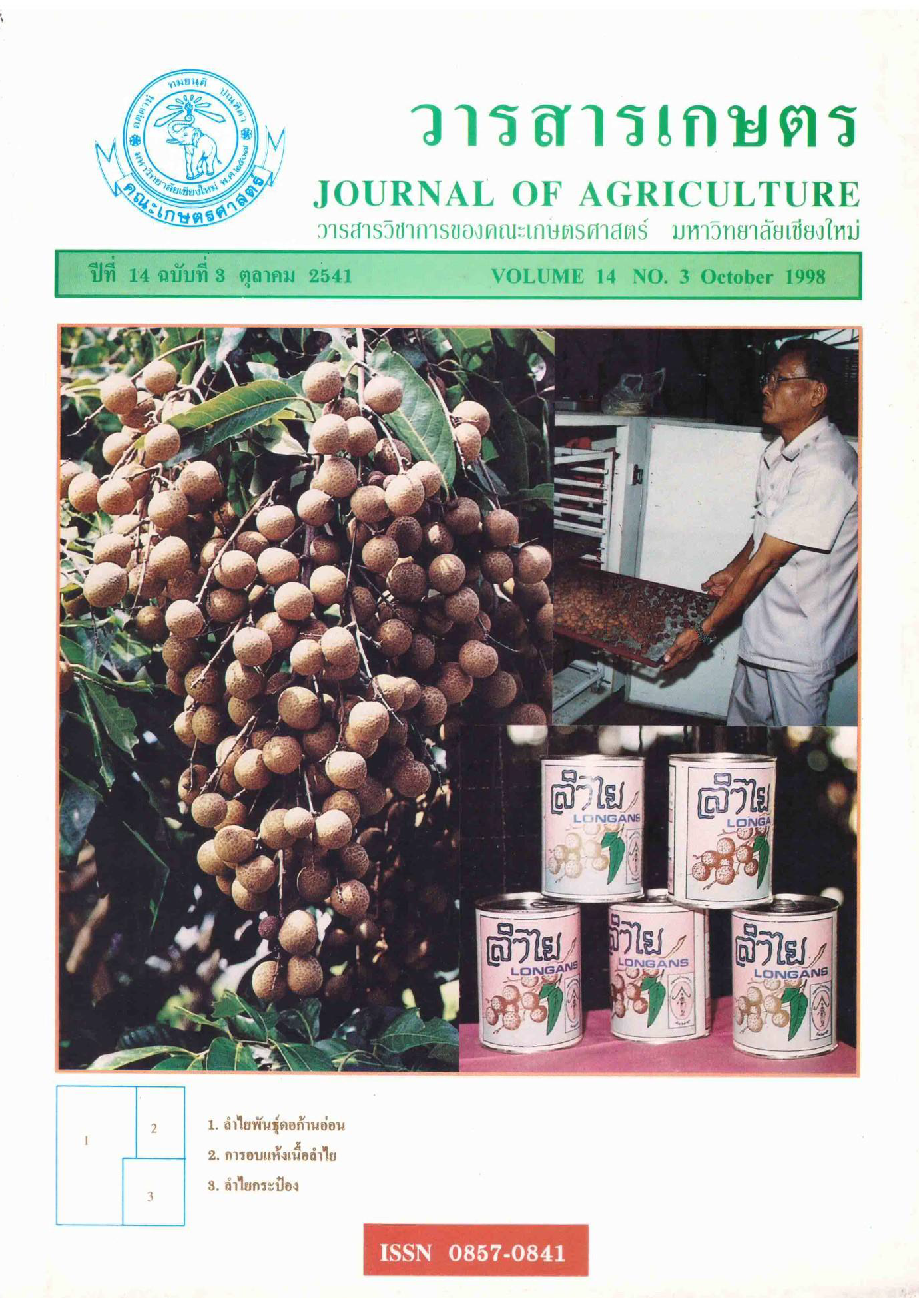
ผลการศึกษาพบว่าปัจจุบันเกษตรกรได้มีการขยายพื้นที่ปลูกลำไยมากขึ้นเป็นผลให้มีการส่งออกในรูปของลำไยอบแห้งมีปริมาณและมูลค่าเพิ่มขึ้นเกิน 20 เท่าในรอบ 10 ปีที่ผ่านมาพันธุ์ลำไยที่เกษตรกรนิยมปลูกคือพันธุ์ดอ เนื่องจากเป็นพันธุ์เบา ให้ผลผลิตเร็วกว่าพันธุ์อื่นใช้บริโภคได้ทั้งสดและแปรรูปได้ดีเป็นที่ยอมรับของโรงงานอุตสาหกรรมทั้งการอบแห้งทั้งเปลือกและบรรจุกระป๋องลักษณะของดินที่เหมาะสมกับการเจริญเติบโตของต้นลำไยควรเป็นดินร่วนปนทรายระบายน้ำดีมีค่าของความเป็นกรดเป็นด่างประมาณ 7.7 และมีอินทรียวัตถุมากพอสมควร
การปลูกและดูแลรักษาลำไยเกษตรกรตัดสินใจปลูกลำไยด้วยตนเอง ในระยะเริ่มแรกเมื่อลำไยมีอายุ 14 ปีเกษตรกรอาศัยภูมิปัญญา / เทคโนโลยีของตนเองในการทำสวนลำไย ส่วนใหญ่ใช้แรงงานในครัวเรือน และมีที่ดินเป็นของตนเองเฉลี่ยประมาณ 10 ไร่เป็นพื้นที่ราบลุ่มมีน้ำพอเพียง เกษตรกรไม่สามารถเลือกพื้นที่ปลูกได้
เนื่องจากมีพื้นที่ จำกัด ระยะปลูก 10 x 10 ม. (16 ต้น / ไร่) มีการเตรียมดินโดยการขุดหลุมปลูกรองก้นหลุมด้วยปุ๋ยคอก (ปุ๋ยมูลวัว) ระยะเวลาปลูกตั้งแต่พฤษภาคมถึงสิงหาคม (ต้นฤดูฝน) กล้าที่ใช้ปลูกส่วนใหญ่ซื้อจากสวนที่พิจารณาแล้วว่าให้ผลผลิตดีมีการคลุมโคนเพื่อรักษาความชื้นของดินและลดวัชพืชส่วนใหญ่มีการให้น้ำแบบปล่อยน้ำขังโคนต้นของทรงพุ่มเกษตรกรมีการใช้ทั้งปุ๋ยอินทรีย์และปุ๋ยเคมีผสม 15-15-15 หรือ 16-16-16 ไม่มีการตัดแต่งทรงพุ่มเพื่อควบคุมขนาดของทรงพุ่ม
การดูแลรักษาต้นลำไยที่ให้ผลผลิตแล้ว (อายุมากกว่า 4 ปี) โดยทั่วไปจะเน้นการบำรุงรักษาต้นให้มีความสมบูรณ์โดยการใช้สารเคมีควบคุมโรคแมลงและใส่ปุ๋ยอย่างสม่ำเสมอเกษตรกรส่วนใหญ่จะมีการค้ำยันต้นลำไยเพื่อป้องกันการหักโค่นล้มของต้นเนื่องจากลมพายุโดยใช้ไม้ไผ่เป็นหลัก
การดูแลรักษาขณะต้นลำไยออกดอกเกษตรกรจะงดการให้น้ำตั้งแต่เดือนพฤศจิกายนเป็นต้นไปจนกว่าจะเริ่มแทงช่อดอกจึงจะเริ่มให้น้ำอีกทีละน้อยเกษตรกรบางรายอาจจะรมควันไฟโดยการเผาเศษพืชใต้ทรงพุ่มในเดือนธันวาคมประมาณ 2-3 ครั้งเพื่อเร่งการแทงช่อดอก
การดูแลรักษาผลและการเก็บเกี่ยวเกษตรกรจะให้น้ำต้นลำไยอย่างเพียงพอพร้อมใส่ปุ๋ยบางรายอาจมีการฉีดพ่นฮอร์โมนเพื่อป้องกันผลร่วงและเร่งการเจริญเติบโตของผลการตรวจสอบความแก่ของผลส่วนใหญ่ใช้วิธีชิมดูความหวานของเนื้อและผิวเปลือกจะเรียบบางรายอาจจะนับวันตั้งแต่ดอกบานจนถึงเก็บเกี่ยวสำหรับพันธุ์ดอ ประมาณ 180-190 วันการเก็บเกี่ยวใช้แรงงานคนค่าแรงงานประมาณ 120-200 บาท / วันแล้วแต่ประเภทของงานภาชนะที่บรรจุ ได้แก่ ตะกร้าพลาสติกขนาดบรรจุ 15-25 กก. หรือกล่องกระดาษขนาดบรรจุ 12-15 กก.
การจัดการสวนลำไยหลังการเก็บเกี่ยวเกษตรกรมีการตัดแต่งกิ่งที่ฉีกหักเสียหายจากการเก็บเกี่ยวและกิ่งที่เป็นโรคหลังจากนั้นจะใส่ปุ๋ยเคมีสูตร 15-15-15 เพื่อเร่งให้แตกใบใหม่เร็วที่สุด
โรคและแมลงศัตรูลำไยที่เกษตรกรพบมากที่สุด ได้แก่ โรคพุ่มไม้กวาดซึ่งขณะนี้ยังไม่สามารถจะป้องกันได้เมื่อเกิดระบาดเกษตรกรจะตัดยอดทิ้งหนอนคืบกินใบและหนอนเจาะลำต้นและกิ่งจะเข้าทำลายยอดอ่อนใบอ่อนและลำต้นของลำไยเกษตรกรกำจัดโดยใช้โมโนโคโตฟอส
ระบบตลาดและการขายผลผลิตเกษตรกรส่วนใหญ่นิยมขายเหมาอาจจะขายตั้งแต่เริ่มออกดอกหรือขณะติดผลขนาดเล็กไปจนถึงผลใกล้สุกเงื่อนไขในการซื้อขายจะแตกต่างกันออกไปการดูแลสวนหลังขายเหมาจะเป็นเจ้าของสวนหรือผู้ซื้อดูแลเองตาม แต่จะตกลงกันการจำหน่ายผลผลิตเพื่อการบริโภคสดจะมีการแบ่งเกรดประมาณ 3-4 เกรด แต่ถ้าขายเพื่อนำไปแปรรูปจะไม่มีการคัดเกรด
สถานภาพการแปรรูปลำไยในปัจจุบันส่วนใหญ่ดำเนินการโดยผู้ประกอบการทั้งรายย่อย (กลุ่มแม่บ้านเกษตรกรและอุตสาหกรรมในครัวเรือน) และผู้ประกอบรายใหญ่ (โรงงานอุตสาหกรรมและ บริษัท ) ผู้ประกอบการรายย่อยจะใช้เตาอบโซล่าที่ผลิตในประเทศไต้หวันโดยกรมส่งเสริมการเกษตรกรมส่งเสริมสหกรณ์เกษตรและกรมการค้าภายในให้การสนับสนุนกรรมวิธีในการแปรรูปของทั้งผู้ประกอบการรายใหญ่และรายย่อยจะคล้ายคลึงกันคือมีการคัดเกรดก่อนนำเข้าอบโดยใช้เวลาอบประมาณ 40-50 ชม. แต่ผู้ประกอบการรายใหญ่จะมีการคัดเกรดอีกครั้งก่อนบรรจุลงถุงพลาสติกเพื่อให้แน่ใจว่าผลิตภัณฑ์ที่ได้นั้นมีคุณภาพหลังจากนั้นบรรจุลงกล่องกระดาษเพื่อส่งออกต่างประเทศส่วนการแปรรูปในลักษณะบรรจุกระป๋อง จะดำเนินการโดย บริษัท ซึ่งมีการลงทุนที่สูง จะมีการคัดเกรดก่อนการแปรรูปเพื่อให้ได้มาตรฐานเดียวกัน
Article Details
เอกสารอ้างอิง
กรมส่งเสริมการเกษตร, 2540. ความต้องการวัตถุดิบของโรงงานอุตสาหกรรมปี 2540, ฝ่ายอุตสาหกรรมกรุงเทพฯ, หจก. ฟันนีพับบลิชชิง
สำนักงานเกษตรจังหวัดเชียงใหม่. 2540. ข้อมูลพื้นที่เพาะปลูกลำไยจังหวัดเชียงใหม่ปี 2536-2539 จังหวัดเชียงใหม่ (เอกสารอัดสำเนา)
สำนักงานเกษตรจังหวัดลำพูน, 2540. ข้อมูลพื้นที่เพาะปลูกลำไยจังหวัดลำพูนปี 2536-2540 จังหวัดลำพูน (เอกสารอัดสำเนา)
รัตนา อัตปัญโญ, กมล งามสมสุข, อนุสนธิ์ อัตตปัญโญ, ศรัณย์ อารยะรังสฤษฎ์ และ เยาวเรศ เชาวนพูนผล. 2541. อุตสาหกรรมแปรรูปลำไย. รายงานการวิจัยคณะอุตสาหกรรมเกษตรและภาควิชาเศรษฐศาสตร์เกษตรคณะเกษตรศาสตร์มหาวิทยาลัยเชียงใหม่.
วิไล เสือดี. 2540. กระบวนการอบแห้งและการส่งออกลำไยอบแห้งของจังหวัดเชียงใหม่และจังหวัดลำพูน. การค้นคว้าอิสระระดับปริญญาโทภาควิชาส่งเสริมและเผยแพร่การเกษตร คณะเกษตรศาสตร์ มหาวิทยาลัยเชียงใหม่
เล็ก ชาติเจริญ. 2528. ลำไย. ฝ่ายฝึกและนิเทศสำนักงานส่งเสริมการเกษตรภาคเหนือกรมส่งเสริมการเกษตรกระทรวงเกษตรและสหกรณ์
สมพัฒวรรณ สิทธิสังข์, 2527. การใช้สหกรณ์เพื่อแก้ปัญหาการตลาดของผู้ผลิตลำไยในจังหวัดเชียงใหม่และลำพูน, วิทยานิพนธ์ปริญญาโทมหาวิทยาลัยเกษตรศาสตร์สถาบันวิจัยวิทยาศาสตร์และเทคโนโลยีแห่งประเทศไทยและสำนักงานปลัดกระทรวงวิทยาศาสตร์เทคโนโลยีและสิ่งแวดล้อม, 2536. รายงานการสัมมนาเชิงปฏิบัติการเรื่องควรวิจัยอะไรกับลำไย 3 ธันวาคม 2536. ณ โรงแรมเชียงใหม่ภูคำ 57 หน้า
Subhadrabanddhu, S. 1990. Lychee and Longan Cultiva tion in Thailand. Bangkok. Kasetsart University. Thailand.
Winston, E.C., P.J.O. 'Farrell and K.E. Young. 1993. Yield and fruit quality of longan (Dimocarpus lon gan Lour.) cultivars on the Atherton tableland of fropical North Australia. Fruit Varieties Journal 47 (3): 153-160.
