
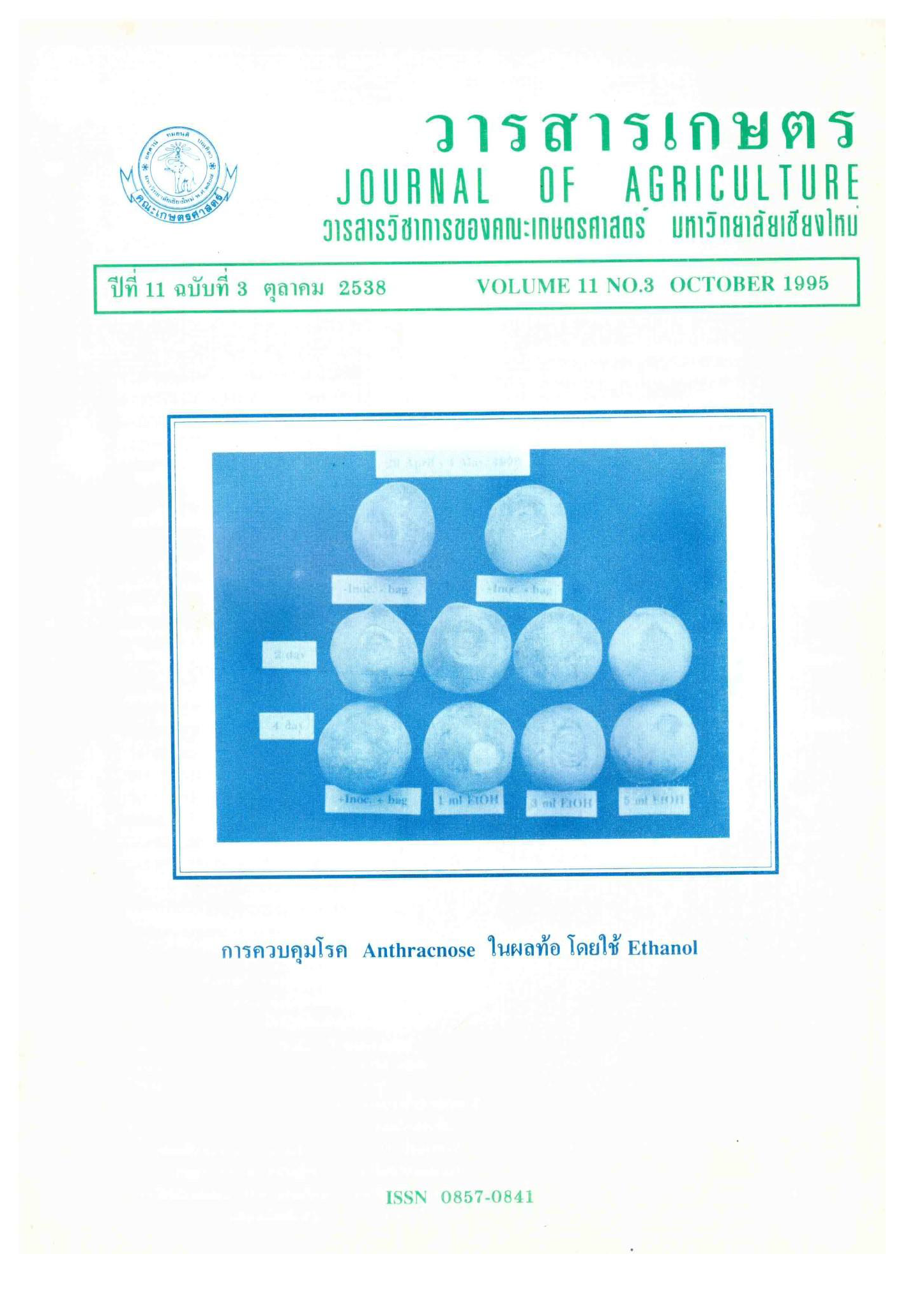
ผลของเอทธานอลต่อโรคแอนแทรคโนสของผลท้อ
Article Sidebar
เผยแพร่แล้ว:
ต.ค. 27, 2020
คำสำคัญ:
ท้อ แอนแทรคโนส โรคหลังเก็บเกี่ยว การจัดการหลังการเก็บเกี่ยว
Main Article Content
บทคัดย่อ
ผลท้อพันธุ์ Earligrand ได้รับการปลูกเชื้อด้วยสปอร์ของเชื้อรา Colletotrichum sp ปริมาณ 3.75 x 10⁷ สปอร์ต่อมิลลิลิตร หลังจากปลูกเชื้อแล้วบรรจุผลท้อลงในถาดพลาสติก แล้วจึงบรรจุลงในกล่องกระดาษขนาด 43 x 37 x8 เซนติเมตร บรรจุกล่องลงในถุงพลาสติกโพลีเอทธิลีน แล้วจึงใส่เวอมิคิวไลท์ซึ่งมีเอทธานอล 95 เปอร์เซนต์ 1 3 หรือ 5 มิลลิลิตรลงในถาดพลาสติก ปิดปากถุงให้สนิทเป็นเวลา 2 วันหรือ 4 วัน ผลปรากฏว่า การใช้เอทธานอลปริมาณ 5 มิลลิลิตร รมเป็นเวลา 2 วันและ 4 วัน สามารถลดจำนวนแผลลงเล็กน้อยและลดความรุนแรงของโรคแอนแทรคโนสได้
Article Details
ประเภทบทความ
บทความวิจัย
เอกสารอ้างอิง
Aharoni, Y. and G. J. Stadelbacher, 1973. The toxicity of acetaldehyde vapors to postharvest pathogens of fruits and vegetables. Phytopathology 63: 544-545.
Boonyakiat, D., P. Smitamana, C. Kuek, M. Warton and C. Yuen. 1995. Control of decay microorganisms in tropical fruits using ethanol vapour. Poster session. Australasian Postharvest Horticulture Conference: Science an Technology for the Fresh Food Revolution. Melbourne, Australia: 18-22 September.
Feliciano, A., A.J. Feliciano and J. Vendrusculo. 1992. Efficacy of ethanol in postharvest benomyl-
DCNA treatments for control of brown rot of peach. Plant Discase 76(3): 226-229.
Ogawa, J. M. and S. D. Lyda. 1960. Effect of alcohols on spores of Sclerotinia fructicola and other peach fruit-rotting fungi in California. Phytopathology 50: 790-792.
Smilanick, J.L., D. A. Margosan and D.J. Henson. 1995. Evaluation of heated solutions of sulfur dioxide, ethanol and hydrogen peroxide to control postharvest green mold of lemons. Plant Disease 79(7): 742-747.
Stadelbacher, G. J. and K. Prasad. 1974. Posthavest decay control of apple by acetaldehyde vapor J.Amer.Soc.Hort.Sci. 99(4): 364-368.
Boonyakiat, D., P. Smitamana, C. Kuek, M. Warton and C. Yuen. 1995. Control of decay microorganisms in tropical fruits using ethanol vapour. Poster session. Australasian Postharvest Horticulture Conference: Science an Technology for the Fresh Food Revolution. Melbourne, Australia: 18-22 September.
Feliciano, A., A.J. Feliciano and J. Vendrusculo. 1992. Efficacy of ethanol in postharvest benomyl-
DCNA treatments for control of brown rot of peach. Plant Discase 76(3): 226-229.
Ogawa, J. M. and S. D. Lyda. 1960. Effect of alcohols on spores of Sclerotinia fructicola and other peach fruit-rotting fungi in California. Phytopathology 50: 790-792.
Smilanick, J.L., D. A. Margosan and D.J. Henson. 1995. Evaluation of heated solutions of sulfur dioxide, ethanol and hydrogen peroxide to control postharvest green mold of lemons. Plant Disease 79(7): 742-747.
Stadelbacher, G. J. and K. Prasad. 1974. Posthavest decay control of apple by acetaldehyde vapor J.Amer.Soc.Hort.Sci. 99(4): 364-368.
