
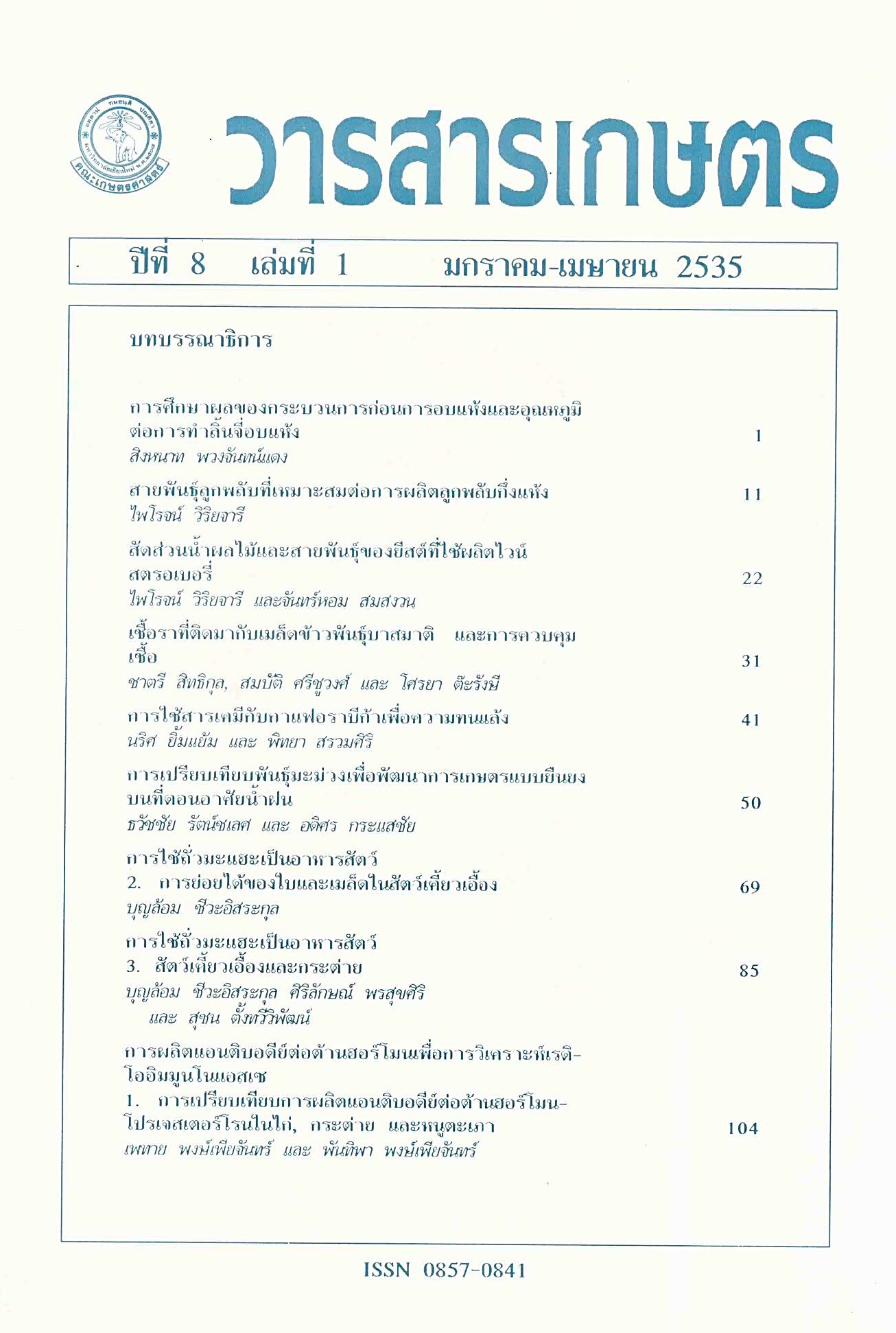
การเปรียบเทียบพันธุ์มะม่วงเพื่อพัฒนาการเกษตรแบบยืนยงบนที่ดอนอาศัยน้ำฝน
Article Sidebar
Main Article Content
บทคัดย่อ
การศึกษาการปลูกมะม่วงผสมผสานกับถั่วเหลืองที่มีอยู่เดิมแล้วในท้องถิ่น บนแปลงของเกษตรกรในพื้นที่โครงการปฏิรูปที่ดินเพื่อเกษตรกรรมป่าจอมทอง จังหวัดเชียงใหม่ ตั้งแต่ปี พ.ศ. 2532 เพื่อคัดเลือกหาพันธุ์มะม่วงที่เหมาะสมจากที่คัดเลือกไว้แล้วในเบื้องต้นจำนวน 16 พันธุ์ ในสภาพที่ดอนอาศัยน้ำฝน ผลการศึกษาในช่วง 2 ปีแรก (2532-2534) ชี้ว่ามะม่วงมีการเติบโตโดยทั่วไปค่อนข้างเร็ว และพันธุ์ที่มีอัตราการเจริญเติบโตค่อนข้างสูงเด่นมีอย่างน้อย 2 พันธุ์ ได้แก่ พันธุ์พิมเสน และพันธุ์หนองแซง ขณะที่พันธุ์แก้วหัวจุกและพันธุ์ศาลายา มีอัตราการเติบโตในเกณฑ์ที่ต่ำสุด ทางด้านผลผลิต พบว่าพันธุ์โชคอนันต์มีการติดผลดีที่สุดในปีที่ 2 การตายของมะม่วงในระยะแรกเป็นปัญหาที่สำคัญของการปลูกมะม่วงในระยะที่มีการสร้างแปลงปลูกใหม่ พบว่าสาเหตุการตายที่สำคัญเกิดจากการปลูกบนจอมปลวก และถูกลมพายุพัดล้ม ส่วนข้อจำกัด ในการผลิตมะม่วงในปีแรก ๆ ในลำดับถัดมาที่พบ ได้แก่ปัญหาการระบาดของโรคยางไหลและการกัดทำลายของแมลง ค่อมทอง (green weevil: Hypomeces squamosus) นอกจากนั้น ในการศึกษานี้ยังได้อภิปรายถึงผลของการปลูกมะม่วงที่มีต่อการผลิตถั่วเหลืองที่ปลูกร่วมกันในฤดูฝน รวมทั้งได้กล่าวถึงผลกระทบของแปลงศึกษาพันธุ์มะม่วงที่มีต่อการขยายตัวของแปลงปลูกมะม่วงของเกษตรกรในบริเวณข้างเคียงอีกด้วย
Article Details
เอกสารอ้างอิง
กระทรวงเกษตรและกรมวิชาการเกษตร. (2531). รายงานประจำปี 2531 สถาบันวิจัยพืชสวน. กรมวิชาการเกษตรและสหกรณ์. หน้า 45.
เจริญสม, โกศล. (2533). แมลงศัตรู ใน: การทำสวนมะม่วง (บรรณาธิการ: ไพบูลย์ ไพรีพ่ายฤทธิ์) หน้า 152-175. ศูนย์ส่งเสริมและฝึกอบรมการเกษตรแห่งชาติ มหาวิทยาลัยเกษตรศาสตร์ วิทยาเขตกำแพงแสน นครปฐม.
รัตน์ชเลศ, ธวัชชัย และ ยิบมันตะสิริ, พฤกษ์. (2534). ปัญหาและโอกาสของระบบการเกษตรแบบผสมผสานบนที่ดอนอาศัยน้ำฝน. เอกสารนำเสนอในการสัมมนาระบบการทำฟาร์มครั้งที่ 8 : สู่ระบบการเกษตรที่ยืนยง. วันที่ 20-22 มีนาคม 2534. คณะแพทยศาสตร์ มหาวิทยาลัยเชียงใหม่. 13 หน้า.
ข่ายสุวรรณ, ถวิล. (2523). พันธุ์มะม่วง. กสิกร 53 (1): 12-27.
ศรีบัวเผื่อน, บันเทิง. (2528). โชคอนันต์ พันธุ์แม่โจ้ 50 ปี มะม่วงมหัศจรรย์พันธุ์ใหม่ของเมืองไทย. วารสารแม่โจ้ 8(3): 34-38.
วังใน, วิจิตร. (2533). พันธุ์มะม่วง. ใน: การทำสวนมะม่วง. (บรรณาธิการ: ไพบูลย์ ไพรีพ่ายฤทธิ์) หน้า 1-17. ศูนย์ส่งเสริมและฝึกอบรมการเกษตรแห่งชาติ มหาวิทยาลัยเกษตรศาสตร์ วิทยาเขตกำแพงแสน นครปฐม.
จินตนาวงศ์, ศิวาพร., ผลประสิทธิ์, ไพโรจน์. และหิรัญประดิษฐ์, หิรัญ. (2533). ลักษณะมะม่วงพันธุ์การค้า. ข่าวสารเกษตรส่งออก 2 (3): 4-8.
คูอาริยะกุล, สุรชาติ. (2532). ความสัมพันธ์ของสายพันธุ์ต่างๆ ของเชื้อรา Botryodiplodia theobronmae Pat. กับการเกิดโรคยางไหลของมะม่วงพันธุ์เขียวเสวยและการควบคุมด้วยสารเคมี. วิทยานิพนธ์มหาบัณฑิต (เกษตรศาสตร์) สาขาโรคพืช มหาวิทยาลัยเกษตรศาสตร์, 143 หน้า.
วิจิตรานนท์, สุชาติ., ภวกุล, ขจรศักดิ์. และ พวงสุวรรณ, ดารา. (2532). โรคของมะม่วง. ใน: เอกสารวิชาการที่ 1 เรื่องมะม่วง. หน้า 47-58. สถาบันวิจัยพืชสวน กรมวิชาการเกษตร กระทรวงเกษตรและสหกรณ์.
Lee, K.E. and Wood., T.G. (1971). Termite and soils. Academic Press, London and New York. 251 P. Pendleton, R.L. (1941). Some results of termite activity in Thailand soils. Thai Sci. Bull. 3(2): 29-53. Radanachaless, T. (1987). Woody perennial systems for rainfed uplands. Technical Report ACNARP- URPG, 1987, Chiang Mai University.
Radanachaless, T. and Krasaechai, A. (1988). Woody perennial systems for rainfed uplands: The performance of the multipurpose trees during the second year. Technical Report ACNARP- URPG, 1988. Chiang Mai University.
Radanachaless, T. and Krasaechai, A. (1990). Woody perennial systems for rainfed uplands: The performance of the multipurpose trees during the third year. Paper presented at the University Research Grants Programme ACNARP-CMU Workshop. Chiang Mai Universit 51 p.
Radanachaless, T. and Krasaechai, A. (1991). Integrating woody perennial species for sustainable agriculture in a rainfed upland 1. Assessing woody perennial species. MCC Agricultural Technical Report No. 12. 23 p.
Radanachaless, T. and Timm, P.W. (1991). Mango growing's problems and needs of the farmers in the rainfed upland. MCC Agricultural Technical Report No. 13. 27 p.
Raintree, J. (1991). Asian farmers prefer multipurpose food trees. Farm Forestry News (Network News) 4(4): 1-2.
