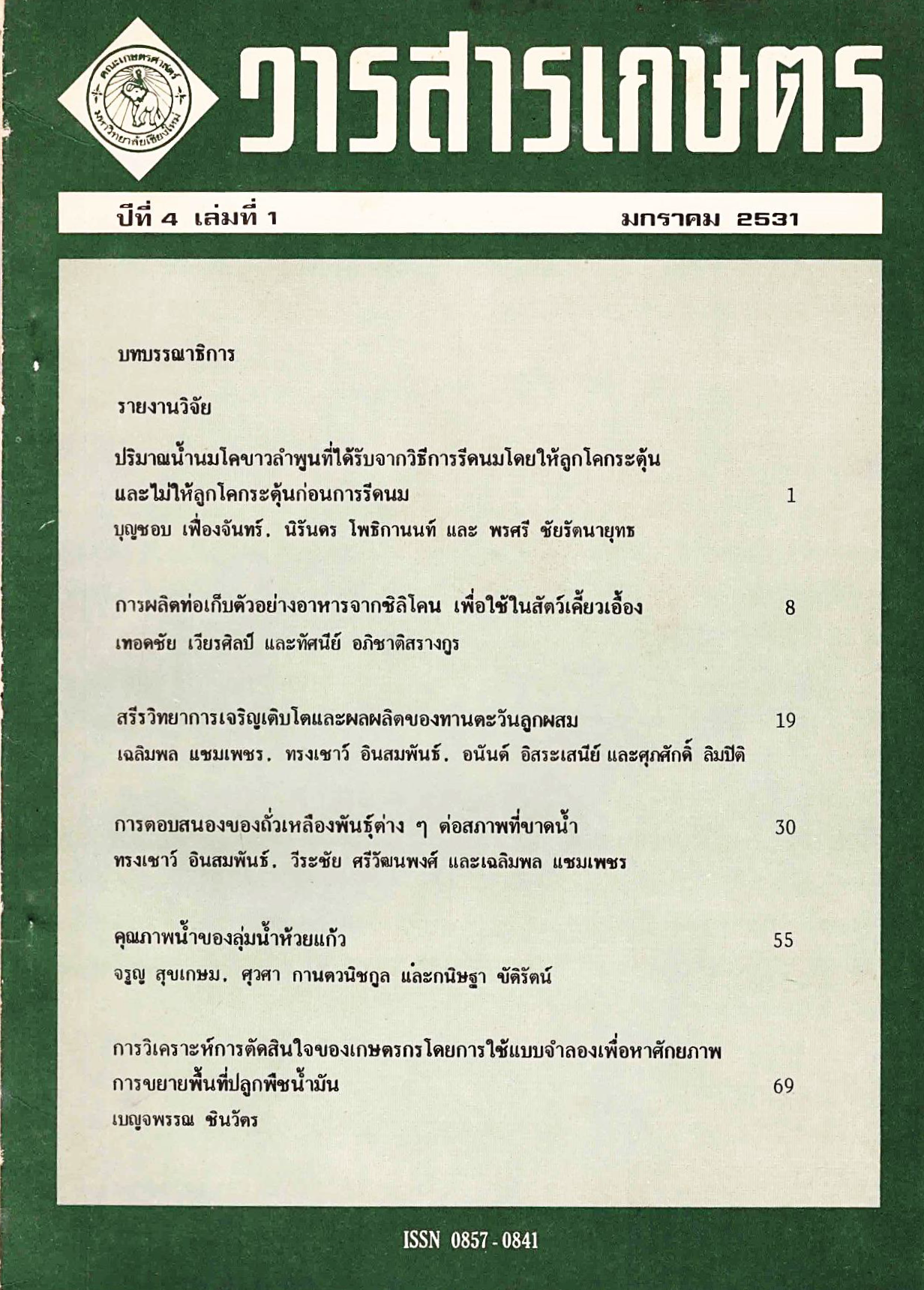
การผลิตท่อเก็บตัวอย่างอาหารจากซิลิโคนเพื่อใช้ในสัตว์เคี้ยวเอื้อง
Article Sidebar
Main Article Content
บทคัดย่อ
เตรียมซิลิโคนให้มีความหนา 5 มม. และ 3 มม. สำหรับใช้ผลิตท่อเก็บตัวอย่างอาหารจากกระเพาะรูเมน และลำไส้เล็กที่มีรูปตัวอักษรที่ (T-shaped) ตามลำดับ นำแผ่นซิลิโคนดังกล่าวมาวางทาบลงบนแบบพิมพ์และกดปรับรอยต่อให้เรียบ ต่อจากนั้นนำไปอบในหม้อนึ่งความดัน 15 ปอนด์ / ต. ร. นิ้วเป็นเวลา 2 ช.ม. ถอดท่อเก็บตัวอย่างออกจากแบบพิมพ์แล้วอบในตู้อบ 200° ซ. 2 ช.ม. ทิ้งไว้ให้เย็น ใช้กรรไกรปรับแต่งส่วนละเอียดอีกครั้งหนึ่ง จากการทดลองใช้แบบพิมพ์ที่ทำจากดินเผาเคลือบ, แท่งเหล็กกลึงผิวเรียบ และไม้ไผ่ พบว่าการเตรียมแบบพิมพ์จากไม้ไผ่ทำได้ง่ายและมีราคาถูกที่สุดเมื่อเปรียบเทียบกับแท่งเหล็กกลึงเรียบ และดินเผาเคลือบตามลำดับ การเตรียมแผ่นซิลิโคนให้มีความหนาสม่ำเสมอและไม่มีหยดน้ำ หรือ ฟองอากาศอยู่ภายใน จะทำให้ท่อเก็บตัวอย่างมีคุณภาพดี และทนทานต่อการใช้งาน
ท่อเก็บตัวอย่างที่ผลิตจากซิลิโคน สามารถผลิตได้เองภายในประเทศ และลดอันตรายที่จะเกิดจากการนอนทับหรือเสียดสีกับคอกของสัตว์ทดลอง และเมื่อท่อเก็บตัวอย่างชำรุดก็สามารถเปลี่ยนได้โดยไม่ต้องทำการผ่าตัดใหม่
Article Details
เอกสารอ้างอิง
Dougherty, R.W. (1981). Experimental Surgery in Farm Animals. The Iowa State University Press, Ames, lowa 50010. USA p. 24-48.
Wenham. G. (1979). Effects of cannulation on intestinal motility. Ann. Rech. Vet 10 (2/3), 157-159.
