
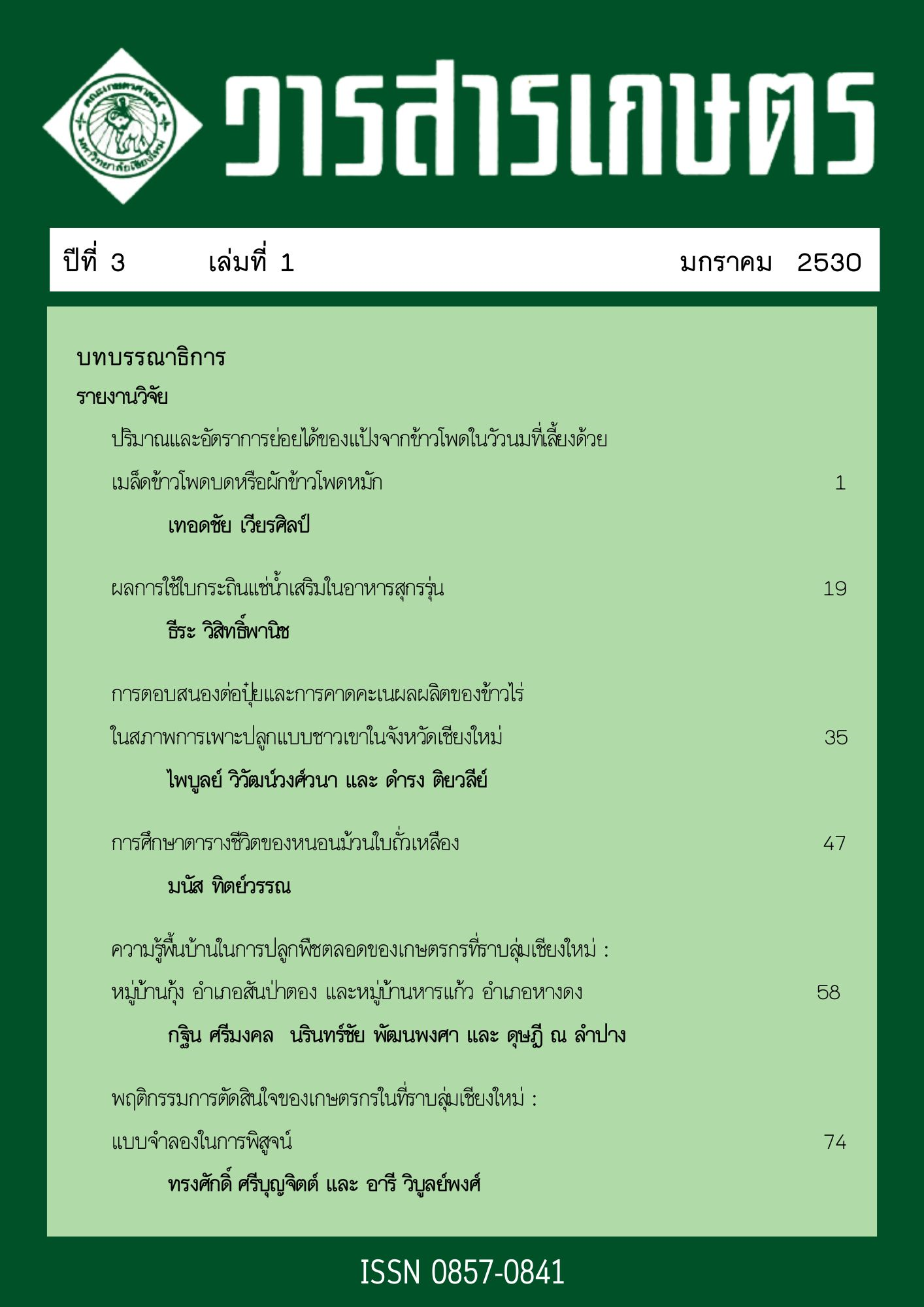
ความรู้พื้นบ้านในการปลูกพืชตลอดของเกษตรกรที่ราบลุ่มเชียงใหม่ : หมู่บ้านกุ้ง อำเภอสันป่าตองและหมู่บ้านหารแก้ว อำเภอหางดง
Article Sidebar
Main Article Content
บทคัดย่อ
งานวิจัยนี้เป็นการศึกษาวิธีการจัดระบบการปลูกพืชตลอดปี และการจัดการพื้นบ้านของเกษตรกร โดยเปรียบเทียบหมู่บ้านดินดีกับหมู่บ้านดินเลว ในที่ราบลุ่มเชียงใหม่สองแห่ง การเก็บขอมูลอาศัยแบบสัมภาษณ์แล้ววิเคราะห์ทางสถิติโดยอาศัยค่าร้อยละและค่าไคสแควส์ ผลการศึกษาพบว่าในทั้งสองหมู่บ้านเกษตรกรปลูกพืชสองครั้งในรอบปี มากที่สุดคือ ฤดูฝน ปลูกข้าวเป็นพืชหลักและในฤดูหนาวปลูกพืชไร่ มียาสูบและถั่วเหลืองมาก รองลงไปได้แก่ พริก ผักต่าง ๆ และข้าวนาปรัง ข้าวนาปี นั้นมีทั้งข้าวเหนียวและข้าวเจ้า ข้าวเหนียวส่วนใหญ่ปลูกพันธุ์สันป่าตองเพื่อใช้บริโภคเอง เพราะมีรสชาติดี ข้าวเจ้าส่วนใหญ่ปลูกพันธุ์ กข 7 เพื่อขายเพราะให้ผลผลิตสูง การเลือกพันธุ์ยาวนานขึ้นกับชนิดของพืชที่ปลูกตามหลังในฤดูหนาว ถ้าเป็นยาสูบ แตงและพริก เกษตรกรต้องรีบปลูกเพื่อให้ได้ราคาดีและ ได้เงินเร็ว กรณีของยาสูบต้องให้ทันกับกล้าจากโรงบ่มใบยา เกษตรกรจะเลือกปลูกข้าวพันธุ์อายุสั้น เช่น ข้าวเหนียวพันธุ์สามเดือน (คอพร้าว) หรือข้าวพันธุ์ กข 7 ถ้าพืชตามที่ปลูกในฤดูหนาวเป็นถั่วเหลืองซึ่งปลูกช้าถึง ต้นเดือนมกราคม เกษตรกรจะเรียกพันธุ์ข้าวอายุยาวปลูกก่อน เช่น ข้าวเหนียวพันธุ์สันป่าตอง หรือข้าวเหนียวพันธุ์พื้นเมืองอื่น แต่ถ้าเกษตรกร เห็นว่าควรปลูกข้าวเจ้าเมื่อได้ราคาดีกว่าไว้ขาย และซื้อขาวเหนียวรับประทาน ก็ยังคงปลูกพันธุ์ กข 7 เกษตรกรที่มีนามากอาจปลูกข้าวเหนียวและข้าวเจ้าไปพร้อมกันและหลังเก็บ เที่ยวจะปลูกพืชไรหลายอย่างพร้อมกันไปด้วย
การกำจัดวัชพืชแบบพื้นบ้าน นิยมใช้เท้าย่ำหญ้าฝังดินถ้าต้นโตมากจะถอนกองบนคันมา การใช้วิธีกำจัดวัชพืชแบบพื้นบ้านและแบบใช้สารเคมีระหว่างหมู่บ้านทั้งสองแห่งพบว่า มีความแตกต่างกันในระดับความเชื่อมั่นที่ .01 โดยหมู่บ้านที่มีดินดีกว่าจะใช้วิธีกำจัดวัชพืชแบบพื้นบ้านมากกว่า การปลูกถั่วเหลืองตามตอซังข้าวแล้วกลบด้วยขี้เถ้าเป็นการปลูกแบบพื้นบ้านที่ทำกันมานานในภาคเหนือและพบว่า หมู่บ้านที่ดินดีกว่าจะมีการปลูกถั่วเหลืองกันมากกว่าหมู่บ้านที่ดินเลว ซึ่งมีความแตกต่างในระดับความเชื่อมั่น .05 แต่อัตราที่ใส่ปุ๋ยให้แก่ข้าวและถั่วเหลืองไม่มีความแตกต่างกันระหว่างหมู่บ้านทั้งสองแห่ง เป็นที่น่าสังเกตว่า เกษตรกร ในหมู่บ้านที่มีดินเลว จะมีการปรึกษาหารือปัญหาเรื่องดินของตนมากกว่าเกษตรกรในหมู่บ้านที่มีดินดีและมีความแตกต่างกันในระดับความเชื่อมั่น 0.01
Article Details

อนุญาตภายใต้เงื่อนไข Creative Commons Attribution-NonCommercial-NoDerivatives 4.0 International License.
เอกสารอ้างอิง
จันทรบูรณ์, สุทธิ. (2526) การเกษตรแบบตัดพันโคนเผาบนพื้นที่สูง : วิทยาการพื้นบ้านการเลือกพื้นที่. ข่าวสารศูนย์วิจัยชาวเขา. ปีที่ 8 ฉบับที่ 1 มกราคม - มีนาคม 2527 23-33.
ศรีมงคล, กฐิน. (2522), การศึกษาเปรียบเทียบผลผลิตและรายได้จากการปลูกถั่วเหลืองแบบตามตอซัง กับ วิธีการแผนใหม่, รายงานการวิจัย ฉบับที่ 1 คณะเกษตรศาสตร์ มหาวิทยาลัยเชียงใหม่.
เอกะสิงห์, เมธี บีบมันตะสิริ, พฤกษ์, ฤกษ์เกษม, เพญจวรรณ และ ศีติสาร, มนู (2527). สมบัติเชิงพลวัดบาง ประการของระบบเกษตรในเขตรับน้ำโครงการชล ประทานแม่แตง จังหวัดเชียงใหม่, รายงานการ ประชุมสัมมนาเตรียมขอมูล 9-10 สิงหาคม 2527. โครงการศูนย์วิจัยเพื่อเพิ่มผลผลิตทางเกษตร.
Linda, C.M., Abdoellah, O., Marten, G. and Iskandar, J. (1984). Traditional Agroforestry in West Java: The Pekarangan (Home Garden) and Kebun-Talun (Perennial-Annual Rotation) Cropping Systems. Working Paper. East-West Center, Honolulu, Hawaii. 42 pp.
Litsingar, J.A., Price, E. C. and Herrera, R.1. (1980). Small farmer pest control practices for rained rice, corn, and grain legumes in three Philippine Provinces. Philipp. Entomol. 4:65-86.
Sanchez, F.F. (1980). Proceedings Symposium on Small Mamals. : Problems and control. 6-8 December 1977. BIOTROP Spec. Pub. No. 12 National Crop Protection Center, University of the Philippines, Los Banos, Philippines. 42 pp.
Srimongkol, K. (1983). Traditional Agriculture in north Thailand. Working Paper. East West Center, Honolulu, Hawaii. 29 pp. Williams, P.H. (1979). Vegetable crop protection in the People's Republic of China. Ann. Rev. Phytipathol. 17: 311-324.
