ชีวนวัตกรรมการผลิตวัสดุปรับปรุงดินจากก้อนเชื้อเห็ดนางฟ้าเก่าหมัก ร่วมกับวัสดุอินทรีย์เหลือทิ้งทางการเกษตรโดยใช้เอนโดไฟติกแบคทีเรียเป็นหัวเชื้อ
DOI:
https://doi.org/10.14456/jare-mju.2025.48คำสำคัญ:
ชีวนวัตกรรม, วัสดุปรับปรุงดิน, ก้อนเชื้อเห็ดนางฟ้าเก่า, เอนโดไฟติกแบคทีเรีย, ฝุ่นข้าวโพดอาหารสัตว์บทคัดย่อ
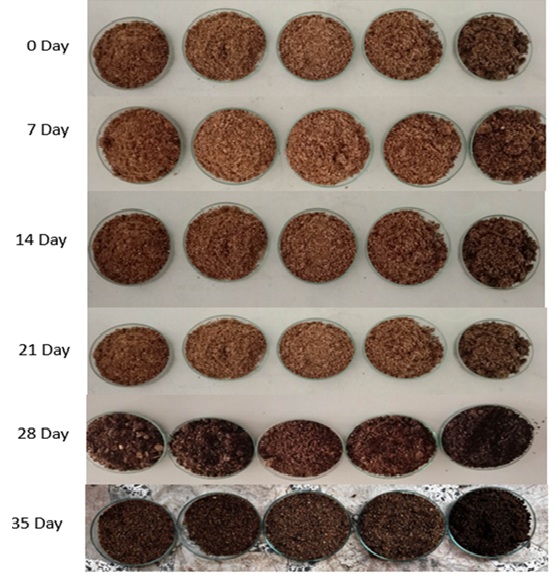
ชีวนวัตกรรมการผลิตวัสดุปรับปรุงดินจากก้อนเชื้อเห็ดนางฟ้าเก่าหมักร่วมกับวัสดุอินทรีย์เหลือทิ้งทางการเกษตรโดยใช้เอนโดไฟติกแบคทีเรียเป็นหัวเชื้อ เป็นการหมักวัสดุปรับปรุงดินจากวัสดุเหลือทิ้งร่วมกับชีวนวัตกรรม การใช้จุลินทรีย์ตรึงไนโตรเจน เพื่อช่วยย่นระยะการเกิดวัสดุปรับปรุงดินให้เร็วขึ้น และเพื่อผลิตสูตรของวัสดุปรับปรุงดินที่มีประสิทธิภาพได้ พบว่าก้อนเชื้อเห็ดนางฟ้าเก่าหมักร่วมกับวัตถุดิบอินทรีย์เหลือทิ้งทางการเกษตรโดยใช้เอนโด ไฟติกแบคทีเรีย Pseudoxanthomonas spadix MJUP08 และ Novosphingobium sp. MJUP_r9 โดยใช้ปริมาณก้อนเห็ดนางฟ้าเก่าจำนวน 5 ระดับ ที่แตกต่างกัน (50, 60, 70, 80 และ 90 เปอร์เซ็นต์) หลังจากหมักเป็นเวลา 35 วัน ผลการศึกษาพบว่า สูตรที่ใช้ปริมาณก้อนเชื้อเห็ดนางฟ้าเก่า ที่ร้อยละ 80 หมักร่วมกับเปลือกกาแฟร้อยละ 6 ฝุ่นข้าวโพดอาหารสัตว์ร้อยละ 6 มูลโคร้อยละ 7 กากน้ำตาลเจือจางกับน้ำ 1 ต่อ 20 ส่วน ที่ปริมาณ 10 ลิตร (ความชื้นร้อยละ 60) โดยใช้จุลินทรีย์ตรึงไนโตรเจนเป็นหัวเชื้อทั้ง 2 สายพันธุ์ ร้อยละ 10 มีสมบัติทางเคมีของวัสดุปรับปรุงดินเบื้องต้น ได้แก่ N2, P2O5 และ K2O เท่ากับร้อยละ 0.34, 0.15 และ 0.84 ตามลำดับ
เอกสารอ้างอิง
Daramola, D.S., A.S. Adeyeye and D. Lawal. 2006. Effect of Application of Organic and Inorganic Nitrogen Fertilizer on the Growth and Dry Matter Yield of Amaranthus. pp.56–65. In Proceedings of the 2nd National Conference on Organic Agriculture 27th November-1st December 2006. Ibadan: University of Ibadan.
Meena, M.D., P.K. Joshi, H.S. Jat, A.R. Chinchmalatpure, B. Narjary, P. Sheoran and D.K. Sharma. 2016. Changes in Biological and Chemical Properties of Saline Soil Amended with Municipal Solid Waste Compost and Chemical Fertilizers in a Mustard-Pearl Millet Cropping System. Karnal: CATENA Press. 140 p.
Nottidge, D.O., S. Ojeniyi and D. Asawalam. 2005. Comparative effect of plant residues and NPK fertilizer on nutrient status and yield of maize (Zea mays L.) in humid Ultisol. Nigerian Journal of Soil Science 15: 1–8.
Oluchukwu, A.C., A.G. Nebechukwu and S.O. Egbuna. 2018. Enrichment of nutritional contents of sawdust by composting with other nitrogen rich agro-wastes for bio-fertilizer synthesis. Journal of Chemical Technology and Metallurgy 53(3): 430–436.
Onnby, L., K. Harald and I.A. ges. 2015. Cryogel-supported titanate nanotubes for waste treatment: impact on methane production and bio-fertilizer quality. Journal of Biotechnology 207: 58–66.
Rajoka, M.I. and K.A. Malik. 1997. Cellulase production by Cellulomonas biazotea cultured in media containing different cellulosic substrates. Bioresource Technology 59(1): 21–27.
Shaviv, A. 2005. Controlled Release Fertilizers. pp. 28–39. In IFA International Workshop on Enhanced-Efficiency Fertilizers. Frankfurt: International Fertilizer Association (IFA).
Silva, V.N., L.E.S.F. Silva, A.J.N. Silva, N.P. Stamford and G.R. Macedo. 2017. Solubility curve of rock powder inoculated with microorganisms in the production of biofertilizers. Agriculture and Natural Resources 51: 142–147.
Subba, R.N.S. 1993. Biofertilizer in Agriculture and Forestry. 3rded. New York: International Science Publisher. 242 p.
Taiwan Fertilizer Company. 1994. Field Tests of Application of Organic Compound Fertilizer. 10 p. In Research Report. China: Taiwan Fertilizer Company.
Tejada, M., B. Rodríguez-Morgado, I. Gómez L. Franco-Andreu, C. Benítez and J. Parrado. 2016. Use of biofertilizers obtained from sewage sludges on maize yield. European Journal of Agronomy 78: 13–19.
Thongpradistha, S., T. Muadsri and A. Sukkaew. 2023. The effect of organic fertilizer formula from Sajor-caju mushroom (Pleurotus sajor-caju) waste on macronutrients. Rajamangala University of Technology Srivijaya Research Journal 12(1): 61–71.
Yang, S.S., H.L. Chan, C.B. Wei and H.C Lin. 1991. Reduce wastes production with modified Kjeldahl method for nitrogen measurement. Biomass and Bioenergy Journal 10: 147–155.
ดาวน์โหลด
เผยแพร่แล้ว
รูปแบบการอ้างอิง
ฉบับ
ประเภทบทความ
สัญญาอนุญาต
ลิขสิทธิ์ (c) 2025 วารสารวิจัยและส่งเสริมวิชาการเกษตร

อนุญาตภายใต้เงื่อนไข Creative Commons Attribution-NonCommercial-NoDerivatives 4.0 International License.
บทความนี้ได้รับการเผยแพร่ภายใต้สัญญาอนุญาต Creative Commons Attribution-NonCommercial-NoDerivatives 4.0 International (CC BY-NC-ND 4.0) ซึ่งอนุญาตให้ผู้อื่นสามารถแชร์บทความได้โดยให้เครดิตผู้เขียนและห้ามนำไปใช้เพื่อการค้าหรือดัดแปลง หากต้องการใช้งานซ้ำในลักษณะอื่น ๆ หรือการเผยแพร่ซ้ำ จำเป็นต้องได้รับอนุญาตจากวารสาร