การพัฒนาผลิตภัณฑ์ชาเปลือกกล้วยหอมทองพร้อมดื่มจากวัสดุเหลือใช้ทางการเกษตร ในจังหวัดเพชรบุรี
DOI:
https://doi.org/10.14456/jare-mju.2026.35คำสำคัญ:
เปลือกกล้วยหอมทอง , ชาพร้อมดื่ม , ชาเปลือกกล้วยหอมทองพร้อมดื่มบทคัดย่อ
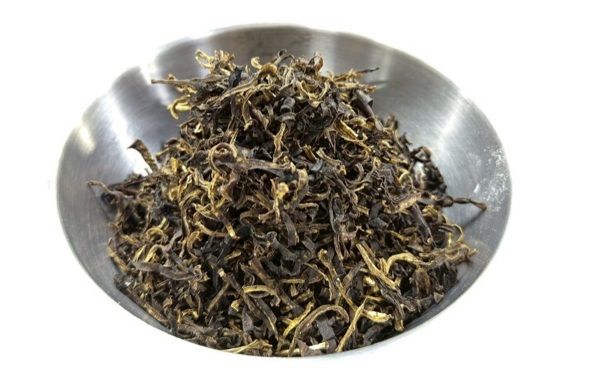
จังหวัดเพชรบุรีเป็นหนึ่งในจังหวัดที่มีปริมาณผลผลิตกล้วยหอมทองที่สูงเป็นลำดับต้นของประเทศไทย ส่งผลให้มีเปลือกกล้วยเหลือทิ้งจากการบริโภคและการแปรรูปเป็นจำนวนมาก แม้จะมีงานวิจัยระบุถึงคุณประโยชน์ของเปลือกกล้วยในหลายด้าน แต่การนำมาใช้ประโยชน์ยังไม่มีความหลากหลาย ดังนั้น งานวิจัย นี้จึงมีจุดมุ่งหมายในการพัฒนาผลิตภัณฑ์ชาเปลือกกล้วยหอมทองพร้อมดื่ม เพื่อเป็นการสร้างมูลค่าเพิ่มให้กับ วัสดุเหลือทิ้งทางการเกษตรในพื้นที่ โดยทำการศึกษากระบวนการผลิตน้ำชาที่เหมาะสม จากการใช้อัตราส่วนของชาเปลือกกล้วยหอมทองต่อน้ำที่แตกต่างกัน 5 ระดับ ได้แก่ ร้อยละ 0.5, 1.0, 1.5, 2.0 และ 2.5 (น้ำหนักต่อปริมาตร) ผลการศึกษาพบว่า การใช้ชาต่อน้ำที่ร้อยละ 1.5 (น้ำหนักต่อปริมาตร) เป็นอัตราส่วนที่เหมาะสม ทั้งในด้านคุณภาพทางกายภาพ เคมี และความชอบของผู้บริโภค นอกจากนี้การเติมไซรัปหล่อฮังก๊วยในน้ำชาที่ร้อยละ 0.2 (น้ำหนักต่อปริมาตร) เป็นอัตราส่วนที่ได้รับคะแนนความชอบจากผู้บริโภคมากที่สุด (p<0.05) ทั้งนี้ชาพร้อมดื่มบรรจุขวดขนาด 200 มล. ให้พลังงาน 60 กิโลแคลอรี โดยหลังผ่านกระบวนการพาสเจอร์ไรซ์และเก็บรักษาที่อุณหภูมิ 4±2°ซ เป็นเวลา 14 วัน พบว่ามีการเปลี่ยนแปลงทางกายภาพและเคมีเพียงเล็กน้อย ขณะที่คุณภาพ ด้านจุลินทรีย์ยังคงอยู่ในเกณฑ์ของประกาศกระทรวงสาธารณสุข (ฉบับที่ 416/2563) และมาตรฐานผลิตภัณฑ์ชุมชน (มผช. 1007/2558) จากการศึกษาดังกล่าวแสดงให้เห็นว่าการพัฒนาผลิตภัณฑ์นี้ สามารถนำไปใช้ต่อยอดเป็นแนวทางในการสร้างมูลค่าเพิ่มให้แก่เปลือกกล้วยหอมทองในพื้นที่จังหวัดเพชรบุรีได้
เอกสารอ้างอิง
Aboul-Enein, A.M., Z.A. Salama, A.A. Gaafar, H.F. Aly, F. Abou-Elella and H. Ahmed. 2016. Identification of phenolic compounds from banana peel as antioxidant and antimicrobial agents. Journal of Chemical and Pharmaceutical Research 8(4): 46–55.
Aburto, N.J., S. Hanson, H. Gutierrez, L. Hooper, P. Elliott and F.P. Cappuccio. 2013. Effect of increased potassium intake on cardiovascular risk factors and disease: systematic review and meta-analysis. BMJ 346: 1–19.
Bugaud, C. and P. Alter. 2016. Volatile and non-volatile compounds as odour and aroma predictors in dessert banana. Postharvest Biology and Technology 112: 14–23.
Chabuck, Z.A.G., A.H.A. Charrakh, N.K. Kadhim and S.K. Kadhim. 2013. Antimicrobial effect of aqueous banana peel extract. Iraq Research Gate Pharmaceutical Sciences 1: 73–75.
Chen, N., W. Cao, Y. Yuan, Y. Wang, X. Zhang, Y. Chen, M.N. Yiasmin, N.A. Tristanto and X. Hua. 2024. Recent advancements in mogrosides: A review on biological activities, synthetic biology, and applications in the food industry. Food chemistry 449: 1–18.
Chirinang, P., I. Wattananakhasem, J. Prattanaruk, J. Intanin and S. Nawong. 2024. Study on production of functional ready-to-drink tea from Borassus flabellifer L. male flowers mixed with herbs. Burapha Science Journal 29(1): 181–198. [in Thai]
Chueamchaitrakun, P., D.R. Adawiyah and W. Prinyawiwatkul. 2018. Consumer acceptance and emotions study of green tea products. Current Applied Science and Technology 18(1): 37–44.
Dachruangsri, A. 2014. High Antioxidant Ready-to-Drink Mulberry Leaves Tea Product Development by Using Innovative Microencapsulation. Master Thesis. Chulalongkorn University. 137 p. [in Thai]
Dippong, T., O. Cadar, M.H. Kovacs, M. Dan and L. Senila. 2023. Chemical analysis of various tea samples concerning volatile compounds, fatty acids, minerals and assessment of their thermal behavior. Foods 12(16): 1–21.
Fernández-Vázquez, R., M. Mora, P. Gaspar and J. Rúa. 2014. Colour influences sensory perception and liking of orange juice. Flavour 3(1): 1–8.
Hikal, W.M., H.A. Said-Al Ahl, A. Bratovcic, K.G. Tkachenko, J. Sharifi-Rad, M. Kačániová, M. Elhourri and M. Atanassova. 2022. Banana peels: a waste treasure for human being. Evidence-Based Complementary and Alternative Medicine 2022(1): 1–9.
Janjariyanon, S. 2009. Participatory in the Organic Hom Thong Banana Production for Export Project of Members in Agricultural Cooperative Limited Banlat, Phetchaburi Province. Master Thesis. Maejo University. 144 p. [in Thai]
Kim, B.S., M.Y. Yu and J. Shin. 2024. Effect of low sodium and high potassium diet on lowering blood pressure and cardiovascular events. Clinical Hypertension 30(1). 1–13.
Mammasse, N. and P. Schlich. 2014. Adequate number of consumers in a liking test. Insights from resampling in seven studies. Food Quality and Preference 31: 124–128.
Matangkasombut, O. and P. Thanyasrisung. 2019. Sugar substitutes and their effects on systemic and oral health. Journal of the Dental Association of Thailand 69(4): 379–397. [in Thai]
Ministry of Public Health. 2020. Notification of the Ministry of Public Health (No. 416) B.E. 2563 (2020): Standards for Contaminants in Food. Bangkok: Ministry of Public Health. 16 p. [in Thai]
Ministry of Public Health. 2023. Notification of the Ministry of Public Health (No. 445) B.E. 2566 (2023): Nutrition Labeling. Bangkok: Ministry of Public Health. 47 p. [in Thai]
Navghare, V. and S. Dhawale. 2017. In vitro antioxidant, hypoglycemic and oral glucose tolerance test of banana peels. Alexandria Journal of Medicine 53(3): 237–243.
Ngamwonglumlert, L., S. Devahastin, N. Chiewchan and V. Raghavan. 2020. Plant carotenoids evolution during cultivation, postharvest storage, and food processing: A review. Comprehensive Reviews in Food Science and Food Safety 19(4): 1561–1604.
Nujnetra, A. and S. Pheratkul. 2013. Kloyhomthongbanlad: production cost and return on investment. Journal of Southern Technology 6(2): 1–8. [in Thai]
Phakamus, S., S. Chokrathok, J. Woraratphoka and S. Innok. 2018. Development of Yanang mixed herb tea products. Burapha Science Journal 23(3): 1682–1695. [in Thai]
Pramote, B., W.N. Waranuch and O. Kritsunankul. 2018. Simultaneous determination of gallic acid and catechins in banana peel extract by reversed-phase high performance liquid chromatography. Asian Health, Science and Technology Reports 26(3). 189–200.
Puangphet, A., P. Chirinang and S. Nawong. 2022. Study of Chemical and Physical Compositions of Hom Thong Banana Peel from Phetchaburi and Development of Banana Peel Tea. 139 p. Research Report. Phetchaburi: Phetchaburi Rajabhat University. [in Thai]
Puangphet, A., P. Chirinang and S. Nawong. 2024. Product development of Hom Thong banana peel tea. VRU Research and Development Journal Science and Technology 19(2): 107–121. [in Thai]
Spence, C. 2019. On the relationship between colour and flavour. Flavour 8(1): 1–17.
Tan, J., W.J. De Bruijn, A. Van Zadelhoff, Z. Lin and J.-P. Vincken. 2020. Browning of epicatechin (EC) and epigallocatechin (EGC) by auto-oxidation. Journal of Agricultural and Food Chemistry 68(47): 13879–13887.
Tayeh, N. 2018. The Development of Tea Product from Betong Watercress. 47 p. In Research Report. Yala: Yala Rajabhat University. [in Thai]
Thai Community Products Standard. 2015. Thai Community Products Standard (TCPS 1007/2558): Iced Tea with Milk. Bangkok: Thai Industrial Standards Institute (TISI). 9 p. [in Thai]
Wani, K.M. and M. Dhanya. 2025. Unlocking the potential of banana peel bioactives. Discover Food 5(1): 1–25.
Whitaker, J.R. 1995. Polyphenol Oxidase. pp. 271–307. In Wong, D.W.S. (Ed.) Food Enzymes: Structure and Mechanism. Boston: Springer.
Wirivutthikorn, W. 2022. Appropriate ratios of mulberry leaf and pineapple on qualities of mulberry leaf and pineapple juice. King Mongkut's Agricultural Journal 40(2): 178–186. [in Thai]
Yasin, M., S. Gangan and S.K. Panchal. 2025. Banana peels: a genuine waste or a wonderful opportunity? Applied Sciences 15(6): 1–20.
Zhang, S., Q. Li, S. Wen, L. Sun, R. Chen, Z. Zhang, J. Cao, Z. Lai, Z. Li, X. Lai, P. Wu, S. Sun and Z. Chen. 2023. Metabolomics reveals the effects of different storage times on the acidity quality and metabolites of large-leaf black tea. Food Chemistry 426: 1–11
ดาวน์โหลด
เผยแพร่แล้ว
รูปแบบการอ้างอิง
ฉบับ
ประเภทบทความ
สัญญาอนุญาต
ลิขสิทธิ์ (c) 2026 วารสารวิจัยและส่งเสริมวิชาการเกษตร

อนุญาตภายใต้เงื่อนไข Creative Commons Attribution-NonCommercial-NoDerivatives 4.0 International License.
บทความนี้ได้รับการเผยแพร่ภายใต้สัญญาอนุญาต Creative Commons Attribution-NonCommercial-NoDerivatives 4.0 International (CC BY-NC-ND 4.0) ซึ่งอนุญาตให้ผู้อื่นสามารถแชร์บทความได้โดยให้เครดิตผู้เขียนและห้ามนำไปใช้เพื่อการค้าหรือดัดแปลง หากต้องการใช้งานซ้ำในลักษณะอื่น ๆ หรือการเผยแพร่ซ้ำ จำเป็นต้องได้รับอนุญาตจากวารสาร