
Guidelines for Creating Community Food Security through Local Rice Production in Thung Song District, Nakhon Si Thammarat Province
DOI:
https://doi.org/10.14456/jare-mju.2025.55Keywords:
local rice varieties, food security, food stability, food access, food utilizationAbstract
This research aimed to study: 1) farmers’ backgrounds in agricultural production and their use; 2) their knowledge, attitudes, and practices on food security; and 3) challenges and suggestions for promoting food security through local rice production among 75 farmers in three sub-districts of Thung Song District, Nakhon Si Thammarat. Data were collected via interviews and analyzed using descriptive and inferential statistics, along with content analysis.
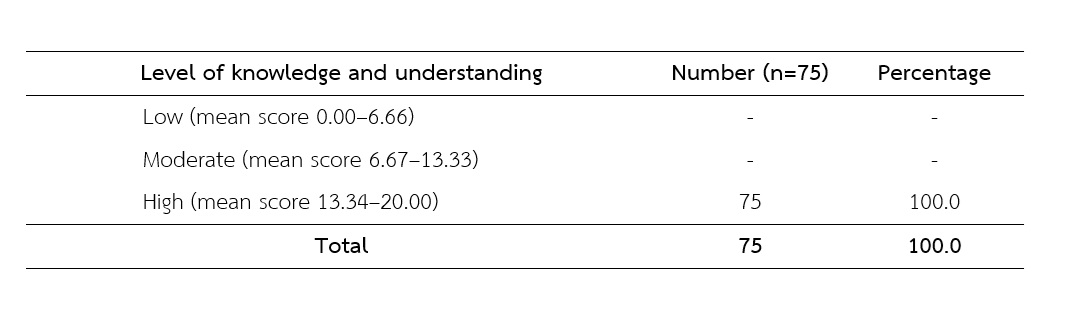
The study found that most farmers had primary education or lower (82.67%), lacked participation in community groups (70.67%), and had not received food production training (73.33%). However, local rice varieties, especially glutinous rice grown with rubber and oil palm, can provide both income and food for households. Each production cycle gives an average yield of 3,685.33 kilograms and earns about 193,459.72 Baht. Farmers had high knowledge and positive attitudes toward food security (avg. 13.34–20.00), but practices were moderate (avg. 4.17), with food stability lowest. Key challenges included limited land, low food diversity, and poor consumption planning.
Policy recommendations include efficient land use, support for household food production, better income and food management, stronger community markets and preserving local rice varieties to support biodiversity. This research suggests that managing local rice at the community level can help achieve sustainable food security for households and communities.
References
Chaiamphorn, S. 2017. Food security: various cultural indicators in Thai society. The NIDA Development Journal (NDJ) 5(1): 200–222. [in Thai]
Department of Agriculture. 2002. Characteristics and Values of Native Thai Rice Varieties. Bangkok: Department of Agriculture, Ministry of Agriculture and Cooperatives. 215 p. [in Thai]
Food and Agriculture Organization of the United Nations (FAO). 2006. Food Security: Policy Brief. Rome: FAO. 4 p.
Office of Agricultural Economics. 2006. Agricultural product production information. [Online]. Available https://www.oae.go.th/view/1/A3/TH-TH. (October 22, 2024). [in Thai]
Office of Agricultural Economics. 2018. Rice. [Online]. Available https://www.oae.go.th/view/1/%E0%B8%82%E0%B9%89%E0%B8%B2%E0%B8%A7/TH-TH (October 22, 2024). [in Thai]
Office of The Permanent Secretary for Ministry of Agriculture and Cooperatives. 2024. Basic information of Nakhon Si Thammarat Province. [Online]. Available https://www.opsmoac.go.th/news-preview-461391791298 (May 5, 2025).
[in Thai]
Phatthalung Rice Research Center. 2007. Native Rice Varieties of Southern Thailand. Volume 1. Bangkok: Rice Research and Development Bureau, Rice Department. 27 p. [in Thai]
Prachasanti, S. 2009. The Situation of Food Security in Thailand After 1997. Bangkok: Sustainable Agriculture Foundation (Thailand), National Health Commission Office (NHCO), Office of Agricultural Economics. 7 p. [in Thai]
Rice Department. 2024. Rice knowledge bank. [Online]. Available https://newwebs2. ricethailand.go.th/webmain/rkb3/ (October 22, 2024). [in Thai]
Siamwala, A. and W. Na Ranong. 1990. Compilation of Knowledge about Rice. Bangkok: Thailand Development Research Institute. 379 p. [in Thai]
Srisakud, B. 2017. Research (10th ed.). Bangkok: Suweerivasarn. 301 p. [in Thai]
Thaveerat, P. 2000. Research in Behavioral and Social Sciences (8th ed.). Bangkok: Chulalongkorn University Press. 303 p. [in Thai]
Veerapat, P. 1977. Rice, Important Characteristics of Rice for Agriculture. Bangkok: Thai Youth Encyclopedia Foundation. 289 p. [in Thai]
Downloads
Published
How to Cite
Issue
Section
License
Copyright (c) 2025 Journal of Agricultural Research and Extension

This work is licensed under a Creative Commons Attribution-NonCommercial-NoDerivatives 4.0 International License.
This article is published under a Creative Commons Attribution-NonCommercial-NoDerivatives 4.0 International License (CC BY-NC-ND 4.0), which allows others to share the article with proper attribution to the authors and prohibits commercial use or modification. For any other reuse or republication, permission from the journal and the authors is required.


