
Effect of Hot-Air Drying Method on the Quality of Chili Paste from Kradang Mushroom (Lentinus polychrous Lev.)
DOI:
https://doi.org/10.14456/jare-mju.2026.17Keywords:
Kradang mushroom, chilli paste, drying, antioxidant activity, nutritional compositionAbstract
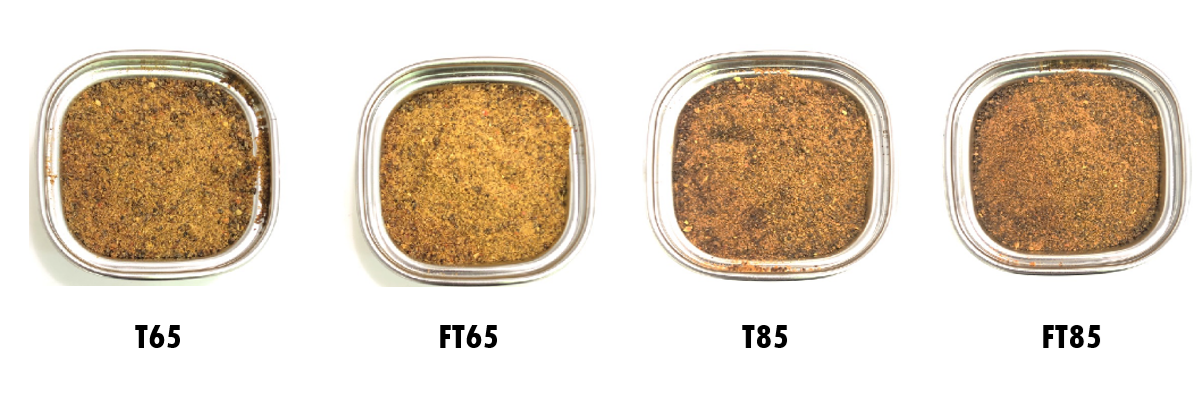
This study aimed to investigate the effects of hot-air drying on the quality of dried Kradang mushroom chili paste by comparing four drying methods: drying at 65°C for 24 hours (T65), freezing at -18°C for 12 hours prior to drying at 65°C for 24 hours (FT65), drying at 85°C for 18 hours (T85), and freezing at -18°C for 12 hours prior to drying at 85°C for 18 hours (FT85). The chili paste recipe consisted of 52.56% boiled Kradang mushroom, 10.51% boiled tilapia meat, and other seasonings. The research findings indicated that the chili paste dried at 65°C had a lighter brown color and a more pleasant aroma compared to the chili paste dried at 85°C. All samples exhibited similar water rehydration properties (p>0.05). The chemical composition of the dried Kradang mushroom chili paste was as follows: 6.25±0.07% moisture, 22.50±0.23% protein, 1.66±0.11% fat, 5.07±0.19% fiber, 10.61±0.24% ash and 46.09±0.83% carbohydrates. Sensory evaluation revealed that the dried Kradang mushroom chili paste produced using the T65 method received the highest acceptance scores, which were not significantly different from those of the T85. However, the T85 resulted in higher antioxidant activity compared to the T65. Therefore, drying at 85°C without freezing is an appropriate method when considering physical characteristics, consumer acceptance, and nutritional value. This method can serve as a guideline for developing dried Kradang mushroom chili paste, enhancing its potential for development into processed food products for commercial purposes and generating income for local communities.
References
AOAC. 2000. Official Methods of Analysis of AOAC International. 17th ed. Virginia Arlington: The Association of Official Analytical Chemists, Inc. 771 p.
Aravindakshan, S., T.H.A. Nguyen, C. Kyomugasho, C. Buvé, K. Dewettinck, A. Van Loey and M.E. Hendrickx. 2021. The impact of drying and rehydration on the structural properties and quality attributes of pre-cooked dried beans. Foods 10(7): 1665.
Arya, M., P. Kumari, G. Kumar, A.S. Chauhan and P. Giridhar. 2024. Insights into the chili phytochemicals, bioactive components, and antioxidant activity of instant premixes (green and red chilies) and their reconstitution products. Food Production, Processing and Nutrition 6: 672.
Babiker, E.E. and Y.A.I. Eltoum. 2014. Effect of edible surface coatings followed by dehydration on some quality attributes and antioxidants content of raw and blanched tomato slices. Food Science and Biotechnology 23(1): 231–238.
Bi, Y.X., S. Zielinska, J.B. Ni, X.X. Li, X.F. Xue, W.L. Tian, W.J. Peng and X.M. Fang. 2022. Effects of hot-air drying temperature on drying characteristics and color deterioration of rape bee pollen. Food Chemistry:X 16: 100464.
Brütsch, L., S. Rugiero, S.S. Serrano, C. Stadeli, E.J. Windhab and P. Fischer. 2018. Targeted inhibition of enzymatic browning in wheat pastry dough. Journal of Agricultural and Food Chemistry 66(46): 12353–12360.
Burandat, P. and Y. Senayai. 2016. Drying of Thai Noodles Sauce. 32 p. In Research Report. Mahasarakham: Rajabhat Mahasarakham University. [in Thai]
Chairote, E.O.N. and S. Intachum. 2016. Volatile aroma compounds of green chili pepper treated with different heat-drying processes. International Journal of Applied Chemistry 12(2): 129–138.
Chaisrisa, J. and A. Charoenchaichai. 2019. Development and consumer acceptance of ready-to-eat dried mackerel chili paste: optimization of drying temperature and time. Journal of Technical Education Development 30(107): 124. [in Thai]
Chu, Q., L. Li, X. Duan, M. Zhao, Z. Wang, Z. Wang and G. Ren. 2023. Effect mechanism of different drying methods on the quality and browning for daylily. LWT. 182: 114862.
Fellows, P. 2009. Food Processing Technology: Principles and Practice. 3rd ed. Oxford: Woodhead Publishing. 608 p.
Hofmann, T., W. Bors and K. Stettmaier. 1999. Studies on radical intermediates in the early stage of the nonenzymatic browning reaction of carbohydrates and amino acids. Journal of Agricultural and Food Chemistry 47(2): 379–390.
Inta, P. and S. Lertworasirikul. 2022. Effect of Drying Temperature on Physical and Chemical Properties of Duckweed (Wolffia globosa). pp. 499–505. In Proceedings of 60th Kasetsart University Annual Conference: Agro-Industry. Bangkok: Kasetsart University. [in Thai]
Jantra, S., T. Fangkrathok and B. Sripanidkulchai. 2025. Lentinus polychrous polysaccharide induces apoptosis in human breast cancer cell lines. Journal of Applied Pharmaceutical Science 15(1): 57–65.
Kim, J.S., O.J. Kang and O.C. Gwean. 2013. Comparison of phenolic acids and flavonoids in black garlic at different thermal processing steps. Journal of Functional Foods 5: 80–86.
Krokida, M.K., V.T. Karathanos and Z.B. Maroulis. 1998. Effect of freeze-drying conditions on shrinkage and porosity of dehydrated agricultural products. Journal of Food Engineering 35(4): 369–380.
Lou, S.N., Y.S. Lin, Y.S. Hsu, E.M. Chiu and C.T. Ho. 2014. Soluble and insoluble phenolic compounds and antioxidant activity of immature calamondin affected by solvents and heat treatment. Food Chemistry 161: 246–253.
Maldonado, S., E. Arnau and M.A. Bertuzzi. 2010. Effect of temperature and pretreatment on water diffusion during rehydration of dehydrated mangoes. Journal of Food Engineering 96(3): 333–341.
Madrau, M.A., A. Piscopo, A.M. Sanguinetti, A. Del Caro, M. Poiana, F.V. Romeo and A. Piga. 2009. Effect of drying temperature on polyphenolic content and antioxidant activity of apricots. European Food Research and Technology 228(3): 441–448.
Pollachat, A., N. Wongsinchuan and S. Suanphairoch. 2015. Total Phenolic Contents and Antioxidant Activity in Palmyra Palm (Borassus flabellifer L.) Haustorium at the Different Incubation Period. pp. 622–628. In Proceedings of 53rd Kasetsart University Annual Conference: Agro-Industry. Bangkok: Kasetsart University. [in Thai]
Roncero-Ramos, I., M. Mendiola-Lanao, M. Pérez-Clavijo and C. Delgado-Andrade. 2017. Effect of different cooking methods on nutritional value and antioxidant activity of cultivated mushrooms. International Journal of Food Sciences and Nutrition 68(3): 287–297.
Silva, M., M. Lageiro, A.C. Ramos, F.H. Reboredo and E.M. Gonçalves. 2024. Cultivated mushrooms: a comparative study of antioxidant activity and phenolic content. Biology and Life Sciences Forum 40: 13.
Sornsanit, K., A. Arlai and A. Riangmoo. 2022. Development of Crispy Fermented Oyster-Mushroom. pp. 195–202. In Proceeding of the 14th NPRU National Academic Conference. Nakhon Pathom: Nakhon Pathom Rahabhat University. [in Thai]
Spence, C. 2015. Crossmodal correspondences: a tutorial review. Attention, Perception, & Psychophysics 77(6): 1461–1487.
Sripanidkulchai, B., N. Fangkrathok and J. Junlatat. 2020. Fruiting bodies and mycelia values of Hed Kradang (Lentinus polychrous Lev.). Center for Continuing Pharmacy Education Pharmacy Council. Retrieved from https://www.ccpe.pharmacycouncil.org/index.php?option=article_detail&subpage=article_detail&id=808 [in Thai]
Therdthai, N. and S. Krajangmathekul. 2011. Effect of Microwave Assisted Hot Air Drying on Quality of Dried Pumpkin. pp. 133–140. In Proceedings of 49th Kasetsart University Annual Conference: Agro-Industry. Bangkok: Kasetsart University. [in Thai]
Tsai, S.Y., T.C. Wu and S.J. Huang. 2019. Effects of different drying methods on the flavor profile of Ganoderma lucidum. Journal of Food Processing and Preservation 43(11): e14215.
Uttarachon, K., K. Suemu, B. Manosan, S. Sriyam and J. Kantakhoo. 2012. Study of dried Ma-kok (Spondias pinnata (L.f.) Kurz.) chili paste production. KMUTT Research and Development Journal 35(1): 65–73. [in Thai]
Vashisth, T., R.K. Singh and R.B. Pegg. 2011. Effects of drying on the phenolic content and antioxidant activity of muscadine pomace. LWT- Food Science Technology 44(7): 1649–1657.
Vega-Gálvez, A., K. Di Scala, K. Rodríguez, R. Lemus-Mondaca, M. Miranda, J. López and M. Perez-Won. 2009. Effect of air-drying temperature on physico-chemical properties, antioxidant capacity, colour and total phenolic content of red pepper (Capsicum annuum, L. var. Hungarian). Food Chemistry 117(4): 647–653.
Voda, A., N. Homan, M. Witek, A. Duijster, G. van Dalen, R. Van der Sman, J. Nijsse, L. van Vliet, H. Van As and J. van Duynhoven. 2012. The impact of freeze-drying on microstructure and rehydration properties of carrot. Food Research International 49(2): 687–693.
Wang, B., Y. Jia., Y. Li, Z. Wang, L. Wen, Y. He and X. Xu. 2023. Dehydration-rehydration vegetables: evaluation and future challenges. Food Chemistry 20: 100935.
Wang, J., L. Zhang and S. Zhao. 2022. Effects of drying methods on umami substances in Lentinus edodes. Journal of Food Measurement and Characterization 16(2): 845–852.
Wongthai, S. 2017. Study of chilli paste names in four regions: a reflection of Thai lifestyles and culture. Srinakharinwirot Research and Development Journal of Humanities and Social Sciences 8(16): 88–100.
Yoopaet, P. 2022. Product Development of Straw Mushrooms as Commercial. 75 p. In Research Report. Bangkok: Department of Agriculture, Ministry of Agriculture and Cooperatives. [in Thai]
Zawirska-Wojtasiak, R., M. Wiewióra and S. Mildner-Szkudlarz. 2009. Volatile compounds in edible mushrooms from Poland. Food Chemistry 113(1): 186–193.
Zellner, D.A. and P. Durlach. 2003. What is refreshing? behavioral and sensory correlates of perceived refreshment. Appetite 41(1): 1–6.
Zhao, H., Q. Sun and M. Zhao. 2014. Chitin and chitosan from mushroom: isolation, structure, and bioactivities. Food Hydrocolloids 38: 248–252.
Downloads
Published
How to Cite
Issue
Section
License
Copyright (c) 2026 Journal of Agricultural Research and Extension

This work is licensed under a Creative Commons Attribution-NonCommercial-NoDerivatives 4.0 International License.
This article is published under a Creative Commons Attribution-NonCommercial-NoDerivatives 4.0 International License (CC BY-NC-ND 4.0), which allows others to share the article with proper attribution to the authors and prohibits commercial use or modification. For any other reuse or republication, permission from the journal and the authors is required.


