
ความหลากหลายของชุมชนแบคทีเรียจากห้อมใบใหญ่ (Strobilanthes cusia) และห้อมใบเล็ก (Strobilanthes sp.) โดยการวิเคราะห์เมตาจีโนมิกส์
DOI:
https://doi.org/10.14456/jare-mju.2026.29คำสำคัญ:
ห้อมใบใหญ่, ห้อมใบเล็ก, ความบริสุทธิ์ของดีเอ็นเอ, เมตาจีโนมิกส์, ความหลากหลายทางพันธุกรรมของจุลินทรีย์บทคัดย่อ
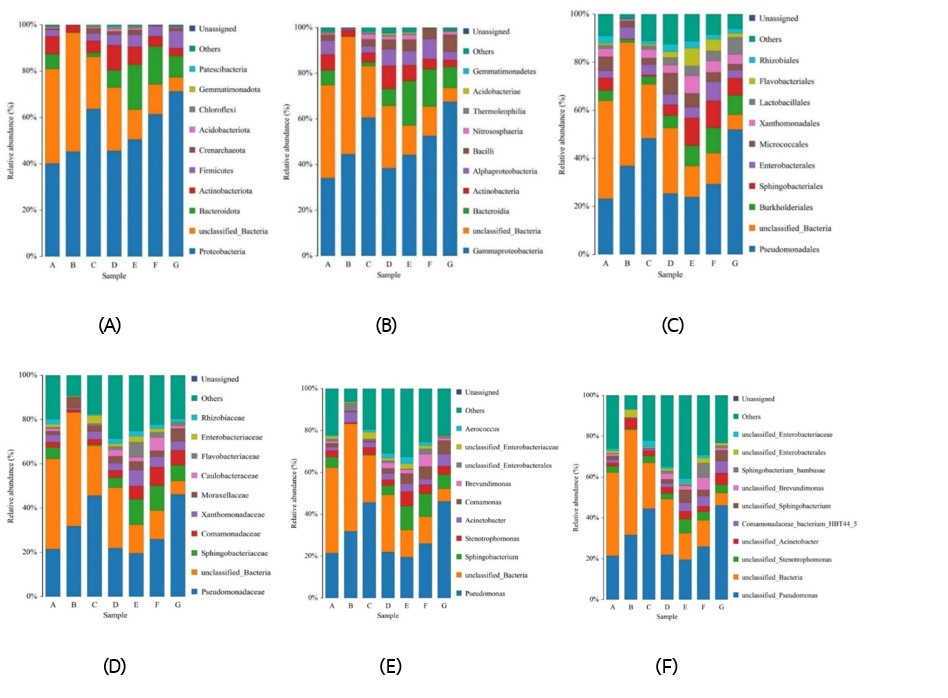
การวิเคราะห์เมตาจีโนมิกส์เป็นเครื่องมือที่มีประสิทธิภาพในการวิเคราะห์องค์ประกอบและความหลากหลายของชุมชนจุลชีพในสิ่งแวดล้อมโดยไม่จำเป็นต้องเพาะเลี้ยง ทำให้เหมาะสมสำหรับการศึกษา จุลชีพที่เกี่ยวข้องกับพืชสมุนไพร ห้อม (Strobilanthes spp.) ซึ่งเป็นพืชเศรษฐกิจสำคัญของภาคเหนือของประเทศไทย ใบของห้อมถูกนำมาใช้ผลิตสีย้อมครามธรรมชาติและมีรายงานว่ามีสารออกฤทธิ์ทางชีวภาพ ที่มีศักยภาพทางการแพทย์ การศึกษาชุมชนจุลชีพที่อยู่ร่วมกับห้อมจึงมีความสำคัญต่อการทำความเข้าใจบทบาทของจุลชีพในการส่งเสริมการเจริญเติบโตของพืช และ การสังเคราะห์สารออกฤทธิ์ทางชีวภาพ งานวิจัยนี้ มีวัตถุประสงค์เพื่อศึกษาความหลากหลายของชุมชนแบคทีเรียจากใบของห้อมใบใหญ่ (Strobilanthes cusia) และห้อมใบเล็ก (Strobilanthes sp.) ที่เก็บจาก 5 พื้นที่ในจังหวัดแพร่ ด้วยเทคนิค 16S rRNA gene sequencing บนแพลตฟอร์ม Illumina ผลการศึกษาพบว่าชุมชนแบคทีเรียส่วนใหญ่จัดอยู่ในไฟลัม Proteobacteria โดยเฉพาะคลาส Gammaproteobacteria และ อันดับ Pseudomonadales ซึ่งกลุ่มหลักที่พบ ได้แก่ Pseudomonas และแบคทีเรียที่ยังไม่ถูกจำแนกสายพันธุ์ (unclassified bacteria) ที่มีรายงานว่ามีบทบาทในการส่งเสริมการเจริญเติบโตของพืชและการผลิตสาร เมตาโบไลต์สำคัญ ผลการศึกษานี้ช่วยเพิ่มความเข้าใจเกี่ยวกับองค์ประกอบของจุลชีพที่เกี่ยวข้องกับห้อม และสามารถนำไปใช้ประโยชน์ต่อยอดในอุตสาหกรรมการแพทย์ สิ่งทอ และเกษตรกรรม ได้ในอนาคต
เอกสารอ้างอิง
Chanchay, N., A. Boonprajaub and R. Dachprom. 2022. Effect of endophytic bacteria on growth of indigo plants. VRU Agricultural and Food Journal 1(2): 23–33. [in Thai]
Chanchay, N., M. Jumpatase and A. Boonprajaub. 2021. Carboxymethyl Cellulose with Crude Extracts of Hom, Bamboo Mushroom Mucus and Vegetable Watercress for Cosmetics Application. pp. 1292-1302. In Proceeding of MJU Annual Conference 24-25 December 2021. Chiang Mai: Maejo university. [in Thai]
Klindworth, A., E. Pruesse, T. Schweer, J. Peplies, C. Quast, M. Horn and F.O. Glöckner. 2013. Evaluation of general 16S ribosomal RNA gene PCR primers for classical and next-generation sequencing-based diversity studies. Nucleic Acids Research 41(1): 1–11.
López-López, A., MA. Rogel, E. Ormeño-Orrillo, J. Martínez-Romero and E. Martínez-Romero. 2010. Phaseolus vulgaris seed-borne endophytic community with novel bacterial species such as Rhizobium endophyticum sp. nov. Syst. Applied Microbiology 33: 322–327.
Meijuan, Z., Z. Yongjia, C. Shijie and D. Yong. 2018. Deciphering the bacterial composition in the rhizosphere of Baphicacanthus cusia (NeeS) Bremek. Scientific Reports 18(8): 15831.
Rondon, M.R., P.R. August, A.D. Bettermann, S.F. Brady, T.H. Grossman, M.R. Liles, K.A. Loiacono, B.A. Lynch, I.A. MacNeil, C. Minor, C.L. Tiong, M. Gilman, M.S. Osburne, J. Clardy, J. Handelsman and R.M. Goodman. 2000. Cloning the soil metagenome: a strategy for accessing the genetic and functional diversity of uncultured microorganisms. Applied and Environmental Microbiology Journal 66: 2541–2547.
Ulrich, K., A. Ulrich and D. Ewald. 2008. Diversity of endophytic bacterial communities in poplar grown under field conditions. FEMS Microbiology Ecology 63(2): 169–180.
Walker, R., A.A. Powell and B. Seddon. 1998. Bacillus isolates from the spermosphere of peas and dwarf French beans with antifungal activity against Botrytis cinerea and Pythium species .Journal of Applied Microbiology 84: 791–801.
Walsh, A.M., F. Crispie, K. Kilcawley, O. O’Sullivan, M.G. O’Sullivan, M.J. Claesson and P.D. Cotter. 2016. Microbial succession and flavor production in the fermented dairy beverage kefir. mSystems 1(5): 00052–16. https://doi.org/10.1128/mSystems.00052-16
Wei, G., Y. Zang, X.J. Hao, F.M. Yang, Q.Y. Sun, L. Susan, M. Natschke, K.H. Lee, Y.H. Wang and C.L. Long. 2014. Indole alkaloid glycosides from the aerial parts of Strobilanthes cusia. Journal of Natural Products 77: 2590–2594.
Zhou, B., Z. Yang, Q. Feng, X. Liang, J. Li, M. Zanin, Z. Jiang and N. Zhong. 2017. Aurantiamide acetate from Baphicacanthus cusia root exhibits anti-inflammatory and anti-viral effects via inhibition of the NF-kB singaling pathway in Influenza A virus-infected cell. Journal of Ethnopharmacology 199: 60–67.
ดาวน์โหลด
เผยแพร่แล้ว
รูปแบบการอ้างอิง
ฉบับ
ประเภทบทความ
สัญญาอนุญาต
ลิขสิทธิ์ (c) 2026 วารสารวิจัยและส่งเสริมวิชาการเกษตร

อนุญาตภายใต้เงื่อนไข Creative Commons Attribution-NonCommercial-NoDerivatives 4.0 International License.
บทความนี้ได้รับการเผยแพร่ภายใต้สัญญาอนุญาต Creative Commons Attribution-NonCommercial-NoDerivatives 4.0 International (CC BY-NC-ND 4.0) ซึ่งอนุญาตให้ผู้อื่นสามารถแชร์บทความได้โดยให้เครดิตผู้เขียนและห้ามนำไปใช้เพื่อการค้าหรือดัดแปลง หากต้องการใช้งานซ้ำในลักษณะอื่น ๆ หรือการเผยแพร่ซ้ำ จำเป็นต้องได้รับอนุญาตจากวารสาร