
Bacterial Diversity in Large-Leaf Indigo (Strobilanthes cusia) and Small-Leaf Indigo (Strobilanthes sp.) Revealed by Metagenomic Analysis
DOI:
https://doi.org/10.14456/jare-mju.2026.29Keywords:
Strobilanthes cusia, Strobilanthes sp., DNA purity, metagenomics, genetic diversityAbstract
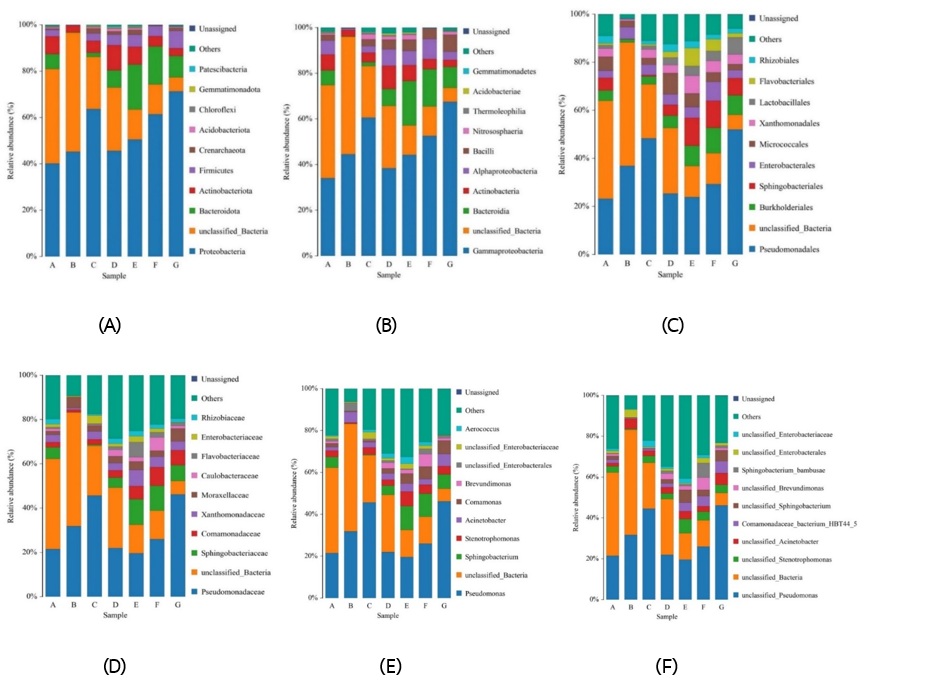
Metagenomics is an effective tool for analyzing the composition and diversity of microbial communities in the environment without the need for cultivation, making it suitable for studying plant-associated microorganisms. Strobilanthes spp. (indigo plant) is an economically and scientifically important medicinal plant in northern Thailand. Its leaves are used to produce natural indigo dye and contain bioactive compounds with potential pharmaceutical applications. Understanding the microbial communities associated with Strobilanthes spp. is essential for elucidating their roles in promoting plant growth and synthesizing secondary metabolites. This study aimed to investigate the bacterial community diversity in leaves of S. cusia (large-leaf) and Strobilanthes sp. (small-leaf) collected from five sites in Phrae province using 16S rRNA gene sequencing on the illumina platform. The bacterial communities were predominantly affiliated with the phylum Proteobacteria, particularly the class Gammaproteobacteria and the order Pseudomonadales, including Pseudomonas spp. and unclassified bacteria. These taxa are known to contribute to plant growth promotion and the biosynthesis of bioactive compounds. The findings provide insight into the microbial diversity associated with S. cusia, offering potential applications in the pharmaceutical, textile, and agricultural industries.
References
Chanchay, N., A. Boonprajaub and R. Dachprom. 2022. Effect of endophytic bacteria on growth of indigo plants. VRU Agricultural and Food Journal 1(2): 23–33. [in Thai]
Chanchay, N., M. Jumpatase and A. Boonprajaub. 2021. Carboxymethyl Cellulose with Crude Extracts of Hom, Bamboo Mushroom Mucus and Vegetable Watercress for Cosmetics Application. pp. 1292-1302. In Proceeding of MJU Annual Conference 24-25 December 2021. Chiang Mai: Maejo university. [in Thai]
Klindworth, A., E. Pruesse, T. Schweer, J. Peplies, C. Quast, M. Horn and F.O. Glöckner. 2013. Evaluation of general 16S ribosomal RNA gene PCR primers for classical and next-generation sequencing-based diversity studies. Nucleic Acids Research 41(1): 1–11.
López-López, A., MA. Rogel, E. Ormeño-Orrillo, J. Martínez-Romero and E. Martínez-Romero. 2010. Phaseolus vulgaris seed-borne endophytic community with novel bacterial species such as Rhizobium endophyticum sp. nov. Syst. Applied Microbiology 33: 322–327.
Meijuan, Z., Z. Yongjia, C. Shijie and D. Yong. 2018. Deciphering the bacterial composition in the rhizosphere of Baphicacanthus cusia (NeeS) Bremek. Scientific Reports 18(8): 15831.
Rondon, M.R., P.R. August, A.D. Bettermann, S.F. Brady, T.H. Grossman, M.R. Liles, K.A. Loiacono, B.A. Lynch, I.A. MacNeil, C. Minor, C.L. Tiong, M. Gilman, M.S. Osburne, J. Clardy, J. Handelsman and R.M. Goodman. 2000. Cloning the soil metagenome: a strategy for accessing the genetic and functional diversity of uncultured microorganisms. Applied and Environmental Microbiology Journal 66: 2541–2547.
Ulrich, K., A. Ulrich and D. Ewald. 2008. Diversity of endophytic bacterial communities in poplar grown under field conditions. FEMS Microbiology Ecology 63(2): 169–180.
Walker, R., A.A. Powell and B. Seddon. 1998. Bacillus isolates from the spermosphere of peas and dwarf French beans with antifungal activity against Botrytis cinerea and Pythium species .Journal of Applied Microbiology 84: 791–801.
Walsh, A.M., F. Crispie, K. Kilcawley, O. O’Sullivan, M.G. O’Sullivan, M.J. Claesson and P.D. Cotter. 2016. Microbial succession and flavor production in the fermented dairy beverage kefir. mSystems 1(5): 00052–16. https://doi.org/10.1128/mSystems.00052-16
Wei, G., Y. Zang, X.J. Hao, F.M. Yang, Q.Y. Sun, L. Susan, M. Natschke, K.H. Lee, Y.H. Wang and C.L. Long. 2014. Indole alkaloid glycosides from the aerial parts of Strobilanthes cusia. Journal of Natural Products 77: 2590–2594.
Zhou, B., Z. Yang, Q. Feng, X. Liang, J. Li, M. Zanin, Z. Jiang and N. Zhong. 2017. Aurantiamide acetate from Baphicacanthus cusia root exhibits anti-inflammatory and anti-viral effects via inhibition of the NF-kB singaling pathway in Influenza A virus-infected cell. Journal of Ethnopharmacology 199: 60–67.
Downloads
Published
How to Cite
Issue
Section
License
Copyright (c) 2026 Journal of Agricultural Research and Extension

This work is licensed under a Creative Commons Attribution-NonCommercial-NoDerivatives 4.0 International License.
This article is published under a Creative Commons Attribution-NonCommercial-NoDerivatives 4.0 International License (CC BY-NC-ND 4.0), which allows others to share the article with proper attribution to the authors and prohibits commercial use or modification. For any other reuse or republication, permission from the journal and the authors is required.


